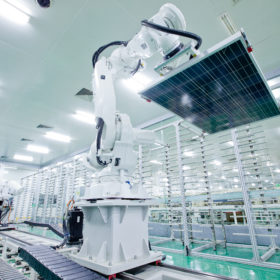
Jinko Solar reports higher sales, profit in Q3
Jinko Solar recorded a higher profit in the third quarter of 2022, as sales of its solar panels surpassed 10 GW. The Chinese PV module manufacturer said it now wants to ramp up production to keep pace with rising global demand.
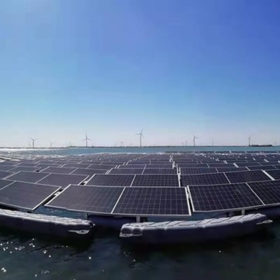
Floating solar combined with wave, tidal, wind power
A consortium of Singaporean universities and companies will study the feasibility of integrating a hybrid floating solar project with ocean, tidal, and wind capacity. If successful, the parties plan to deploy a pilot system with at least 100 MW of renewables capacity.
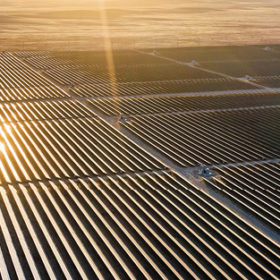
Annual added PV capacity will more than quadruple to 650 GW in 2030, says IEA
The International Energy Agency (IEA) has published its “World Energy Outlook 2022” report. It expects the energy crisis triggered by Russia’s invasion of Ukraine to accelerate the global energy transition.
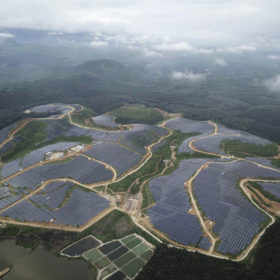
Malaysia to grant 4-year PPA extensions to bidders in large-scale solar tender
The Malaysian authorities have revealed that they will extend power purchase agreements from the fourth LSS4 tender for large-scale PV from 21 to 25 years.
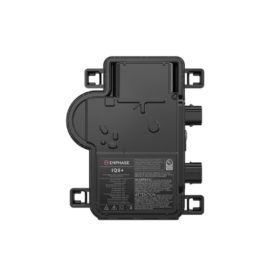
Enphase to open new US manufacturing lines
Enphase said in its recent third-quarter earnings call that it will expand solar inverter production in the United States.
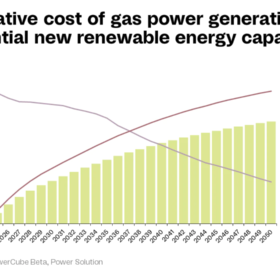
New solar capacity 10 times cheaper than gas, says Rystad
Operating gas-fired power plants would be 10 times more expensive in the long-term than building new solar capacity in Europe, according to research from intelligence company Rystad. Their study uses the levelized cost of energy (LCOE) for gas and coal-fired power generation at different price levels and compares it to the LCOE of solar PV and wind.

Tandem perovskite-silicon solar cell with 29.80% efficiency via periodic nanotextures
Researchers from Germany have designed a tandem perovskite silicon PV cell that reportedly has lower reflection losses and improved open-circuit voltage. They demonstrated a device with submicrometre-periodic nanotextures and an improved back-reflector design.
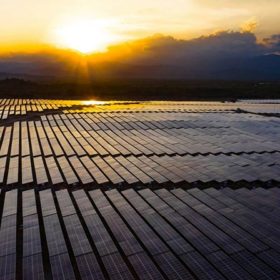
Vietnam set to open renewable energy market to PPAs
The Vietnamese government has been working on a scheme to allow bilateral power purchase agreements (PPAs) since 2020. The start of the pilot scheme has been delayed and is now expected for the first quarter of 2023. The official program would launch in 2025.
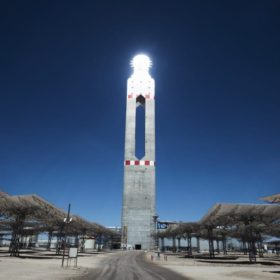
Four injured in solar thermal plant accident
Four people who were carrying out inspection work at the Chilean Cerro Dominador solar thermal plant have suffered burns due to a high-temperature water leak. Two are in intensive care.
New process to recycle Si-PV modules
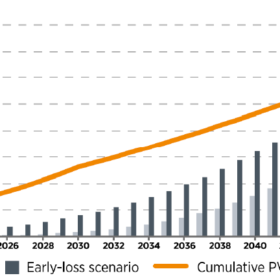
A team of researchers from the University of New South Wales (UNSW) has proposed a novel cost-effective way to recycle silicon solar panels. Their process consists of module deframing, laminate shredding and material concentration using electrostatic separation, reducing their original weight by 2% to 3%.
