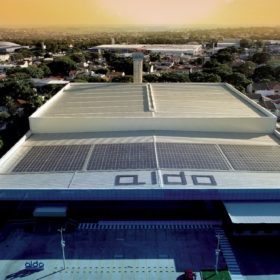
Canadian asset management co. agrees to acquire Brazil’s largest PV product distributor
The transaction should be finalized by the end of the month, with the deal amounting to a $320 million equity investment.

Ever heard of photovoltachromics, the new tech for solar windows?
Researchers in China have developed a smart solar window tech based on a photovoltachromic device that is able to achieve a high pristine transmittance and to be self-adaptable to control indoor brightness and temperature. The device was assembled via a full solution process in an architecture incorporating glass, a fluorine-doped tin oxide (FTO) layer, a perovskite-based PV cell, an electrochromic gel, another FTO layer, and glass.
Lithium-ion technology to lead the Indian storage market by 2030
A new report predicts lithium-ion technology to lead the Indian battery energy storage systems market by 2030 as prices for lithium iron phosphate (LFP) and lithium nickel-cobalt-manganese (NCM) battery technologies fall.
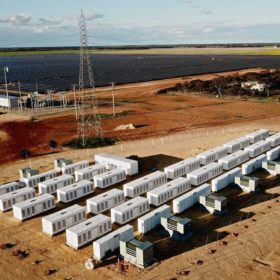
Australian Energy Market Operator points to inverters as possible path to 100% renewables
The AEMO is looking to fast-track the deployment of advanced inverter capabilities to support Australia’s “once-in-a-lifetime transition” to a power system featuring reduced synchronous generation, such as coal-fired generation.
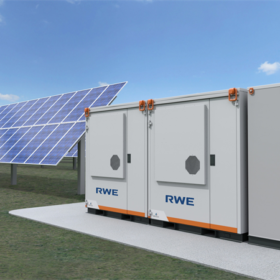
Data confirm the rise of solar-plus-storage hybrids across the U.S. grid
Battery prices are falling, and renewable energy generation continues to expand, leading power plant developers to co-locate energy storage along with power generation assets.
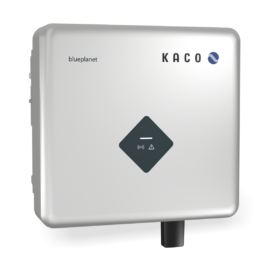
Kaco unveils new single-phase string inverter
The blueplanet NX1 M2 series of inverters have an output between 3 and 5 kVa and an efficiency of 97.5%, and are designed for residential rooftop PV systems.

North Macedonian government launches solar auction
The North Macedonian government wants to award a 15-year PPA through the procurement exercise. Selected developers will be granted a feed-in premium tariff paid on top of the electricity price.
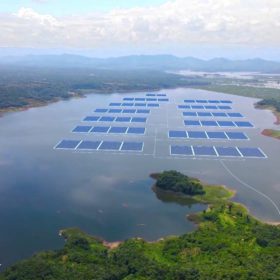
Work begins on 145 MW floating solar plant in Indonesia
South-East Asia’s biggest floating PV installation is under construction by Masdar and Indonesian energy company PT PJB. The two companies secured a PPA for the project with state electricity company Perusahaan Listrik Negara (PLN) in January 2020. The agreed tariff is $0.0581/kWh.
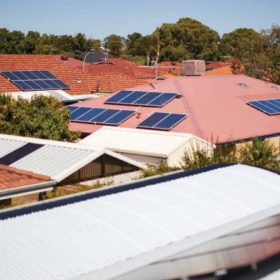
Australia’s rooftop PV capacity reaches 14.7 GW
Australia’s rooftop solar PV market has emerged as the second largest generator by capacity in the nation with new data published by the Australian Energy Council showing that small-scale solar is overshadowed only by coal-fired generation.
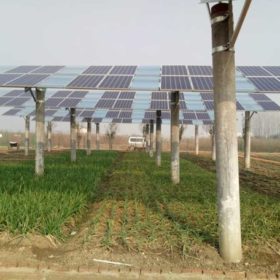
Novel plant design for agrivoltaics
Developed by Chinese researchers, the novel design methodology consists of utilizing metal brackets as mounting structures, conventional solar panels, and a grooved glass plate placed between the solar panels. According to its creators, it ensures a farmer’s average income increases by 5.14 times, including the solar power generation business. A system built with this approach should cost around €715 per kW installed.
