
Solar sculpture to produce 300 MWh of electricity annually
Called Solar Mountain, the permanent installation should be built in Nevada with modular design elements of recycled wood and other environmentally friendly materials.
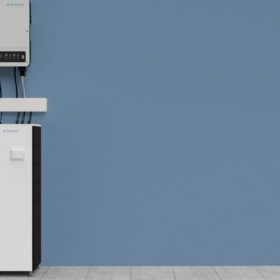
New battery for residential and commercial storage from Germany
Manufactured by Germany’s Fenecon, the modular battery has a storage capacity ranging from 8 kWh to 22 kWh. The product is claimed to allow predictive, grid-friendly charging and discharging.

Floating structure design for offshore PV
Researchers at the Norwegian institute Sintef are testing a special floating structure that Equinor wants to deploy in offshore waters. The structure is built with an anchoring system that is claimed to give the installation enough freedom to cope with the waves.
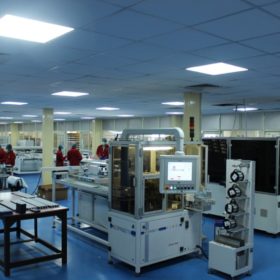
India’s Gautam Solar doubles capacity with new production line
Gautam Mohanka, managing director of New Delhi-headquartered Gautam Solar, told pv magazine its Haridwar module factory, now scaled up to 250 MW, is producing panels with a power output of up to 400 W, using mono PERC and polycrystalline cells.
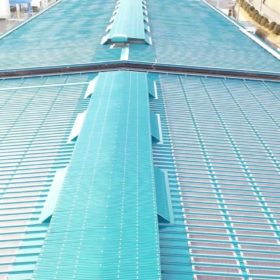
Off-grid rooftop solar with metal-wrap-through solar modules
Chinese MWT solar module manufacturer Sunport has provided its S1 product for a solar-plus-storage commercial rooftop PV project in Japan. The array is linked to 165 kWh of storage and is equipped with flexible solar panels that weigh 1.3kg each.
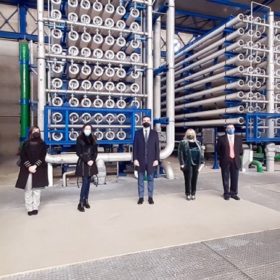
Solar revitalizes abandoned desalination plant in Spain
A new €99 million solar project will help the Rambla Morales desalination plant, which shut down in 2011, to resume operations by fall 2022.

South Korea kicks off 2 GW PV tender
The Korean Energy Agency has included PV projects exceeding 20 MW in size for the first time in its solar energy procurement scheme. Selected projects will be awarded a fixed rate under a 20-year contract under the country’s renewable energy certificate (REC) scheme and will sell electricity to local power distributors.

Absorbent glass mat battery for residential storage
Silicon Valley-based start-up Gridtential has secured $12 million in funds to develop what it calls the world’s first factory-ready, single-block, 24V, deep-cycle lead battery. The product is claimed to be ideal for personal mobility vehicles and renewable energy storage in homes and offices.
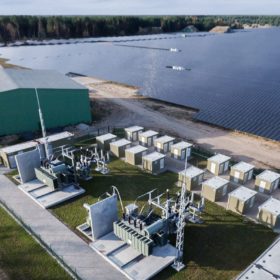
German utility-scale PV tender concludes with lowest price of €0.0469/kWh
Germany wrapped up another oversubscribed tender for large-scale solar last week, as well as an innovation tender for storage-linked PV projects.
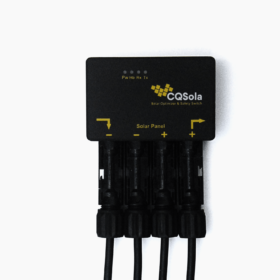
Power controller to connect solar to terminals of electrolyzers
An Australian innovation, the unassuming-looking CQSola power controller has under-the-hood smarts that could significantly cut the cost of hydrogen produced using solar energy.
