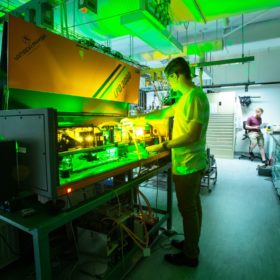
New discovery promises to bring singlet fission enhanced C-Si solar cells nearer to commercial production
New research from Australia has shown that singlet fission solar cells do not only have the potential to raise the theoretical efficiency of the PV technology to unexpected levels but also to provide a better temperature behavior and longer duration compared to conventional PV devices. The scientists believe that this technique may help conventional crystalline silicon solar cell technologies reach efficiencies close to 30%.
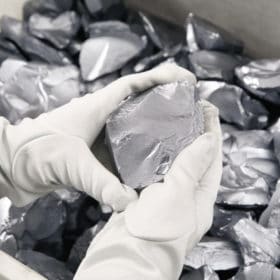
Daqo opens Xinjiang polysilicon factory to international observers
The polysilicon manufacturer has once again rejected allegations of forced labor by opening the doors of its factory in China’s Xinjiang Uyghur Autonomous Region to international investors and journalists. Video footage of the event was published by the company on its website.
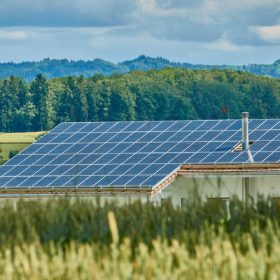
Dutch farmers left with no connection for their PV arrays
Grid congestion issues are increasing in the Netherlands and several Dutch farmers claim to have remained without access to the grid despite having completed their rooftop arrays.
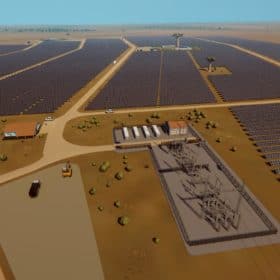
20 MW/10 MWh solar-plus-storage project moves forward in Malawi
The Golomoti solar plant is expected to come online by the end of the year. The plant will be used to provide grid stability and reduce national dependence on diesel generators and hydroelectric generation.
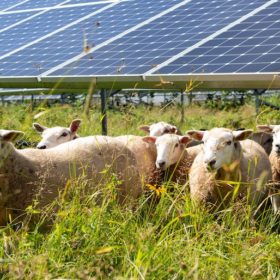
New York state funds study on benefits of grazing for PV
Sheep and solar farms can exist symbiotically, and the American Solar Grazing Association says that now is the time to convert that relationship into a full-scale industry.

Could hydrogen replace diesel in large-scale agriculture?
Australian farmer Thomas Blair is expanding the horizons of his industry to cultivate green hydrogen.
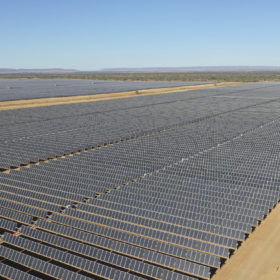
3.3 GW renewables pipeline provides cover for coal-fired power plant closures in Australia
Record investment in solar and wind farms across the National Electricity Market has helped to quell concerns that Victoria and South Australia will face increased risk of blackouts later this decade following the impending closure of the Yallourn coal-fired power plant.
Indian state tenders 500 MW of solar capacity under farming support scheme
With the national KUSUM program offering farmers the chance to develop projects or lease their land, developers in Odisha will have until June 22 to bid for projects. The state utility will buy the power generated under a 25-year PPA for a maximum INR3.08/kWh ($0.04).

Role of distributed solar at issue in California’s net metering update
Industry groups focus on solar-plus-storage, or preserving the distributed solar industry, while a state agency aims to compensate rooftop solar at avoided costs and add a grid service charge.

Best membrane for non-aqueous redox flow batteries
A Chinese-Finnish research team has identified composite membranes as the best future option for non-aqueous redox flow batteries.
