
Germany to tender 18.8 GW of PV by 2028
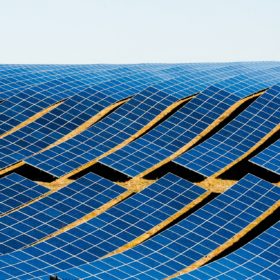
The German government is planning to tender 5.3 GW in the rooftop segment and 13.5 GW for large-scale PV projects.
Chinese PV Industry Brief: New EVA encapsulant factory, 1 GW PV pipeline
Cybrid, a Shanghai-listed backsheet supplier, will open a new EVA encapsulant factory in Zhejiang province. Datang, meanwhile, has revealed plans to build 1.05 GW at 10 sites across three provinces.
Light and shade of 500 W plus solar panels – part II
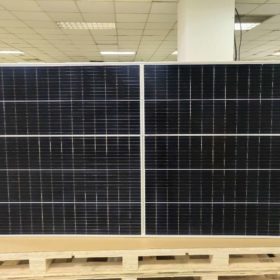
In the second article in a series, pv magazine editor Pilar Sánchez Molina and industry experts keep discussing the challenges and opportunities created by new panels with power output exceeding 500 W.

Niger holds firm on plan to build solar park at diesel-fueled thermal plant
The solar plant is expected to have a capacity of up to 60 MW and will be located at the 100 MW Gorou Banda thermal power station commissioned in 2017.

Computational method shows Italy may install 144.5 GW of PV by 2050
According to a new study, PV may reach an installed power of 144.5 GW in Italy by the end of the first half of the century, followed by onshore and offshore wind with 59.6 GW and 17.6 GW, respectively. The research is based on a new computational model that identifies the best spatial distribution of renewable energy sources in an individual country or electricity system while avoiding problematic concentrations of technologies
Photovoltaics for highways
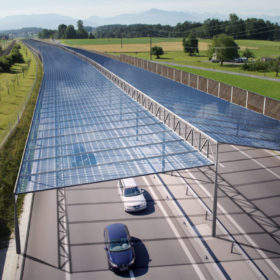
The Austrian Institute of Technology, Fraunhofer ISE, and Forster Industrietechnik are developing a new rooftop PV system concept for motorways. They aim to harness the potential of underexploited road networks to generate electricity.
Enphase microinverters for high-power modules
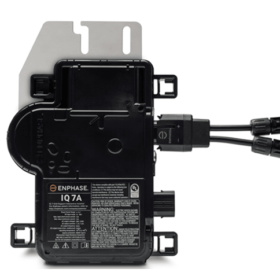
The US microinverter manufacturer has now brought its inverter solution for commercial and industrial solar to Australia and Europe. The device is suitable for modules with power output ranging from 295 to 450 W and has a European efficiency of 96.5%.

Light and shade of 500 W plus solar panels – part I
In the first article of a series, pv magazine editor Pilar Sánchez Molina analyzes with industry experts challenges and opportunities created by new panels with power output exceeding 500 W.
New dopants may improve PV glass performance
According to a British-Swedish research team, the down‐shifting process for solar glass manufacturing can be improved through the use of two dopant cations that produce no absorption bands. The doping with these compounds is said to reduce the UV transmission while also keeping the glass free from absorption in the visible and near-infrared ranges.
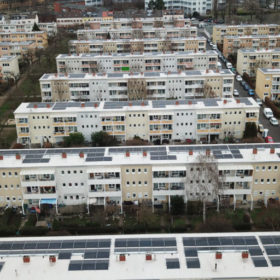
Germany deployed 447 MW in July
According to the latest figures from the Federal Network Agency, the country’s cumulative installed PV power has now reached 51.98 GW.
