
India’s SECI announces 3.4 GW of RfS for solar projects
The Solar Energy Corporation of India Limited (SECI) has announced a slew of Requests for Selection (RfS) for the installation of various PV projects totaling 3.37 GW across the country.

India: SECI opens bids for 150 MW floating solar power project
The Solar Energy Corporation of India Limited (SECI) has announced a tender for the development of a 150 MW grid connected floating solar PV power project in the Indian state of Uttar Pradesh.

Yingli’s financials go from bad to worse
In reporting its FY 2017 financials, Yingli has again revealed that “substantial doubt exists as to the Company’s ability to continue as a going concern.” It is seeking to agree on a debt restructuring plan with creditors, and is asking them to refrain from initiating bankruptcy proceedings. Overall, it recorded a 2017 net loss of US$510 million and total liabilities of $3.2 billion. It has not issued guidance for this year.
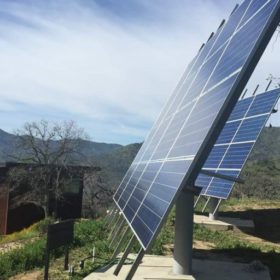
US residential solar power grows 11% in Q1 2018
OhmHome estimates 72,996 residential solar power installations in the first quarter of 2018, with California and Massachusetts growing 14% and 9%, respectively.
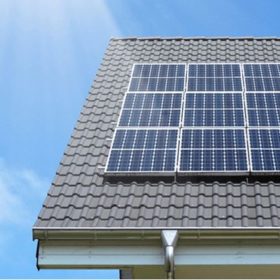
ReneSola records positive performance following restructuring
The Chinese solar PV project developer has posted positive earnings for both FY2017 and Q4, although it has not included its discontinued manufacturing operations in its latest financials. Overall, it has a project pipeline of 1.1 GW, big plans for Europe and a strategic investor interested in injecting US$31.6 million in its Chinese Holdco.

Energía Hoy, pv magazine group launch pv magazine Mexico
Trade publishers energía hoy and pv magazine group have partnered to launch a new website – www.pv-magazine-mexico.com – and weekly newsletter to cover the fast growing Mexican solar PV market.
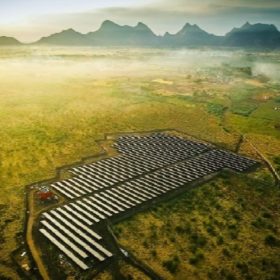
India: Utility-scale solar plants completed in Odisha, Karnataka
IBC Solar has completed the installation of a 27 MW solar PV plant in the state of Odisha, while Sunsure Energy installed 20 MW across two plants in Karnataka.
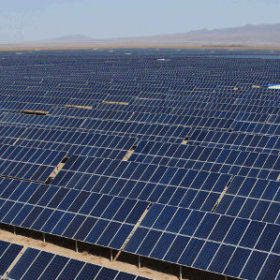
China bucks forecasts to install 9.65 GW of PV in Q1, DG leads the way
Of the 9.65 GW of solar PV China installed in the first quarter of 2018, 7.68 GW comprised distributed generation (DG) systems, reports China’s National Energy Administration (NEA). Changes to the country’s PV policy have also been proposed.

Nigerian universities go off-grid with solar PV, storage mini-grids
Four of Nigeria’s federal universities and university teaching hospitals across the country have signed EPC contracts to develop mini-grid solutions, which will power their facilities and disconnect them from the main electricity grid. A total of 9.3 MW of PV and 5,760 battery cells will be deployed.

Historic UN deal for shipping industry could lead to solar powered ships
A climate change strategy on the reduction of greenhouse gas emissions from ships, adopted last week by the United Nations (UN) International Maritime Organization (IMO), could boost the electrification of ships using solar PV technology.
