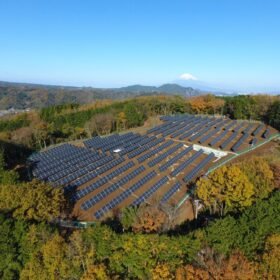
Solar potential of tough terrain
Nextracker has specifically designed solar tracker solutions for the challenges of the Indian landscape, by addressing issues such as undulating terrain and fluctuating irradiance conditions at utility-scale sites, Vice President and Managing Director Rajeev Kashyap tells pv magazine.
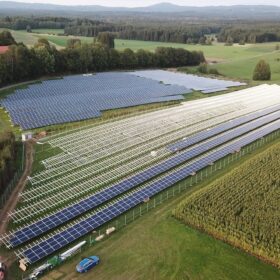
DIF Capital Partners to acquire 60% stake in Dutch solar developer Novar
Dutch fund manager DIF Capital Partners has signed an agreement to purchase a majority of Dutch solar project developer Novar for an undisclosed sum.
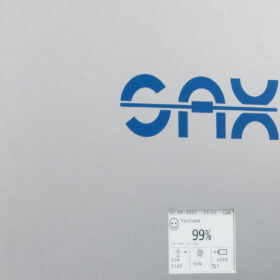
Sax Power unveils plug-in 5.8 kWh lithium iron phosphate battery
Sax Power has developed a 5.8 kWh lithium iron phosphate battery, priced at €4,957 ($5,403) for end customers, with a smart meter for precise electricity delivery.

Italy’s January-September solar installations hit 3.5 GW
Italy deployed more than 3.51 GW of new solar in the first nine months of 2023, bringing its cumulative installed PV capacity to 28.57 GW at the end of September, according to the national energy agency.
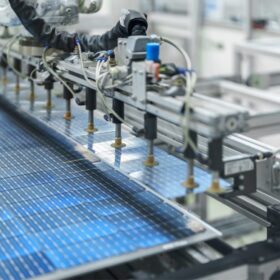
Voltec Solar secures funds to make perovskite-silicon tandem modules
Voltec and the Institut Photovoltaïque d’Île-de-France (IPVF) plan to set up a pilot line for their new tandem panel tech in 2023 and their first 200 MW industrial demonstrator in 2025. They also plan to increase the factory’s capacity to 1 GW in 2027 and 5 GW by 2030.
Germany’s January-October solar capacity additions hit 11.7 GW
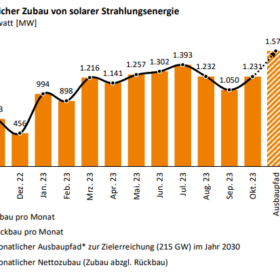
Germany installed 11.7 GW of new solar capacity between January and October 2023, with 1.23 GW added in October alone, bringing the nation’s cumulative installed solar capacity to 79.2 GW.
Fraunofer ISE, Heckert Solar present Made-in-Germany rooftop solar panel
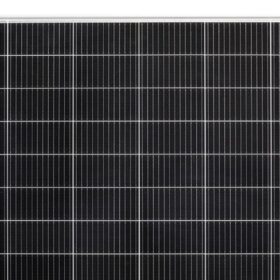
Fraunhofer Institute for Solar Energy Systems (Fraunhofer ISE) and Heckert Solar have developed a rooftop solar panel in Germany. The 400 W module, featuring M12 half cells, boasts an efficiency of 20.5%. The collaborative effort led to the establishment of a brand-new production line dedicated to this module series.
Only 3 Portuguese energy communities operating despite massive demand
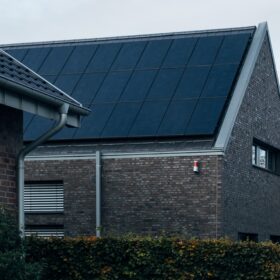
The European Commission first set up the rules for energy sharing communities in 2018 and 2019, with Portugal rolling out its own legislation soon after. Despite these efforts, five years on there are only three energy sharing communities legally operating in the Mediterranean country, with hundreds more stuck in a year-long regulatory backlog, one local engineer tells pv magazine.
Dynamic allocations increase financial savings in energy communities
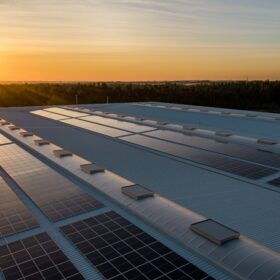
A global research group has compared static, customized dynamic, and dynamic-by-default energy allocations at a collective self-consumption project in France. They have found that dynamic customization performs better due to tax benefits.

EU Parliament’s vote on Net-Zero Industry Act prompts mixed reactions
European solar lobby groups have mostly welcomed the European Parliament’s recently supported EU Net-Zero Industry Act, which is aimed at strengthening the region’s renewables manufacturing sector. However, two groups are divided over a clause in the Act that limits tendered project’s from using technology partially made outside Europe.
