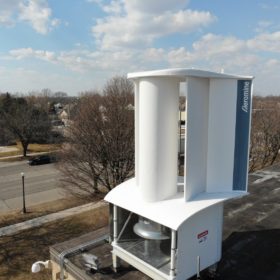
Rooftop wind energy innovation claims 50% more energy than solar at same cost
BASF is currently testing Aeromine Technologies’ patented motionless wind-harvesting system.
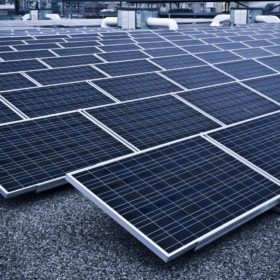
Prospects for US solar electricity at $0/kWh
A new Credit Suisse report suggests that from 2025 through 2032, the United States could see solar and wind power purchase agreements regularly signed for under $0.01/kWh, due to a combination of manufacturing and project tax credits.
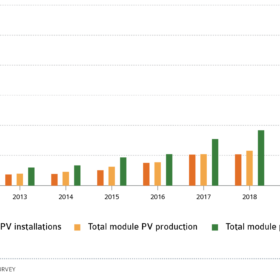
IEA-PVPS expects polysilicon prices to stabilize by end of 2023
The International Energy Agency Photovoltaic Power Systems Programme (IEA-PVPS) recently published a report on trends in PV applications for the 2021-22 period. Prices for polysilicon, wafers, cells and modules rose, while production capacity expanded in China and beyond.
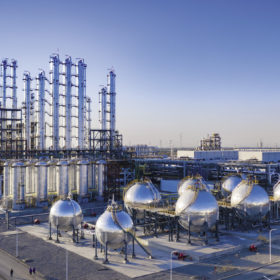
Global polysilicon capacity could hit 536 GW by end of 2023
Clean Energy Associates said in a new report that it expects polysilicon production capacity to exceed PV installations next year.
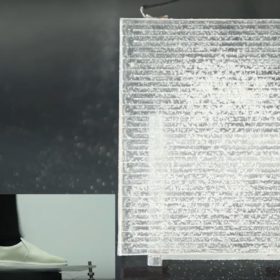
‘Footstep tech’ for solar module cleaning
Scientists in South Korea have used a triboelectric generator and an electrodynamic dust shield to develop a panel-cleaning system that can be activated by footsteps. They said the system can remove more than 70% of accumulated dust with the pressure of just 12 footsteps.
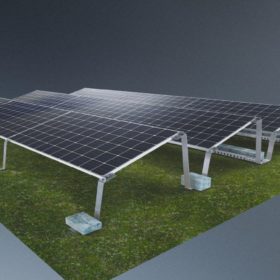
Aerocompact launches high-elevation mounting system for rooftop PV
Aerocompact’s new CompactFLAT GS mounting structure can be installed 40 cm above rooftop surfaces, with tilt angles of 10 and 15 degrees. The company says the product is ideal for bifacial solar arrays and green rooftops.
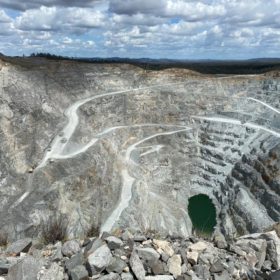
Australian state expedites development of pumped hydro project at gold mine
A plan to build a 2 GW/20 GWh pumped hydro project at an old gold mine in the Australian state of Queensland has been declared a “coordinated project,” in order to fast-track the plan.
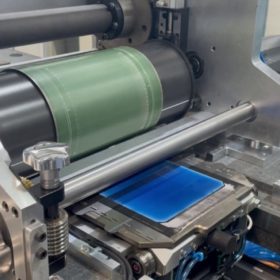
PV production equipment sales soaring in Europe
According to VDMA, a German engineering association, there are now more orders coming in for German production equipment from Europe than from China. Nevertheless, shipments to Asia remain dominant.
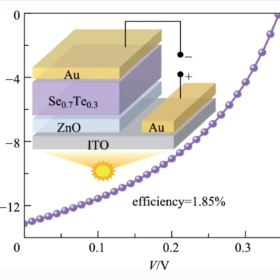
Selenium solar cell with optimized energy bandgap
Chinese scientists have built a selenium solar cell with an alloyed selenium-tellurium absorber, which reportedly reduces interfacial defects. Under standard illumination conditions, the device has an efficiency of 1.85%.

Pakistan approved 280 MW of solar in 2021-22
Pakistan’s National Electric Power Regulatory Authority (Nepra) has published its annual report for the 2021-22 financial year. The regulator granted nine licenses for solar projects, totaling 44.74 MW of installed capacity, and 7,032 net-metering licenses for a total of 243.43 MW.
