
Nine-year old US solar farm gets tracker upgrade
A lot has changed in tracker technology in the past decade, so in upgrading its Alamo plants, OCI Solar Power completely replaced the old tracker with a new state-of-the-art system, all while keeping the plant energized.
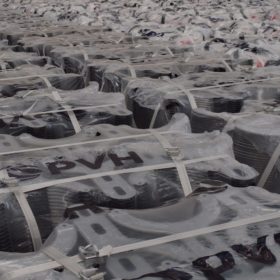
PVH to build world’s largest tracker factory
PVH has confirmed that it will build a new manufacturing facility in Valencia, Spain. The factory will raise its global tracker production capacity to 25 GW.
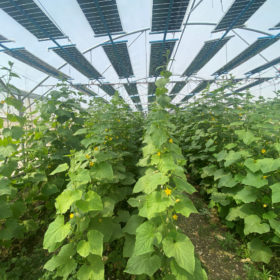
New agrivoltaic project to test crop-responsive PV trackers for greenhouses
An international consortium led by Israel’s Al-Zahrawi Society has launched the Regace project to develop agrivoltaic solutions for greenhouses. It will investigate the performance of a new tracking system across locations and climates and use carbon dioxide enrichment to improve crop yield.
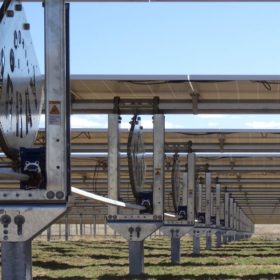
Array Technologies to build tracker factory in Australia
US solar tracker supplier Array Technologies plans to set up a factory in Australia, after winning a contract to supply trackers for a 102 MW solar farm in the Australian state of Victoria.
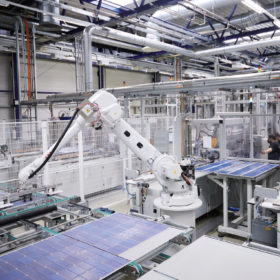
Wood Mackenzie sees $114 billion in US renewables investments by 2031
The advanced manufacturing production (AMPC) credit and domestic content requirement (DCR) will be key to supporting the rapid development of the US renewable energy economy, says Wood Mackenzie.
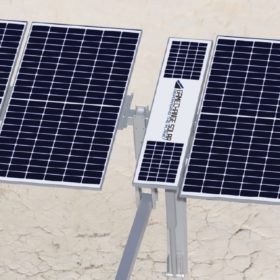
GameChange releases new solar tracker
US tracker manufacturer GameChange Solar’s latest product launch follows its recently announced decision to increase its annual domestic manufacturing capacity to 24 GW.
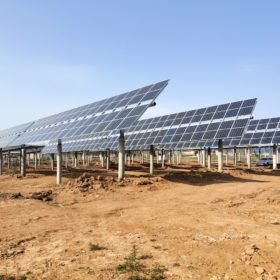
Chinese PV Industry Brief: Trina to supply 875 MW of trackers for Qatar solar plants
Trina Solar has signed an 875 MW tracker supply deal with Samsung C&T for Qatar’s new “IC Solar” project, while Chint said it aims to sell up to 8 GW of residential PV assets by the end of 2023.
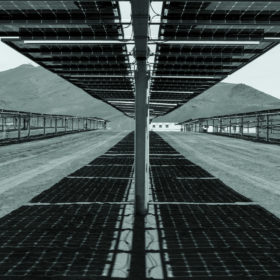
Soltec, Enel to build new solar tracker factory in Spain
Enel and Soltec have revealed plans to open a new factory on the grounds of a former thermal power plant owned by Enel’s Endesa unit in Teruel, Spain.
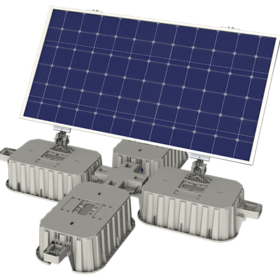
Sun-tracking floating solar islands from Portugal
Portugal-based Solaris Float has developed a swiveling floating solar platform with one- or two-axis tracking. It has installed its first project on a lake in the Netherlands. The project consists of 130 PV modules on a single-axis tracker, with an installed capacity of 50.7 kW.
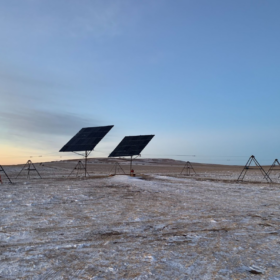
Agrivoltaic solar tracker uses cables instead of buried steel
Rute Foundation Systems says its Rute Suntracker system – designed for utility-scale, high-clearance solar – could potentially reduce steel use by 30%.
