
Bringing water to 273 farmers with just 90 kW of solar pumps
Two solar water pumps installed by the Philippines’ National Irrigation Administration (NIA) will cover a total area of more than 500 hectares.
Solar manufacturers warn of 12-18 months disruption for standalone products
Potential price rises of 14% for the solar home systems that are driving access to electricity in the world’s under-served regions could signal further arrested progress towards the UN goal of universal access by 2030.
Solar water pumps – cheaper, easier but routinely underestimated
Australia’s Commodore Independent Energy Systems has evaluated how much customers save by using solar water pumps compared to diesel or mains-connected pumps.
Optimal sizing for solar water pumps
Researchers in Malaysia have proposed a new approach for optimal sizing of solar water pumps. Their method consists of using a single PV module, a charge controller, several batteries, and a DC load.
The unstoppable trajectory of photovoltaic water pumps
Scientists in Russia have analyzed the most important technological advances achieved for solar water pumps over the past decades and have indicated the roadmap that future research should follow to expand their use and application.
World Bank offers $4.6m credit for off-grid solar panels and cook stoves in Kenya
Part of the development lender’s $150 million Kenya Off-grid Solar Access Program, the money will enable distributors to stock up and establish sales networks as well as offering affordable repayment terms to customers across 14 off-grid counties in the East African nation.
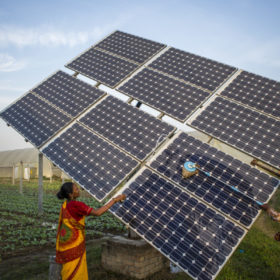
India launches tender for innovative solar pumps
Bidders will be expected to deploy their tech in real field conditions. Shortlisted entries will be given sites to install solar pumps under India’s rural PV scheme.
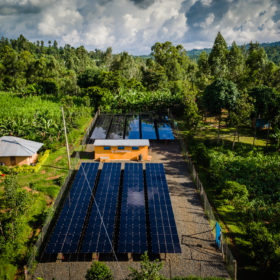
Risk of a ‘bridge to nowhere’ effect in Africa’s electrification
A report from the United States’ Rocky Mountain Institute finds more work is needed on the demand side for microgrids and other rural electrification projects in Africa. Such projects, says the report, often focus on building generation capacity, with little consideration for the ability of end users to make good use of energy.

India solar water pump scheme could add 150 GW, report says
Greenpeace India, Germi, and the IWMI-Tata Water Policy Program have released a report stating that the Indian government’s latest ambitions to deploy solar water pumps could meet the country’s solar PV target of 100 GW, if done comprehensively. So far the plan goes as far as 28 GW, and still needs legislative approval.
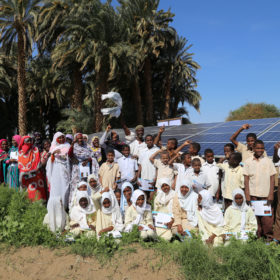
United Nations backs solar powered irrigation
A new report published by the United Nations Food and Agriculture Organization outlines the benefits of solar powered irrigation systems to both large and small scale farming operations in developing countries. The report also stresses the need for comprehensive management and regulation of such systems, to avoid unsustainable water use.
