
Standalone EV recharging station integrating renewables, storage and hydrogen
Scientists in Qatar have developed a new model for setting up standalone EV recharging stations based on the hybridization of multiple renewable energy sources and different types of storage. The system includes power generation devices from CPV/T, wind, and biomass and is designed to fast-charge 80 electrical vehicles daily.
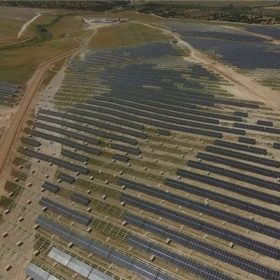
Iberdrola secures 10-year PPA for Spain’s largest PV project
Iberdrola has agreed to supply electricity from a 590 MW solar project to nine facilities owned by German pharmaceutical giant Bayer.

Long-term assessment of PV panel degradation under hot, humid tropical climates
A Dutch-Hungarian research team has measured, for 12 years, the degradation rates of PV modules installed in an off-grid system located in Ghana. It found that the panels had an average annual decline in power yield of 3.19%.
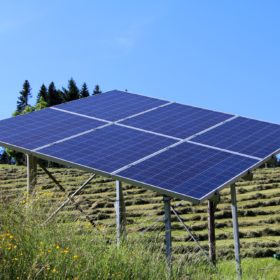
The best renewables combination for off-grid power supply
Scientists in India have proposed a model to design an off-grid, hybrid energy system based on a combination of solar, wind, biomass, biogas and fuel cell, linked to storage, for electrifying a cluster of three village hamlets in the Indian state of Karnataka. The model is implemented through the HOMER software and a genetic algorithm.

Indonesia has 18.2 MW of solar under net metering
Most of Indonesia’s deployed capacity comes from industrial PV systems, at 7.7 MW, while residential PV installations stand at just 5.1 MW. The authorities introduced improved net metering provisions earlier this year.
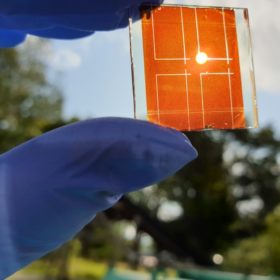
New tech to apply perovskite thin-film layers to conventional solar panels
According to its creator, Swedish start-up Evolar, the new technology can be applied to existing production lines for crystalline silicon modules and increase a product’s efficiency by around 5%.

Form Energy secures $70 million for ‘aqueous air battery’
Form Energy plans to deploy a 1 MW/150 MWh system with a Minnesota utility by 2023.
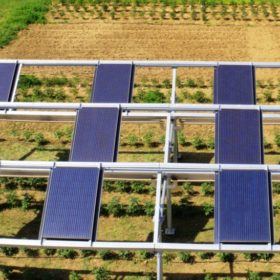
French alliance to build intelligent shade systems for agrivoltaics
French companies Ombrea and RES are partnering on the development of special PV shade systems for agrivoltaic projects. The devices will be equipped with artificial intelligence technologies to make them react to unfavorable weather conditions.

Switzerland allocates another $513m for solar incentives
The new funds will eliminate the waiting list for old feed-in tariff contracts. Around 22,400 new renewable energy systems have secured public support in Switzerland this year.
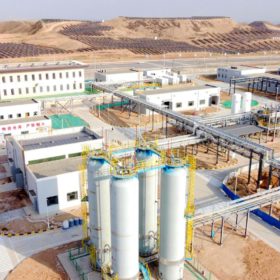
China’s ‘Liquid Sunshine’ project demonstrates PV powered methanol
A pilot project in China was brought online this month, combining 10 MW of PV with electrolyzers for hydrogen production and carbon dioxide hydrogenation to synthesize methanol. The methanol is supplied to the chemical industry, or can be converted back into hydrogen for energy use. And the project’s creators say their next goal is scaling the project up to 10 or even 100 times its current size.
