
Gigawatt Global and Energiya to install 100 MW of PV in Ethiopia
The Dutch-U.S. solar developer and the Israeli company are teaming up to construct 10 solar power plants with a capacity of 10 MW each at several university campuses in Ethiopia.

The weekend read: Solar’s new fertile crescent
Middle Eastern PV: The Jordanian solar sector has enjoyed near-constant growth in recent years, proving that it is a market founded on a sustainable and reliable base. Investors have been wondering for a few years whether Egypt can follow Jordan’s example successfully, and the signs are good that 2018 will prove to be a strong year for Egypt’s solar development. pv magazine explains the forces driving this optimism.

SECI tenders 950 MW of PV projects in southern states of India
SECI has had a busy day, releasing three tenders worth 1.2 GW. Following on from a 275 MW tender this morning, it has now announced a 950 MW tender for grid connected solar PV projects in the state of Andhra Pradesh and Karnataka, under the National Solar Mission of Phase-II, Batch-IV.

Scientists develop laser evaporation process for thin film deposition
A group of researchers from Duke University in the U.S. has developed a new coating process for the creation of hybrid thin film materials. The researchers say their process allows for the creation of solar materials that have until now proven difficult or even impossible to make.
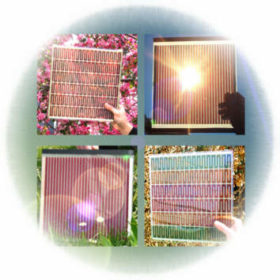
Scientists seek to improve efficiency of dye-sensitized solar cells with halogenes
Halogens have proved to be very successful in accelerating the electron transfer between the electrolyte and the semiconductor.

Saudi Arabia announces shortlist for 300 MW tender, excludes lowest bid
Shortlisted bidders are Saudi energy company, ACWA and Japanese trading company, Marubeni, which submitted the second and third lowest bids, respectively. The lowest bid, which was proposed by consortium formed by UAE-based Masdar and French energy giant, EDF and could have become the world’s cheapest offer for solar energy, was excluded from the auction.

UMass scientists boost polymer-chain storage efficiency
A team from the University of Massachusetts, Amherst (UMass) has developed a polymer based energy storage system, which releases energy on demand as heat. The scientists say their system utilizes a polymer chain ‘organized like a string of Christmas lights’ and can achieve more than double the storage density of previous polymer based systems.

German PV equipment providers report decline in orders for 2017
After a strong start to the year, new orders from suppliers in Germany declined significantly in the course of 2017. However, order books are still well filled.
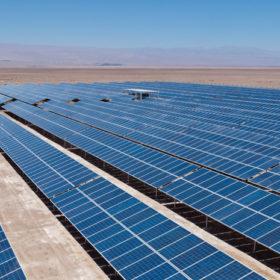
India’s impressive solar achievements in 2017
2017 was a busy year for India’s solar industry. As of the end of November, the country had installed around 5.5 GW of PV. With its ambitious renewable energy goals, it is paving the way to becoming a world leader in the industry. Overall, the country saw a rapid increase in renewable energy activity, with solar dominating almost 48% share of total capacity installed.

U.S. researchers develop quantum dot solar glass
A team from the Los Alamos National Laboratory has developed a double pane solar glass, using quantum dot PV technology. The researchers say the glass could be integrated into buildings as a semi-transparent window, or added to existing solar panels to boost efficiency.
