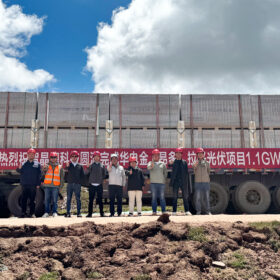
Construction begins on 1.1 GW solar project in Tibet
JA Solar has supplied its n-type DeepBlue 4.0 Pro modules for a 1.1 GW solar installation in Tibet. The project is believed to be the world’s largest combined animal husbandry facility and solar array now under construction.

Storage, hydrogen, and demand flexibility key to avoiding negative prices
Antonio Delgado Rigal, CEO of Spain’s AleaSoft Energy Forecasting, speaks with pv magazine about the rise in negative price hours in major European energy markets. He emphasizes the need for more storage capacity and argues that negative price periods will probably not threaten project profitability over the long term.
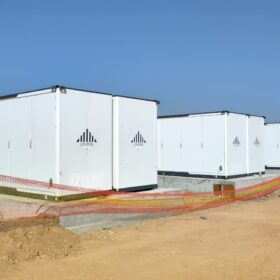
Brazilians ready to embrace storage amid rising energy bills, falling battery prices
The conditions are in place for the country’s battery energy storage market to expand at a compound annual growth rate (CAGR) of 20% to 30%, as Holu Solar’s Sophia Costa explained.

Canada considers surtax on solar products, batteries from China
The Canadian government has launched a 30-day consultation to determine whether to impose a surtax on solar products, semiconductors, batteries, and battery parts from China. It recently slapped a 100% surtax on Chinese-made electric vehicles.
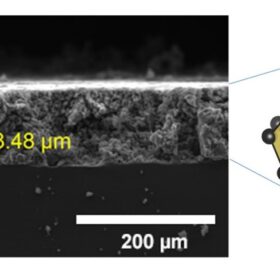
Increasing potential of silicon clathrate films for photovoltaics
Researchers led by scientists from CNRS in France are exploring an exotic form of silicon called silicon clathrate as a material for energy applications, including photovoltaics. Mastering the synthesis and using appropriate characterizations are key elements towards potential applications. Significant progress is being made for the fabrication of functional devices.

Nextracker introduces solar mount foundation services for soil types ‘anywhere’
The solar tracking provider introduced NX Anchor, further expanding the types of soil and areas that solar installers can develop on.
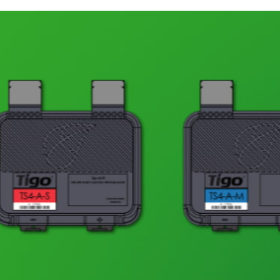
Tigo Energy files patent infringement lawsuit against Chinese company
A unit of US-based Tigo Energy has filed a patent violation lawsuit against Zhejiang Benyi New Energy in the Shanghai Intellectual Property Court, alleging infringement of its rapid shutdown technology.

Mimicking chimpanzees’ hunting behavior to improve PV prediction models
Researchers have used the chimp optimization algorithm to optimize the hyperparameters of five PV power yield prediction machine learning models. This algorithm is based on the cooperative hunting behavior of chimpanzees in nature, mimicking the way they work together to target prey.
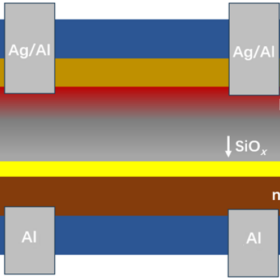
TOPCon solar cell built with printed aluminum paste achieves 22.56% efficiency
Developed by researchers in China, the TOPCon solar cell was screen printed with a paste made of silver and aluminum on the front side and an aluminum-only paste on the rear side. They added silicon to the aluminum paste to reduce metal recombination and improve the device’s open-circuit voltage.

India’s solar pump market set to expand
Gopal Kabra, the founder and CEO of GK Energy, speaks to pv magazine about India’s solar pump market, its key drivers, and future outlook.
