
What are the selling points of marine energy?
Marine energy is renewable and generally predictable. It could thus compensate for the unplanned intermittency of solar and wind generation, its proponents argue. But several challenges still need to be overcome for the energy to become widely used.
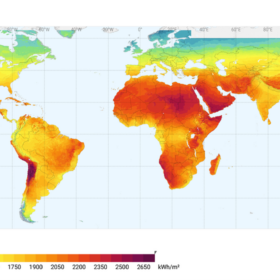
Solar generation performance with regional weather conditions deviating from long-term averages
Global solar PV continues its rapid growth, reaching around 650 GW in 2025, with record solar irradiation extremes across regions such as East Asia, India, and Latin America. With current production capacity and emerging technologies like perovskite-silicon tandem modules, PV is poised to surpass all other electricity generation technologies combined by the end of the decade.
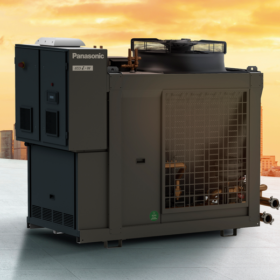
Panasonic debuts propane heat pump for light industrial, multi-residential buildings
Designed for commercial and multi-residential buildings, the Aqua‑G EVO heat pump can replace gas boilers, cascade up to eight units, and integrate with Panasonic’s complete HVAC ecosystem.
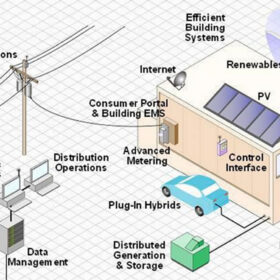
Industry 4.0 technologies raise cyber risks for smart renewables grids
An international research team developed a multi-stage intrusion detection system that uses supervised and unsupervised AI techniques to detect and mitigate cyber threats in smart renewable energy grids. The system can reportedly achieve high accuracy, low false positives, and real-time detection, outperforming traditional intrusion detection system models.
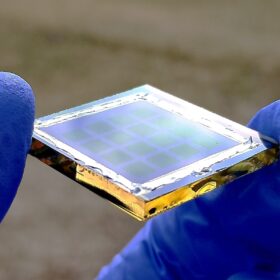
Swedish scientists build bifacial chalcogenide solar cell with 15.1% efficiency
Researchers in Sweden developed a bifacial chalcoprite solar cell using a titanium-doped indium oxide (ITiO) back contact, achieving 68% bifaciality. The device is able to maintain strong front-side performance with around 15% efficiency, 595 mV open-circuit voltage, and 75% fill factor.”
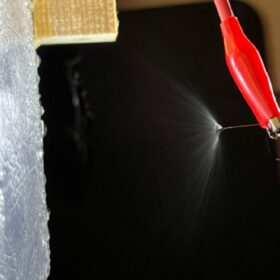
Electrospray cooling can boost PV panel performance with minimal water use
Researchers in Turkey optimized electrospray cooling for PV panels, achieving optimal power output with minimal water use and a compact, energy-efficient setup. Their study identified irradiance, flow rate, voltage, and nozzle distance as ideal parameters.

Germany classifies cybersecurity threats for energy infrastructure
Germany’s Federal Network Agency will use a new, structured framework developed by Fraunhofer IOSB-AST to classify cybersecurity incidents in the energy sector. The methodology enables comprehensive risk assessments, from initial reports to systemic and economic impacts, supporting consistent evaluation across the entire energy value chain.
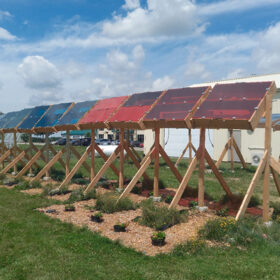
Agrivoltaics for turnips
Researchers in Canada found that semi-transparent cadmium telluride and low-transparency crystalline silicon solar panels can boost turnip root and leaf yields in agrivoltaic systems by optimizing light quality, distribution, and heat stress. Their study highlights that PV module type, transparency, and spectral transmission must be carefully matched to plant physiology to maximize both crop productivity and renewable energy generation.
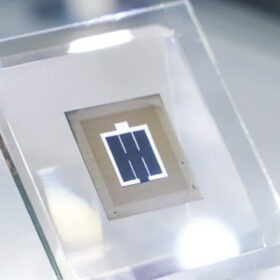
JinkoSolar achieves 32.76% efficiency in perovskite-TOPCon tandem solar cell
The result was certified by China’s National Photovoltaic Industry Metrology Test Center (NPVM). The cell utilizes a perovskite top device with MBT-ligand-controlled crystallization on a TOPCon silicon bottom cell, achieving a void-free, high-efficiency tandem structure.
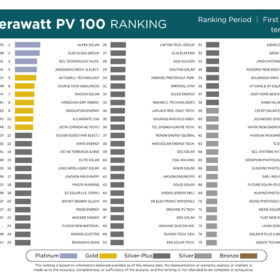
Who are the Top 100 PV manufacturers today?
The Terawatt PV 100 ranks the top 100 solar manufacturing companies using a new methodology based on production scale, financial strength, and corporate transparency, with Tongwei leading the Q1 2026 list and most top firms headquartered in China. The analysis highlights increasing global supply-chain scrutiny driven by tariffs and ESG mandates, while also showing rising influence from Indian companies and strong positions for key materials and equipment suppliers.
