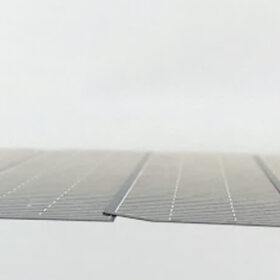
First attempt to build ‘shingled’ perovskite-silicon tandem solar cells
Fraunhofer ISE researchers have demonstrated for the first time the feasibility of the shingling approach with perovskite-silicon tandem solar cells. They also produced full format photovoltaic modules with a power conversion effciency of 22.8%.
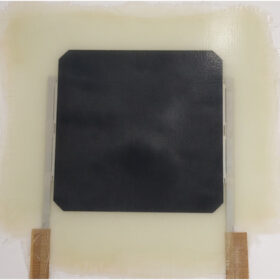
Novel solar module encapsulant based on glass-fiber, epoxy resin
Researchers in Spain have used a glass fiber reinforced composite material with an epoxy matrix containing cleavable ether groups as an encapsulant material for photovoltaic panels. They found that new material still has issues with performance stability, but they also ascertained it ensures lower electrical losses.

Hybrid photovoltaic-tidal energy system for island resorts
Scientists in India have proposed to combine solar PV with tidal energy and storage to cover the entire electricity demand of island resorts. They found the system could help to reduce energy costs for residents and businesses.
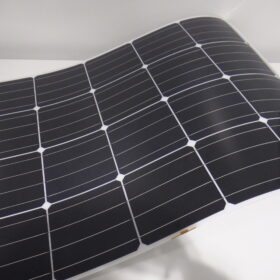
Japanese scientists design flexible crystalline silicon solar modules with PET front cover
The new solar panels have flexible properties and are suitable for roofs with loading restrictions. According to their creators, the modules showed high reliability under both high temperature and high humidity conditions.
India’s NHPC tenders 1.5 GW of renewables storage
NHPC has launched a tender to select developers for 1.5 GW of firm, dispatchable power from renewable energy projects with storage systems across India. Developers can submit online bids until Nov. 13.
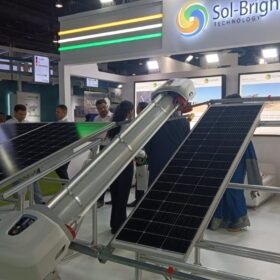
Sol-Bright introduces automated robotic cleaning system for utility-scale solar
China’s Sol-Bright Technology has developed a sixth-generation automated robotic cleaning system for solar panels in utility-scale PV installations. The robot features gear transmission and has a cleaning efficiency of minimum 99.5%.

Integrating sky images, global solar irradiance into solar forecasting algorithms
A research team in the United States has created a novel approach to integrate raw sky images and global solar irradiance measurements, solar nowcasting, and intra-hour forecasting. The methodology utilizes low-cost radiometric IR cameras instead of expensive ceilometers.
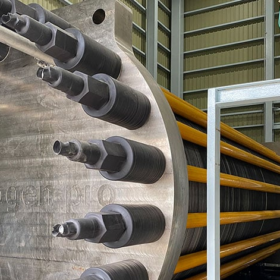
Mitsubishi testing 5.5 MW pressurized alkaline electrolyzers in Japan, Norway
Mitsubishi has conducted short-term validation tests of its 5.5 MW pressurized alkaline electrolyzers in Norway and long-term validation tests in Japan. It plans to incorporate the design of these two single-stack pressurized alkaline electrolyzers into a US project.
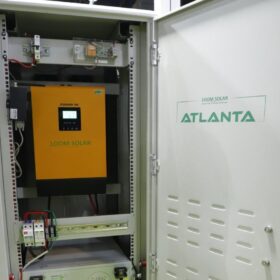
Loom Solar unveils 5 kWh/10 kWh storage system
India’s Loom Solar has developed an Internet of Things (IoT)-based, all-in-one energy storage solution for homes and businesses, featuring lithium iron phosphate (LFP) batteries.
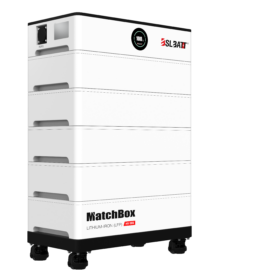
Bslbatt introduces high-voltage battery for residential PV
China’s Bslbatt says its new batteries feature individual battery modules with voltages of 102.4 V and a capacity of 52 Ah. They can be stacked in series with two to seven battery modules.
