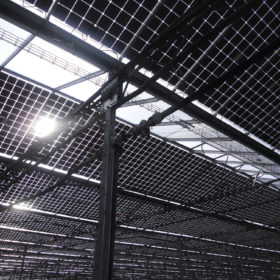
Satellite method estimates albedo for bifacial PV systems in ‘worst-case scenario’ areas
Scientists in the UK have utilized data from two different satellites – Sentinel-2 and MODIS – to develop a new and more accurate approach to estimated albedo for bifacial PV systems in complex landscapes. The novel methodology reportedly achieved a much lower normalized root mean square error than reference methods relying on MODIS only.

Heraeus buys stake in French solar manufacturer HoloSolis
HoloSolis plans to build Europe’s largest PV factory – a 5 GW solar plant in France – by 2025. Heraeus will provide its latest metallization technologies for the factory and play an active role on the HoloSolis board of directors.
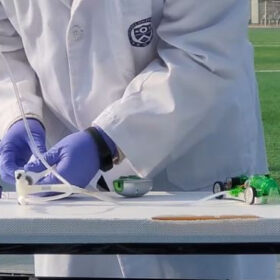
Algae photovoltaics for hydrogen production
South Korea researchers have developed a cell by merging green algae with carbon nanofibers, in order to generate 9.5 W per cell and achieve a peak efficiency of 0.9%. They claim this is enough to power a micro-generation system for hydrogen production.
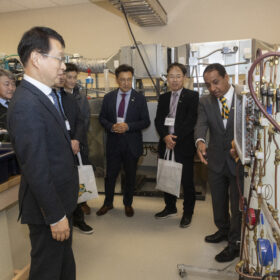
LG targeting Alaska for heat pump deployment, research
LG has formed a partnership with the University of Alaska Anchorage to conduct lab research and perform real-world testing of heat pump technologies, with a particular focus on Alaska’s extreme temperatures.
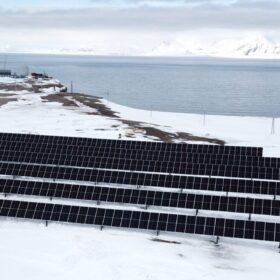
Norwegian developer switches on northernmost ground-mounted PV plant
Store Norske Energi AS has installed a PV system in the Svalbard archipelago, the last inhabited strip of land before the North Pole. The company told pv magazine that the system could reduce the use of fossil fuels by 70% and potentially become a model for the Arctic transition to renewables.
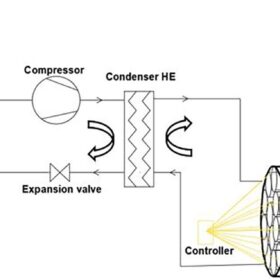
Novel residential solar-assisted heat pump system integrates PCM for heat storage
A British-Chinese research group has developed a novel heat pump concept consisting of a heat pump, the PCM tank, and tube solar heat collectors. Intended for demand shifting in space heating and domestic hot water (DHW) applications, the system is reportedly able to achieve a higher coefficient of performance than conventional heat pumps.
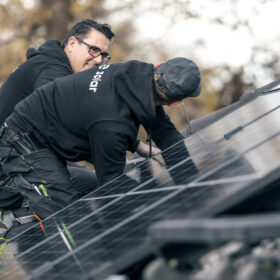
PV, storage may allow 53% of European households to end reliance on grid
A German-Swiss research team has calculated how many homes in Europe could be decoupled from external infrastructure with solar power, batteries, and hydrogen storage.
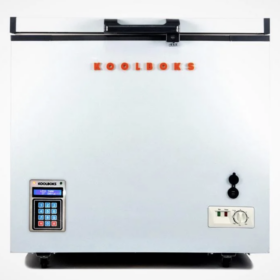
French startup unveils off-grid solar refrigerators
French startup Koolboks has developed off-grid solar refrigerators that offer continuous refrigeration for up to four days via solar modules, ice storage, and lithium-ion batteries. The units are available for rental and include two LED lighting bulbs and USB ports to charge phones.

Israel to use solar fences to protect villages
Against the backdrop of its war with Hamas, Israel has started allowing villages to install solar fences to improve protection for residents.
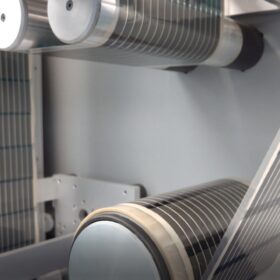
InfinityPV presents measurement system for roll-to-roll thin film PV manufacturing
A new imaging system for contactless defect detection in roll-to-roll printed thin film solar cell manufacturing lines is available from InfinityPV, a Danish printed electronics equipment manufacturer. The so-called ultrafast laser beam induced current mapping system is suitable for manufacturers of perovskite, organic, kesterite, copper indicum gallium diselenide (CIGS) and amorphous silicon PV foils and can be retrofitted into existing roll-to-roll lines.
