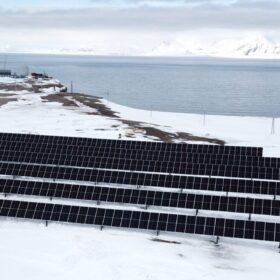
Norwegian developer switches on northernmost ground-mounted PV plant
Store Norske Energi AS has installed a PV system in the Svalbard archipelago, the last inhabited strip of land before the North Pole. The company told pv magazine that the system could reduce the use of fossil fuels by 70% and potentially become a model for the Arctic transition to renewables.
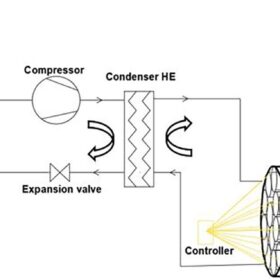
Novel residential solar-assisted heat pump system integrates PCM for heat storage
A British-Chinese research group has developed a novel heat pump concept consisting of a heat pump, the PCM tank, and tube solar heat collectors. Intended for demand shifting in space heating and domestic hot water (DHW) applications, the system is reportedly able to achieve a higher coefficient of performance than conventional heat pumps.
PV, storage may allow 53% of European households to end reliance on grid
A German-Swiss research team has calculated how many homes in Europe could be decoupled from external infrastructure with solar power, batteries, and hydrogen storage.
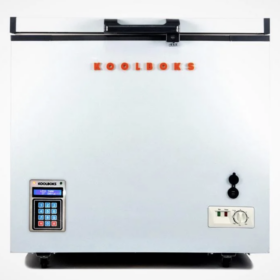
French startup unveils off-grid solar refrigerators
French startup Koolboks has developed off-grid solar refrigerators that offer continuous refrigeration for up to four days via solar modules, ice storage, and lithium-ion batteries. The units are available for rental and include two LED lighting bulbs and USB ports to charge phones.

Israel to use solar fences to protect villages
Against the backdrop of its war with Hamas, Israel has started allowing villages to install solar fences to improve protection for residents.
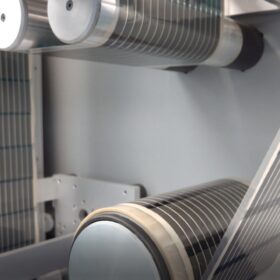
InfinityPV presents measurement system for roll-to-roll thin film PV manufacturing
A new imaging system for contactless defect detection in roll-to-roll printed thin film solar cell manufacturing lines is available from InfinityPV, a Danish printed electronics equipment manufacturer. The so-called ultrafast laser beam induced current mapping system is suitable for manufacturers of perovskite, organic, kesterite, copper indicum gallium diselenide (CIGS) and amorphous silicon PV foils and can be retrofitted into existing roll-to-roll lines.
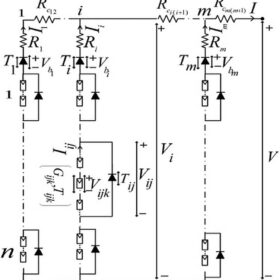
Novel algorithm estimates global maximum power point in partially shaded PV systems
Developed by scientists in India, the global maximum power point (GMPP) technique is based on the voltage and current of strings in a PV array. The research group tested it in computer simulation, as well as through an experimental setup.

Ascent Solar announces 17.55% efficiency for CIGS tech
Ascent Solar, a US-based manufacturer, has achieved an efficiency of 17.55% for its copper, indium, gallium and selenide (CIGS) technology. It says it plans to release a new CIGS solar module with this efficiency rating soon.
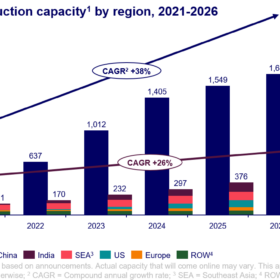
China expected to dominate solar manufacturing through 2026
A Wood Mackenzie report forecasts that China will hold more than 80% of poly, wafer, cell and module manufacturing capacity for the next three years.

SunDrive secures funds to expedite production of silver-free HJT solar cells
SunDrive Solar, a Sydney-based startup working to replace the silver in solar cells with copper, has obtained AUD 11 million ($7 million) from Australian Renewable Energy Agency (ARENA) to expand its metallized cell production to a commercial scale of more than 100 MW per annum.
