
All-weather imaging tech to detect PV module faults
The system combines software that applies a modulated electric current to the PV panels and an indium-gallium-arsenide (InGaAs) photodiode detector that takes a sequence of images of the panels. According to its creators, the proposed technique works with any lighting conditions and in all weather.
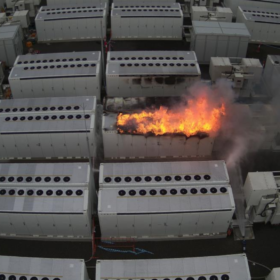
Australia’s biggest battery cleared for testing following fire
Energization testing is set to resume this week for Neoen’s 300 MW/450 MWh Victorian Big Battery, following a fire that caught global attention and destroyed two of its Megapacks on July 30.
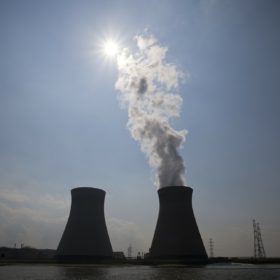
Renewables vs. Nuclear: 256-0
The latest World Nuclear Industry Status Report shows that the world’s operational nuclear capacity grew by just 400 MW in 2020, with generation falling by 4%. By contrast, renewables grew by 256 GW and clean energy production rose by 13%. “Nuclear power is irrelevant in today’s electricity capacity market,” the report’s main author, Mycle Schneider, told pv magazine.
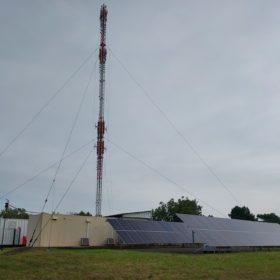
Solar-plus-hydrogen for air traffic control
A 19.8 kW PV system is powering a telecommunications antenna at a French air control center. When it produces more energy than needed, the surplus is used to produce hydrogen which is then utilized to produce new electricity via a fuel cell system and provide power to the antenna during a period of up to five days. For short-term storage, lithium-ion batteries are used.
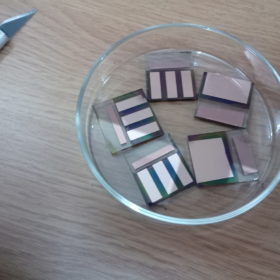
Large area perovskite solar cell with copper metal contact
An Indian research group has built a perovskite cell that has a metal contact based on copper, instead of expensive gold. The device showed almost the same efficiency as a cell developed with gold metallization but its stability was much lower. In order to overcome this issue, the scientists suggest using a metal contact made of a thin layer of gold and a thicker, overlying copper layer.
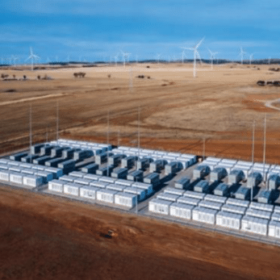
Australian regulator takes Tesla big battery to court
The Australian Energy Regulator has filed a lawsuit against the Hornsdale Power Reserve, which is owned and operated by French renewable energy developer Neoen, over claims that it failed to provide the grid security services it was paid to deliver.
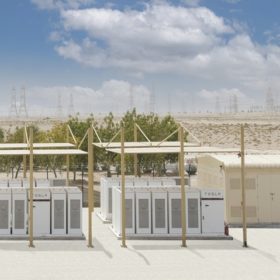
Tesla’s storage facility comes online at Mohammed bin Rashid solar park in Dubai
The 1.21 MW/8.61 MWh storage facility is the second battery deployed at the 5 GW solar park. The system allows bi-directional charging.
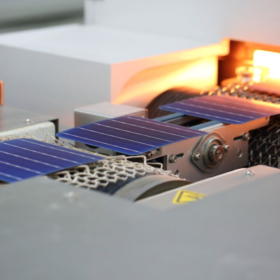
Australian research shows tandem cells should follow PERC for multi-TW production
A new paper from the University of New South Wales underscores the urgent global need for tens of terawatts of PV to replace fossil fuels by 2050. The researchers say it’s time to focus on the most sustainable technologies, before reserves of silver, indium and bismuth dry up.

Interface engineering for a stable, 23.4% efficient perovskite solar cell
Scientists led by Switzerland’s École Polytechnique Fedérale de Lausanne (EPFL) demonstrated a simple approach to designing the interface between two layers in a perovskite solar cell, which was shown to improve both the performance and stability of the device. Solar cells fabricated by the group achieved 23.4% conversion efficiency, and were operated for close to 6,000 hours before degrading beyond 80% of this initial value.
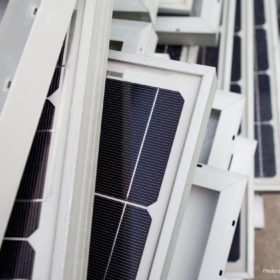
Circular economy could support India’s push for clean energy, self-reliance
The recovery of valuable raw materials from end-of-life solar panels and batteries presents a great opportunity for India to secure future supplies as the nation chases its ambitious renewable energy targets.
