
CEA-Ines achieves 19.2% efficiency for flexible perovskite solar cell
The cell was fabricated with a flexible substrate made of indium tin oxide (ITO) and polyethylene terephthalate (PET). The device was tested through a damp heat test and showed it can retain around 90% of its initial efficiency after 800 hours.
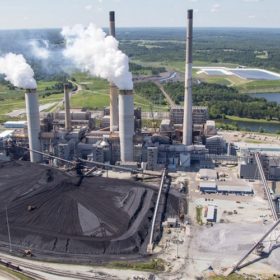
Novel approach to turn coal plants into energy storage stations
From pv magazine USA Malta Inc. and Duke Energy, using a Department of Energy grant, are partnering on a one-year study to assess the socio-economic, environmental, and operational issues behind converting retiring coal units into long-duration, zero-emissions energy storage systems. The two companies will look at integrating Malta’s 100 MW, 10-hour pumped heat energy storage […]
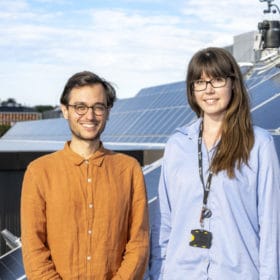
How much solar energy is lost through automated inverter settings?
In a huge data-crunching project designed to inform rooftop solar-export policy and regulations, Australian technical and social researchers delve into the costs and effectiveness of inverter standards.
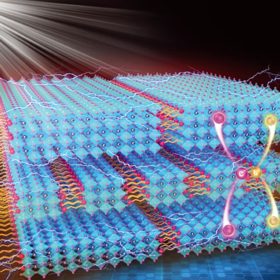
Sandwich structure of quasi-2D perovskite film nourishes next-gen solar development
Even as solar researchers strive to squeeze every drop of efficiency from the industry-ruling silicon solar-cell technology, scientists are constantly questing for the next, cheaper, more efficient way of harvesting the sun’s energy to power human endeavours. The appetite for accelerating 2D perovskite solar cell development has just been piqued!

Next2Sun unveils bifacial photovoltaic fence
The solar fence has an output of 400 W per fence section. It is built with heterojunction or n-type PERT bifacial cells developed by the German start-up and relies on its vertical mounting technology for bifacial photovoltaic panels.

TCO-free heterojunction silicon solar cell with 22% efficiency
The cell was built with a phosphorus-doped n-type Czochralski (Cz) silicon wafer with a resistivity of 1.09Ωcm and a thickness of 170mm. Ti/Au/Ag metal stacks were used for the contact with the hydrogenated amorphous silicon (a-Si:H) layers.
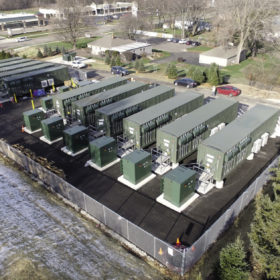
Pairing a battery with solar could cut its overall value, Berkeley Lab report says
Separating generation from storage usually delivers higher value, but it may also deliver higher costs, the report said.

Hybrid wind-solar could make green ammonia cost-competitive in niche markets by 2030
According to a new study from the LUT University, hybrid wind-solar plants offer the ideal profile to reduce the costs of green ammonia. Although natural gas will be able to provide lower prices over this and the next decade, beyond 2040 ammonia generated by wind and solar may reach a price of between €300 and €330 per ton.
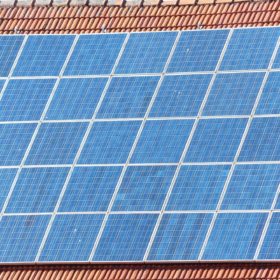
Optimization model to combine residential PV with hybrid hydrogen storage
German scientists have outlined a model to combine hydrogen storage with conventional battery storage in high-efficient energy buildings powered uniquely by photovoltaics. In the proposed configuration, the DC power of the PV system is connected directly to the hybrid hydrogen system, a lithium-ion battery, an electric water heater, and an inverter, which in turn would provide AC current to the household and a heat pump.
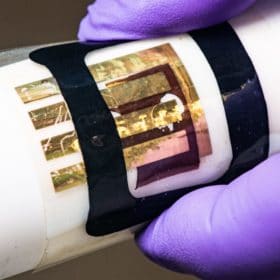
US scientists gain an atom-level view into perovskite cell efficiency
Using Department of Energy laboratories, scientists learned at the atomic level that a liquid-like motion in perovskites may explain how they efficiently produce electric currents.
