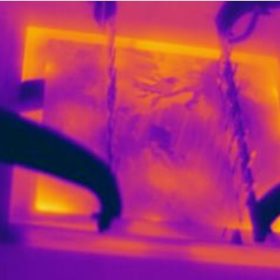
New protocols identify solar cell failures during production
Two new pass/fail protocols are said to be able to separate cells which present high hot-spot possibility, show high current leakage and demonstrate intermediate behavior. The sorting technique relies on a manual solar simulator, an infrared camera and a tool to measure isolation.
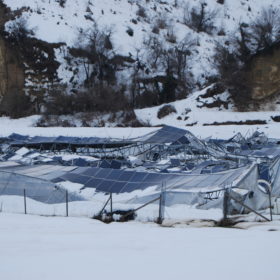
The cost of building stronger PV systems
Scientists in the U.S. have estimated the expense of strengthening solar systems. The researchers stressed that the upfront investment needed to take 13 key measures may be outweighed by the benefits.
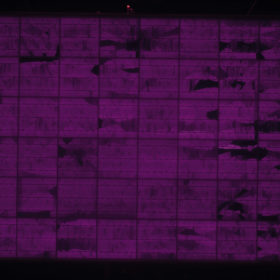
How the cracks are forming
Scientists in the United Kingdom have investigated the formation of cracks in PV cells, confirming that the high temperatures cells are exposed to during soldering for interconnection are a leading cause of cracking. Their findings will aid future research into module reliability and predictions of how cracks are likely to form.
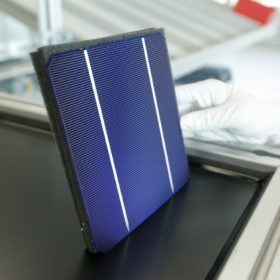
Foil method for PID test misleading if only one side of bifacial module is stressed
Results from PID stress tests can be misleading when bifacial PV modules are PID-stressed from just one side using the foil method in IEC TS 62804, according to a new study by Belgian researchers. An unintended electric field arises between the non-stressed side of the cell and the grounded interior of the climate chamber, which may have the undesired effect of causing additional PID stress.

Techno-economic analysis of PV-powered golf carts
Danish researchers have shown that adding 250 W solar panels to all of the buggies in a 50-cart fleet is a profitable investment. With an upfront investment of around €75,000, annual benefits of around €15,000 are possible, they claim.
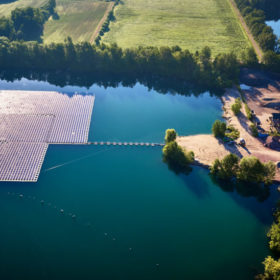
German floating PV plant works better than expected
The volume of solar electricity generated and proportion of self-consumption at the Lake Maiwald floating plant have both surpassed expectations. Gravel company Ossola has been able to reduce its electricity bill 10% as a result.

Rooftop solar window based on semi-transparent perovskite solar cells
A prototype of an energy-harvesting, solar-powered smart window device has been developed by scientists from the U.S. Department of Energy’s Argonne National Laboratory. The window was created by integrating a semi-transparent perovskite solar cell and a multi-layer nanophotonic coating.
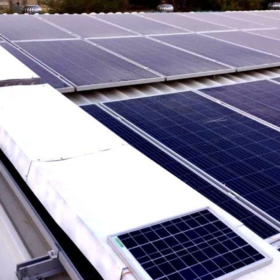
Water-free module cleaner for residential PV systems
A newly developed autonomous robotic cleaning solution for modules uses artificial intelligence to clean daily or on demand, without substantial human input.
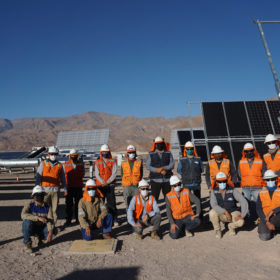
The world’s sunniest PV testing field
French energy giant Engie recently commissioned a solar module testing facility in Chile’s Atacama Desert, a region which has the world’s highest solar radiation. Thore Müller – head of bifacial PV R&D and solar services at Engie Laborelec, talked to pv magazineabout the advantages of testing panels, inverters and cleaning systems in hot, arid environments.
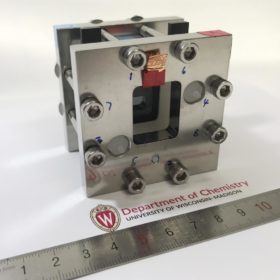
Redox flow battery powered by perovskite solar cells
An international team has developed an integrated solar flow battery which has been suggested as ideal for off-grid locations. The device, which combines energy conversion and storage in one unit, can be used for lighting and recharging cell phones.
