
Bidders line up for Ecuador renewables auction
The final results of the exercise, which attracted 22 participants, will be known on April 15. A 200 MW solar project will be assigned in the auction, with the winning bidder for that facility securing a 20-year power purchase agreement.

Algerian 150 MW solar tender secures final price of $0.069/kWh – and only a third of the capacity
The Algerian Electricity and Gas Regulation Commission has concluded a tender launched in June. The one solar project selected will sell power at DZD8.28/kWh. The authority reportedly only published ceiling prices for energy bids on the day the exercise was completed.
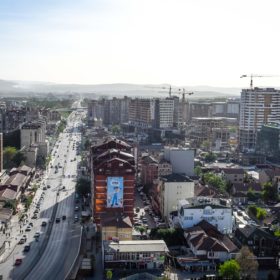
Kosovo preps 50 MW solar tender
The Balkan nation is planning a tender for 50 MW of utility scale solar capacity on a public-private partnership basis with help from the International Finance Corporation. The World Bank’s private finance arm is procuring a technical, environmental and social consulting firm to advise on the project.

Eswatini 40 MW solar tender attracts 13 approved bidders
The regulator received 26 proposals overall for a project intended to make the kingdom less dependent on power imports from troubled South African utility Eskom.

Afghanistan kicks off tender for another 40 MW solar project
The facility will be developed under the World Bank’s Scaling Solar initiative on a public-private partnership basis in Herat province.
Trina the only solar winner in Colombian energy auction
The Colombian government has revealed more details of the renewable energy procurement exercise finalized on Monday. Chinese manufacturer Trina was the bidder behind all three successful solar projects in the auction.

Colombia’s first solar and wind power auction brings average price of $0.027/kWh
Three solar projects and five wind facilities were contracted in the procurement exercise. The auction’s final average electricity price was COP95/kWh, with a maximum bid of COP110.
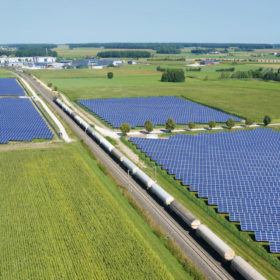
German PV tender brings average solar price of €0.049/kWh
The average price in the October round of Germany’s solar capacity procurement program fell back below the five-cent mark, helped by expansion of the quota for solar on Bavarian agricultural land. Nineteen of the 27 projects allocated by the Federal Network Agency were such schemes.
South Africa plans to allocate at least 6 GW of large scale solar by 2030
That would take the country to 8.28 GW of generation capacity by the end of the next decade with the government stating up to 6 GW of small scale capacity could be required on top. By that stage, however, coal would still amount to 43% of generation capacity and gas and diesel a combined 8.1%, under the new Integrated Resource Plan.

Average solar power price in Brazilian A-6 auction reaches $20.52/MWh
Only 530 MW of the 2.97 GW of renewable energy generation capacity contracted in the procurement exercise went to solar. Eleven solar projects were successful and their final electricity prices were far below those offered by competing technologies.
