
Improving roll-to-roll slot-die coating via machine learning
University of Sheffield researchers developed a machine learning framework to improve coating properties in a roll-to-roll slot die coating process. The work is seen as an initial step toward broader use of machine learning and related technologies to assist with optimization.
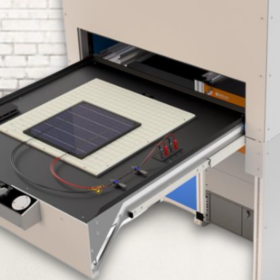
Wavelabs unveils tester for mini perovskite solar modules
The Germany-based testing equipment manufacturer has launched mini-module testing equipment targeted at researchers working on scaling perovskite solar cell technology, thin film devices, and wafer-based PV.
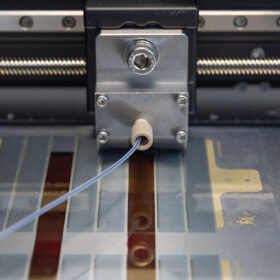
InfinityPV unveils slot die coater for thin-film PV research
The customizable, compact sheet coater supports coating speeds from 1.2 mm/sec up to 33 mm/sec.
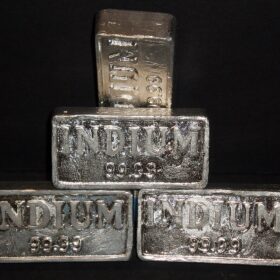
China imposes export controls on critical minerals for thin-film PV
China has announced new export restrictions on materials essential for the thin-film solar industry, including critical minerals such as tungsten, tellurium, and indium.
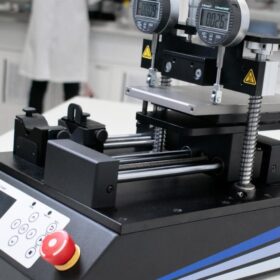
New lab-sized slot die coater for thin film PV
Ossila, a U.K.-based scientific equipment and materials supplier, has launched a new version of its slot die coater for research labs. It is suitable for teams working on thin film photovoltaics at the scaling-feasibility test stage.
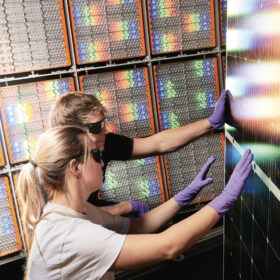
Shedding light on tandem perovskite solar cell progress
Perovskite PV devices are set to become the next big thing in solar with market analysts at S&P Global Commodity Insights predicting 1 GW of production by the end of 2024, rising to 6 GW in 2025. Perovskite tandem devices are at the front of the queue for commercialization but their characterization presents technical challenges.
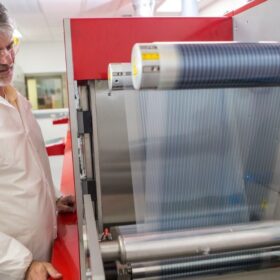
Danish slot die coating equipment manufacturer raises capital for expansion
Denmark-based slot-die coating equipment manufacturer FOM Technologies raised DKK 43.60 million ($6.3 million) to finance the next stage of growth, which includes expansion of sales in the United States.
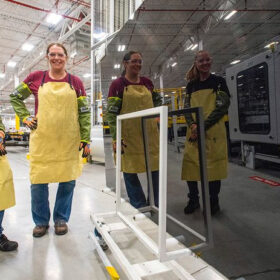
Weekend Read: The fruitful search for other thin films
First Solar and its cadmium telluride (CdTe) technology dominate thin-film solar in the mainstream market. Valerie Thompson looks at the US-based business and the future of thin-film PV technology.
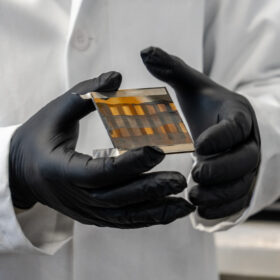
Commercial perovskites imminent
Andries Wantenaar, a solar analyst at Rethink Energy, explains why he sees a bright future for perovskite PV cells, with technological advancements and major R&D investment paving the way for revolutionary change.

Weekend Read: New turf for thin films
Thin-film technologies have long promised to make a major impact on the solar industry but have largely been constrained to niche applications and research labs if they were not shredded by the market. After several false starts, current trade dynamics and promising research programs may help solar thin films find their place in the sun.
