
FuturaSun, TNO sign bifacial solar cell collaboration
FuturaSun and The Netherlands Organization for Applied Scientific Research will work together on advancing the design of bifacial n-type silicon solar cells, with the technology to be integrated into FuturaSun’s Silk Nova solar modules.
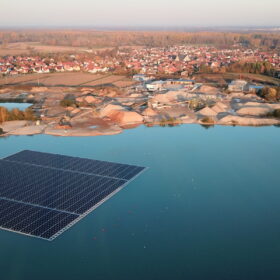
IEA PVPS certifies that floating PV systems have small carbon footprint
Floating systems cause slightly more CO2 emissions than land-based solar systems, mainly because of the additional components for the structure. But overall, they also perform very well from a climate perspective.
Weekend Read: Getting to the bottom of TOPCon degradation
Should the industry be alarmed at the potential degradation susceptibility of tunnel oxide passivated contact (TOPCon) solar cells? Or are the problems easily addressed and more a reflection of rushed-to-market products? pv magazine contributor and consultant Götz Fischbeck reports.
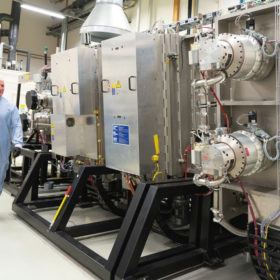
Weekend Read: Industry and researchers in tandem
As efficiency records tumble and devices become more stable, Europe is seeing the beginnings of a race to commercialize high-efficiency perovskite-silicon tandem solar products, reports Valerie Thompson.
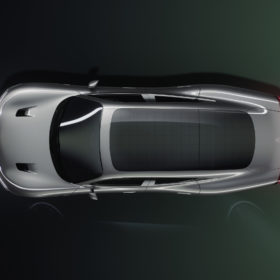
Efficiency of solar vehicles in real-world conditions
A new three-year pilot project will assess the efficiency of vehicle-integrated PV and verify it with on-the-road monitoring and testing. The goal is to predict the charging infrastructure needed for electric vehicles with PV modules.
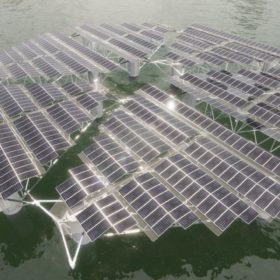
North Sea offshore floating solar project secures funding
A Dutch offshore floating solar consortium has obtained €7.8 million ($8.07 million) to test and develop a solar platform at an offshore wind farm in the North Sea. The 500 kW pilot project is expected to wrap up testing and monitoring by the end of 2024.
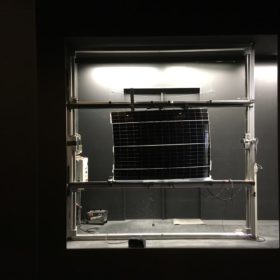
Vehicle-integrated PV reduces EV charging time in sunny regions by 40%
Dutch scientist Bonna Newmann spoke with pv magazine about the present and future of vehicle-integrated PV from a technological and economic perspective. Solar panels installed on cars could have a payback time of only three or four years and ensure 10,000 km of pure PV-generated road travel per year, she said. Furthermore, if you live in a sunny place, you can drive an electric car with solar panels for weeks during summertime, without the need for recharging, she pointed out.
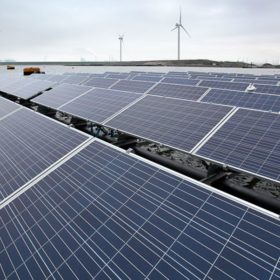
System design key to enhancing cooling effect of water in floating PV
Researchers in the Netherlands and Singapore have measured irradiance-weighted average temperatures of floating PV systems in both countries and have compared the results with reference rooftop and ground-mounted PV systems. They have discovered that floating PV systems with open structures, which allow wind to pass beneath the modules, can provide a higher heat loss coefficient.
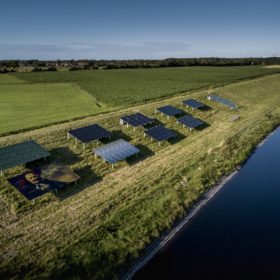
Challenging plans to deploy PV on dikes
Dutch researchers are trying to determine whether large-scale PV projects can be deployed on flood-control dikes across the Netherlands. A 5 MW solar project has already been built on a dike near Groningen, but the researchers believe there is potential to build up to 2.9 GW of PV on such embankments.
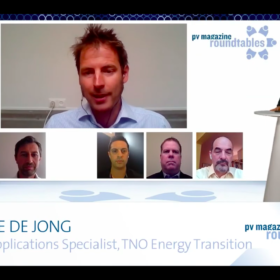
pv magazine video: New tech not without teething pain
pv magazine’s Quality Roundtable this year brought together experts from a broad range of applications relevant in the solar industry. The overarching theme this year was quality concerns with new technologies. Experts from companies and research institutes held that the failures that the industry has observed with technologies such as 2P single-axis trackers are not inherent in the technology but can be addressed.
