
Opes Solar Mobility starts VIPV module production
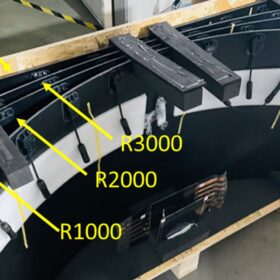
Opes Solar Mobility has opened a 12,000-square-meter facility near Leipzig, Germany, to produce flexible photovoltaic modules for commercial and recreational vehicles, supplying partners across Europe, Africa, and South America.
Progress on standardized tests, protocols for vehicle-integrated photovoltaics
Researchers from University of Miyazaki in Japan have published a technical background paper about testing protocols to address the unique challenges of vehicle integrated photovoltaic (VIPV) modules. It features the background on a new numerical probability model that incorporates shading, partial-shading, dynamic shading, uneven terrain and modules’ curvatures.

Equipping transport trailer fleets with solar PV for fuel savings
Dutch solar PV systems integrator IM Efficiency has launched a complete solar PV system that includes battery and energy management system to power electrical systems on freight carrying trucks and transport trailers.
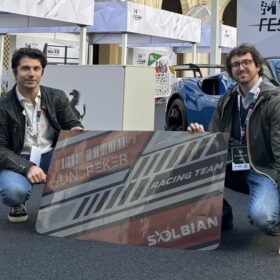
Solbian, Sunspeker unveil customizable solar modules for vehicle-integrated photovoltaics
The two Italian companies said their new modules use a fully recyclable sticker that can help to improve aesthetics and turn the panels into advertising billboards. The panels use 24%-efficient interdigitated back-contact solar cells from Maxeon.
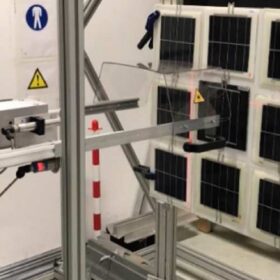
Hail-resistant front covers for vehicle-integrated photovoltaics
Researchers at Germany’s Fraunhofer ISE have tested glass fiber-reinforced polymer as a front cover material vehicle integrated PV modules, finding that it has the potential to reduce weight by 44% to 74 % compared to conventional glass-covered modules. Experimental devices withstood hail tests, avoiding cell cracking after impact.

Quantifiying benefits of vehicle-integrated photovoltaics
Austrian researchers developed a model to quantify the benefits of vehicle integrated photovoltaic (VIPV) on the energy needs of three different sizes of electric vehicle in the city of Graz, Austria, particularly the effect on battery energy and vehicle mileage.
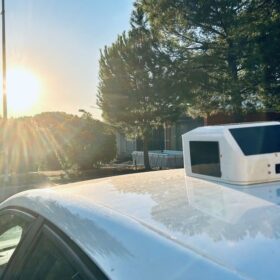
New model for diffuse, shadow effects on vehicle-integrated photovoltaics
Researchers at the Polytechnic University of Madrid have validated a model to simulate solar resources for vehicle integrated PV in urban settings, taking into account reflections and shadows of buildings and objects.
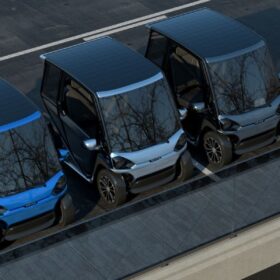
Lightweight mobility with vehicle-integrated photovoltaics
A European consortium of commercial and research groups is developing lighter weight, solar-powered, cost-conscious, three and four-wheel prototype vehicles for passengers and cargo. The $13.4 million project aims for a platform that has standardized components, including the battery, powertrain, and solar PV parts, as well as support for end-of-life, maintenance, and refurbishment.
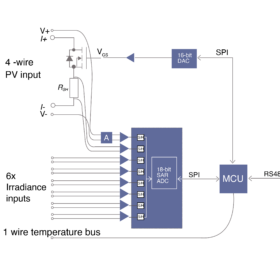
Monitoring system for vehicle-integrated photovoltaics
Researchers in Slovenia have built a monitoring system for vehicle-integrated photovoltaics consisting of an IV curve scanner that uses a MOSFET as a voltage-controlled electronic load. The system also utilizes an 18-bit analog-to-digital converter and a microchip microcontroller.
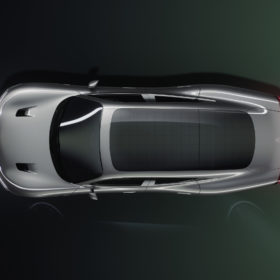
IEC develops standards for vehicle-integrated photovoltaics
In its first monthly column for pv magazine, the International Electrotechnical Commission (IEC) explains how a team of its experts is currently working on the definition of new standards for VIPV systems.
