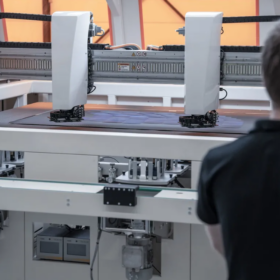
Nissan wheels out solar-powered vehicle
The Ariya demonstration vehicle features 3.8 m² of Lightyear’s custom solar panels integrated across the hood, roof, and tailgate. Testing showed that the car could generate 0.5 kWh of solar energy during a 2‑hour, 80 kilometer trip, delivering up to 3 kilometers of range at no extra cost or charging time.
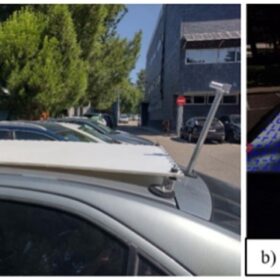
Test tracking algorithms for vehicle-integrated photovoltaics
Researchers in Spain developed a new model incorporating dynamic shading conditions in Madrid to evaluate the yield and test control algorithms for vehicle-integrated PV (VIPV) systems.
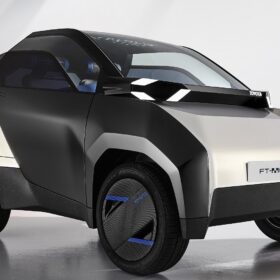
Toyota developing two-seater electric vehicle with solar roof
Toyota Manufacturing UK says it is leading a consortium to investigate the feasibility of a lightweight micro-mobility electric vehicle with a PV roof, digital connectivity, and sustainable components.
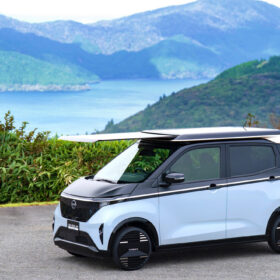
Nissan presents mini electric vehicle with expandable solar roof
The Japanese car maker announced it will show a prototype extendable solar PV rooftop onboard a Nissan Sakura Kei at an upcoming mobility industry event in Japan.

Opes Solar Mobility starts VIPV module production
Opes Solar Mobility has opened a 12,000-square-meter facility near Leipzig, Germany, to produce flexible photovoltaic modules for commercial and recreational vehicles, supplying partners across Europe, Africa, and South America.
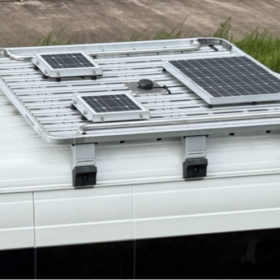
Shadow-aware route planning for vehicle-integrated photovoltaics
Japanese researchers have proposed a method for future vehicle-integrated photovoltaic route planning. It integrates environmental shading effects based on satellite and geographic information system data.
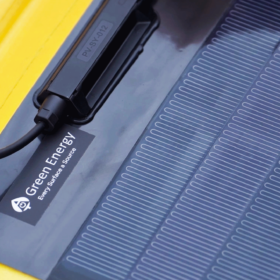
Vehicle-integrated photovoltaics for biofuel-powered transport trucks
DHL Freight Sweden and Denmark-based Green Energy Group announced a one year nationwide pilot in Sweden to test the use of vehicle integrated PV with a fleet of biofuel-powered transport trucks.

Vehicle integrated PV potential measured over a million km in Netherlands, Germany
Researchers have collected data from solar sensor-equipped vehicles, racking up over a million km mainly in the Benelux and German region, to be able to make more accurate efficiency and yield predictions. The research project is part of an ongoing three-year European assessment of VIPV.
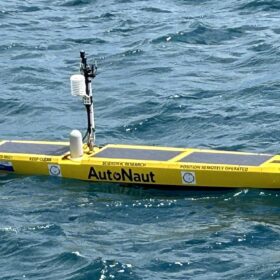
Solar, wave-powered uncrewed vehicle for marine monitoring
UK-based Autonaut offers wave-propelled and solar PV-powered drones capable of data collection at sea for several months at a time.

How to measure solar cell vibrations in vehicle-integrated photovoltaics
Researchers at the University of Miyazaki in Japan used a new non-destructive method to enable them to investigate solar cell vibrations independently of module components. The study included potential design features for resonance-resistant vehicle integrated PV modules that would increase the natural resonance frequency to above 2,000 Hz.
