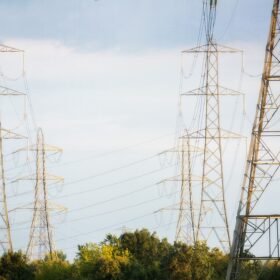
Grid balancing costs up 10% in Great Britain, may hit GBP 8 billion in 2030
Transmission infrastructure buildout essential to curb rising cost of balancing Great Britain’s electricity grid, according to electricity system operator. New report finds thermal constraints were main driver of increased balancing costs, with planned outages in Scotland coinciding with high wind outturn.

PV outperforms wind, piezoelectric energy in street lighting
Scientists in Thailand have assessed which technology between PV, wind, or piezoelectric energy is better for powering street lighting and have found solar is the winning tech, as it proved both economically and technologically feasible.
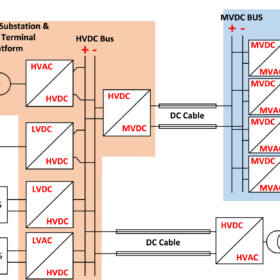
Maltese scientists design offshore virtual power plant integrating PV, wind, storage
The proposed virtual power plant (VPP) integrates a platform-to-ship (P2S) setup to electrify anchored and bunkering ships, while also providing surplus electricity to the country’s grid. The system was designed to operate through a 200 MW floating wind farm and a 300 MW floating PV plant, with battery and compressed air systmes being used for energy storage.

French asset manager Mirova invests €480 million in Austrian developer RP Global
The transaction, consisting of equity and convertible bonds, will cover Italy, Germany, France, Spain, Portugal, Poland and Croatia. RP Global aims to commission 2.5 GWp of renewable power in the next five years.

Depreciation of €222 million pushes Baywa’s result to zero
The Munich-based group generated significantly lower sales in the first half of the year. In addition, it had to make large write-downs, particularly in its renewable energy business.
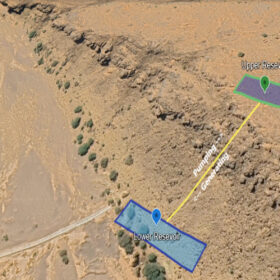
Combining hybrid wind-solar with pumped hydro in rural electrification
Scientists in Morocco have evaluated how hybrid wind solar plants may be combined with pumped hydro storage to power remote rural areas. The proposed system was found to have an LCOE $0.03831/kWh and a 86% use factor.

The effects of wind on single-axis PV trackers
Scientists in South Africa have conducted full-scale research on the effect of wind load on PV panel mounting rails for more than 100 days. Compared to standard design codes, they found lower combined wind load coefficients. Maximum loads occurred for an easterly wind direction.
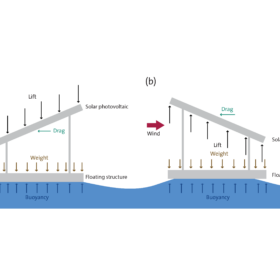
Assessing wind sensitivity of offshore floating solar
Researchers in China have conducted a numerical study on the wind sensitivity of offshore floating solar plants. They have tested six row-arrangements of panels and have found an optimal system configuration that is reportedly less sensitive to wind direction.
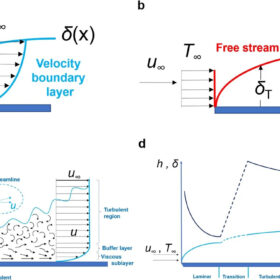
Wind speed increases could cause PV yield losses
A Spanish research group says air flux variations over different parts of solar plants could also lead to mismatch losses. Past. studies have only looked at the benefits of high wind speed on PV arrays, which enhances module cooling.
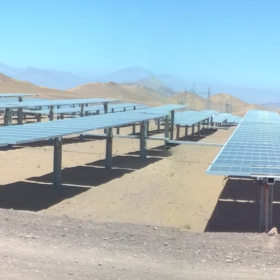
Case study: When trackers are blown away, you can’t blame the wind
If the industry has sufficient knowledge and experience to deal with the effects of strong wind, why do trackers still get damaged and destroyed? pv magazine’s Pilar Sanchez Molina looks at a recent example in Spain with PI Berlin’s Asier Ukar.
