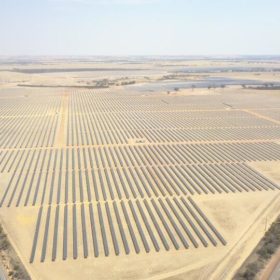
Danish fund backs 5 GW Australian renewable hydrogen project
Copenhagen Infrastructure Partners and Hydrogen Renewables Australia have agreed to develop the 5 GW Murchison Renewable Hydrogen Project in Western Australia. It will use PV and wind to produce hydrogen fuel for export to Japan and South Korea.
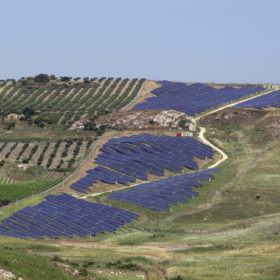
Solar secures 95.5 MW in Italy’s third renewables auction
The Italian authorities have awarded four solar projects in yet another undersubscribed renewables tender, with the nation’s top clean energy association criticizing the auctions for being uncompetitive. The lowest price for PV came in at €0.064 ($0.075)/kWh.

Solar, wind expanding rapidly in US market
Solar has accounted for nearly 3.4% of total national generation thus far this year, with wind contributing 8.5%. Coal, meanwhile, has plunged from about 30% last year to just 17.8%.
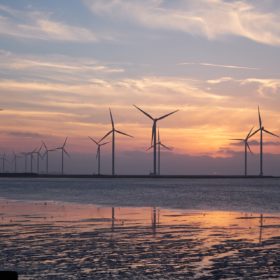
Testing floating PV, storage and hydrogen at Netherlands’ largest off-shore wind complex
Energy companies Shell and Eneco have secured the tender to build the 759 MW wind power plant. The partners will build a pilot solar park, short-term storage capacity and a green hydrogen plant at the facility, to assess their capabilities of balancing intermittent power.
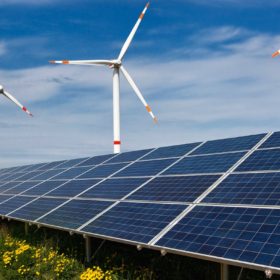
Renewables met half Germany’s power demand in first half
The Federal Environment Agency said clean energy provided 8% more electricity in the first six months of the year than in the same period of 2019. Solar accounted for 28 TWh.
A perovskite electrode to improve hydrogen production
The material was used by scientists in the U.S. in electrochemical cells which use electricity to separate steam into hydrogen and oxygen. The researchers say the oxide of perovskite used in the electrode improves cell performance and reduces operating temperatures.
Varying capital costs favor wind over solar in Europe
Differing finance costs across the continent are likely to see wind-rich, high electricity demand nations such as Germany, France, Austria and Belgium forge ahead with renewables at the expense of countries with plenty of sun but where borrowing is expensive, according to a German study.

Eastern Spain to host 1.58 GW solar park
Spanish energy company Endesa is planning to build a 1,725 MW renewable energy complex in the Spanish town of Andorra, in the province of Teruel. The €1.48 billion project is set to comprise 1,585 MW of solar generation capacity, 139 MW of wind turbines and a large scale storage system, and will replace coal power plants Endesa wants to close in Andorra (Teruel) and Compostilla (León).

100% renewables means 95% less water consumption for conventional power generation
According to a new study by Finland’s LUT University, solar PV consumes between 2% and 15% of the water that coal and nuclear power plants use to produce just 1 MWh of output; for wind, this percentage ranges from 0.1% to 14%. Under the researchers’ best policy scenario, water consumption could be reduced by 75.1% by 2030, compared to 2015 levels.

Solar and wind offer safest route to decarbonized electricity mix
The mature renewable energies are the most efficient power resources to slow down global warming and reduce human health impacts, according to a new study published in Nature Communications. The authors claim renewable energy generation capacity is also the best way to reduce land use, toxicity and drinking water depletion.
