
Tax credit transfers driving growth in third-party solar ownership, says Wood Mackenzie
Third-party ownership dominated the US commercial and community solar market, reaching 72% a share in 2024, says Wood Mackenzie.

US bill poses challenges to renewable energy industry
Proposed US budget could deter renewable energy development and weaken domestic manufacturing by phasing out key clean energy tax credits early, says a Wood Mackenzie analyst.

WoodMac tips Australia to fall short of 82% renewables goal
Wood Mackenzie predicts Australia will fall well short of its target of 82% renewable generation by 2030 due to grid connection delays, inadequate investment, and moves from some state governments to scale back their clean energy ambitions.
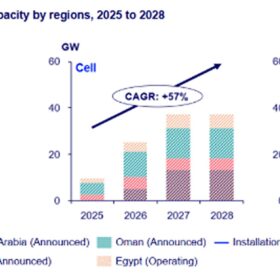
Middle East, North Africa solar manufacturing capacity to reach 44 GW by 2029, says WoodMac
Wood Mackenzie forecasts the Middle East and North Africa region will emerge as a tariff haven and overtake Southeast Asia as a top solar export hub, becoming the primary exporter of solar panels to the US towards the end of this decade.

pv magazine Focus: As storage scales, co-located solar projects must adapt
At pv magazine’s Focus event at Intersolar Europe this week, moderated by ESS News Editor Marija Maisch, the panelists discussed co-location and financing, alongside forward-looking presentations on market trends.
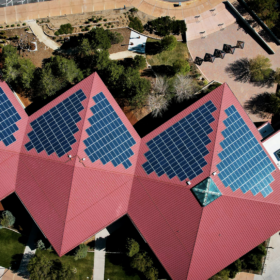
US residential solar hits record low of $2.50/W, says EnergySage
US residential solar prices fell to a record low of $2.50 per watt in the second half of 2024, said EnergySage. The marketplace operator reported average pre-incentive quotes of $28,750 for rooftop systems.
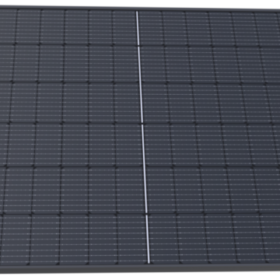
Boviet Solar opens solar production facility in North Carolina
With an investment reportedly approaching $400 million, the manufacturing plant will be built in two phases with phase one producing 2 GW of solar modules and phase two expected to produce 2 GW of solar cells in 2026.

US solar industry to add 502 GW (DC) of capacity in next decade
Wood Mackenzie warns that policy uncertainty could significantly alter its projections for US solar industry growth. The research firm says the US solar industry will add 502 GW (DC) of capacity over the next decade, with annual installations surpassing 40 GWdc through 2035.

Are robots coming for solar installer jobs?
Robots on solar sites are not new; they have been deployed to automate everything from operations and maintenance to inspection and cleaning. In recent months, there has been an uptick in interest in robots for installation, particularly among utility-scale solar developers dealing with staff shortages, safety concerns, rising costs, and pressure to build.
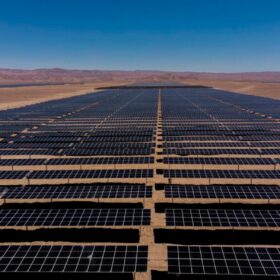
South America estimated to add 160 GW of PV by 2034
Mature markets Brazil and Chile will account for 78% of total installations, with small-scale projects (<5 MW) accounting for 48% of total builds in the region, according to Wood Mackenzie.
