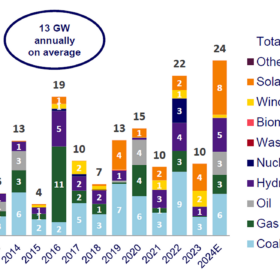
China installed 8 GW of solar in ‘Belt and Road’ countries in 2024
Wood Mackenzie says Chinese companies installed 24 GW of power projects throughout the world under China’s “Belt and Road” development initiative in 2024. This marked a record for a calendar year, with solar projects accounting for about one-third of the newly installed capacity.
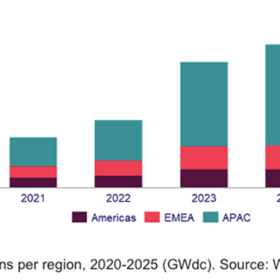
Wood Mackenzie predicts solar growth will stagnate in 2025
Wood Mackenzie’s latest report forecasts that 493 GW (DC) of solar will be added throughout the world this year, compared to 495 GW in 2024. Solar module prices are expected to rise this year as manufacturers aim to recover profit losses from the past two years.
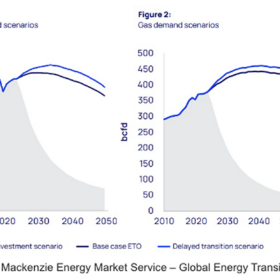
Wood Mackenzie warns of upstream sector impact from delayed transition
Wood Mackenzie says that a 30% increase in upstream spending will be needed to meet stronger oil and gas demand under a delayed energy transition. The research firm warns that this scenario could strain supply chains, inflate costs, and push Brent crude prices above $100/barrel by the 2030s.
Australia’s batteries surf revenue wave on back of volatile power prices
Investments in battery storage within Australia’s National Electricity Market (NEM) are increasingly profitable due to higher power price volatility and changing market dynamics, according to the latest report by Wood Mackenzie. Going forward, four-hour storage systems are projected to have fastest return on investment.
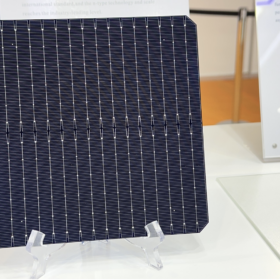
US starts solar cell manufacturing to close supply chain gap
The “US Solar Market Insight Q4 2024” report, published by the Solar Energy Industries Association (SEIA) and Wood Mackenzie, states that domestic module manufacturing will be able to match the rapid pace of growth in the US solar industry, with cell production also ramping up.
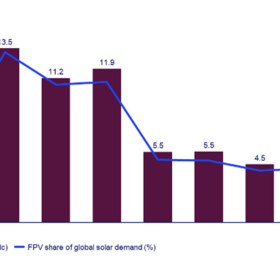
Wood Mackenzie forecasts 77 GW of floating solar by 2033
Wood Mackenzie predicts that the global floating solar market will be dominated by the Asia-Pacific (APAC) region and led by India, China and Indonesia through to 2033. The consultancy says growth will be driven by rising demand, decreased capital expenditure and supportive policies.
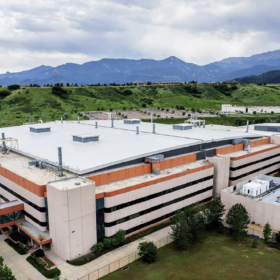
US solar factories: From announcements to reality
Now that incentives from the US Inflation Reduction Act (IRA) are well understood, global manufacturers are announcing factories in the United States to constitute much of the solar supply chain. While some plans have been scrapped already, and more cancellations are expected, the broader trend is unprecedented growth.
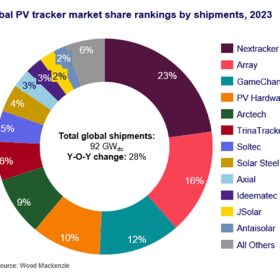
WoodMac says global solar tracker shipments grew by 28% in 2023
Global tracker shipments reached 92 GWdc last year, according to WoodMackenzies’ latest report. The US accounted for the majority of the global market, with three US-based manufacturers, Nextracker, Array Technologies and GameChange Solar, ranking as the three largest shippers in the world.
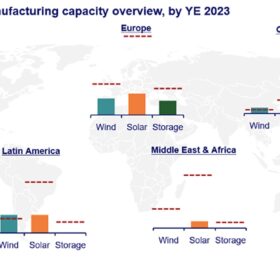
Chinese manufacturers offering prices up to 200% lower, says WoodMac
Wood Mackenzie says in its latest report that low prices and integrated supply chains allow Chinese manufacturers to supply more than 65% of total global demand for renewables equipment, with its exports growing by 35% between 2019 and 2023.
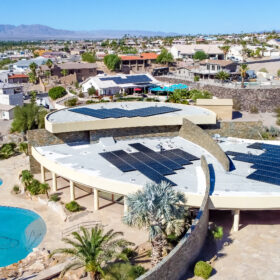
‘We must push back on net billing’
With California’s NEM 3.0 legislation having gutted panel sales and Arizona heading a bevy of other US states preparing to reduce solar-export payments, it’s time the United States solar industry stepped up, for ourselves as well as our customers.
