Nuclear ‘not an effective low carbon option’

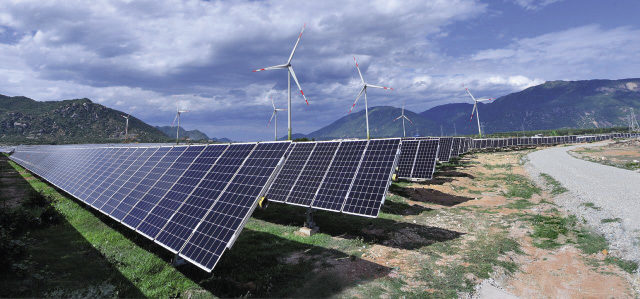
A study led by the University of Sussex (UoS), in the U.K., has found renewables up to seven times more effective at reducing carbon emissions than nuclear power. The paper concluded nuclear could no longer be considered an effective low carbon energy technology, and suggests that countries aiming to rapidly and cost-effectively reduce their energy emissions should prioritize renewables.
The study, published today in Nature Energy, considers three hypotheses: Firstly, that emissions decline the more a country adopts nuclear; secondly, that emissions decline the more a country adopts renewables; and thirdly, that nuclear and renewables are ‘mutually exclusive’ options that tend to crowd each other out at an energy system level. The hypotheses were tested against 25 years’ worth of electricity-production and emissions data from 123 countries.
The UoS study found little correlation between relative nuclear electricity production and CO2 emissions per capita but did observe a linkage with the per-capita GDP of the nations studied. Countries with high per-capita GDP saw some emissions reduction with increased use of nuclear power, said the researchers, but regions with lower GDP saw CO2 emissions rise with the use of nuclear.
Renewables
For renewables, however, the data revealed a decrease in CO2 emissions associated with the technology “in all timeframes and country samples” and with no significant linkage to per-capita GDP.
National policy commitments tend to favor one or other option, noted the UoS group, meaning a nuclear focus reduced renewables deployment and vice versa.
“This paper exposes the irrationality of arguing for nuclear investment based on a ‘do everything’ argument,” said Andy Stirling, a professor of science and technology policy at UoS. “Our findings show not only that nuclear investments around the world tend, on balance, to be less effective than renewable[s] investments at carbon emissions mitigation, but that tensions between these two strategies can further erode the effectiveness of averting climate disruption.”
The authors of the study acknowledged their report considered only carbon emissions and said future work should also consider factors such as economic cost; integrated resource planning; reliability; life cycle impacts; risk profiles; waste management; and ecological, political and security impacts.
“While our study can be viewed as a starting point for robust research on the topic of nuclear power, renewables and [the policy] lock-in [of one at the expense of the other], it is not meant to be a finishing point,” the authors stated. “It is an anomaly that the strong claims in favor of particular technologies with which this paper began, have for so long remained so under-evidenced. We encourage others also to address this gap in their future research.”
Recommendation
Even without considering other factors, though, the report’s authors said the emissions data alone was strong enough to recommend nations hoping to trim their energy emissions should focus on renewables rather than nuclear.
“The evidence clearly points to nuclear being the least effective of the two broad carbon emissions abatement strategies and, coupled with its tendency not to co-exist well with its renewable alternative, this raises serious doubts about the wisdom of prioritizing investment in nuclear over renewable energy,” said Benjamin K Sovacool, professor of energy policy at UoS. “Countries planning large scale investments in new nuclear power are risking suppression of greater climate benefits from alternative renewable energy investments.”
This content is protected by copyright and may not be reused. If you want to cooperate with us and would like to reuse some of our content, please contact: [email protected].

Please login to comment

You may want to know the history of the authors. A similar 2016 paper by Sovacool was retracted after a blogger identified a bevy of errors. The blog and comments show some of the underbelly, it is here: https://thompson.energy/2016/10/12/a-response-to-lawrence-sovacool-and-stirling/

Dear Doug,
Thank you for your comment, which I passed to Prof. Sovacool for a response. He notes that the earlier paper was retracted voluntarily by its authors, and that he has discussed the issue at length in this article: https://socialsciences.nature.com/posts/the-sustainability-of-nuclear-power-and-the-critical-importance-of-independent-research

Ok

I think I would need to see further details on lifecycle, carbon cost to produce/recycle and overall energy density. It seems that all these studies fail to take into account ecological impact and land constraints to stand up these renewable systems. While I do believe there has been sustainable improvements in this field it goes without saying the glaring issues and costs associated with present battery technologies need to be weighed in to the overall equation of renewables as they simply can’t sustain without the backup infrastructure.
Second, I would need to know what types of nuclear is being compared or if it is broad and generic. Is this Lightwave Form, Molten Salt, Thorium, Candu, SMR, etc. Unfortunately without clearly defining the comparator it is likely that this could be a paper comparing modern wind and solar to 1950/60’s Candu technology which isnt an effective measure of comparative value.

It would appear that they aggregated data until they were so meaningless as to prove nothing but confirmation bias.
I can do that. I hypothesise that the world is flat. I have some data from the 17th century that show very clearly where you will sail off the edge of the world and be eaten by a monster.

Hello John, our study was indeed only focused on carbon emissions. We didn’t consider any other criteria directly, other than GDP, which we treated in our moderator analysis. So other aspects such as land use, air pollution, water use, etc. are not factored in. We also treated all nuclear reactors as a single class, and all renewable energy generators as a single class. Not ideal, but this was the way the data was aggregated, and we mention how future work can be more nuanced across sub-classes of technology.

Interesting conclusions from this report – however, it would be nice to know the reasons WHY the paper’s authors found that “nuclear investments around the world tend, on balance, to be less effective than renewable[s] investments at carbon emissions mitigation”. Is it possible to revise the article to include a summary of the possible reasons for the conclusions?
Hi Greg, good question, and yes, happy to share, here is an open access link to ReadCube (free to all, but it cannot be downloaded or printed): https://rdcu.be/b76hW. We essentially hypothesize that the reasons why nuclear power plants are not as effective as renewables has to do with technological, policy, and social trends. Technologically, reactors are too expensive and prone to delays and overruns, and (some) negative learning. Policy wise, they have been prone to costly regulatory ratcheting after any major accident. Socially, they seem to have less social support than renewables. But there could very well be other factors.

[…] originally posted on http://www.pv-magazine.com Continue to read pv magazine International : https://www.pv-magazine.com/2020/10/05/nuclear-not-an-e… #Nuclear #effective #carbon #option #magazine […]
Thanks for the wonderful articles! I am wondering as to where I could find “renewables up to seven times more effective at reducing carbon emissions than nuclear power”. I have read your article on Nature Energy, but couldn’t find.
Hello Jeongseo, it’s there, but in quantitative form, we’re referring to some of the interpretations from our data tables. “up to seven times” is the most significant relationship we find within the dataset.