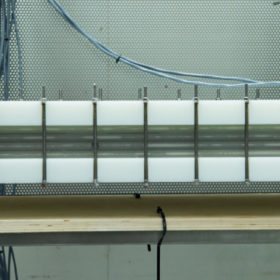
Zinc-air battery aims for extremely low $45/kWh cost
New York state has chosen Zinc8’s zinc-air battery to demonstrate the technology’s viability over a three-year period in a 100 kW/1 MWh storage system.

Japan’s fifth solar auction delivers final lowest price of $0.10/kWh
Only 39.8 MW of PV projects were allocated in the fifth round of Japan’s procurement program for large-scale solar. The lowest price offered was ¥10.99/kWh ($0.10) and the highest ¥13.0, for an average price of ¥12.57.

Spain reaches 8.7 GW of cumulative solar
The country saw the addition of 3.975 GW of new solar installations last year. Most of this capacity comes from solar projects selected by the Spanish government in the renewable energy auction held in July 2017.

ERA-Net awards 23 future energy pilot projects across Europe
Under the umbrella of the European Union’s Horizon 2020 initiative, the research platform ERA has initiated a new batch of future energy projects. Looking at the list of winning projects, it is easy to tell that hydrogen, virtual power plant, and blockchain projects are really at the center of what Europe thinks will be important for its net-zero carbon plans by 2050.
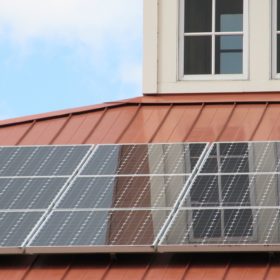
Vietnam confirms 20-year FIT for rooftop PV will be maintained at $0.0935/kWh
The generous tariff is considered crucial by the Vietnamese government to maintain high levels of development in the rooftop segment until 2021.

Benin introduces VAT exemption on imports of PV panels
The exemption will be applied to the import of materials, equipment and installation accessories for the deployment of PV and solar thermal systems. The new measure is aimed at increasing access to electricity through more off-grid projects.
How much can you wash a wearable PV device?
UK researchers claim to have proved the viability of wearable photovoltaic devices as an integrated part of regular clothing. A solar-powered fabric textile was created by embedding micro-crystalline silicon solar cells within the fibers of a textile through thin copper wires. The scientists claim that the device can maintain its performance even after 15 domestic machine cycles, 25 hand wash cycles, and 6000 abrasion cycles.
A new approach to performance simulation of heterojunction III-V solar cells
Scientists from Italy are proposing a new theoretical approach based on the combination of the scattering matrix method (SMM) with the Hovel method. The new model is said to describe with improved accuracy the propagation of electromagnetic waves in solar cells based on indium gallium phosphide (InGaP), indium gallium arsenide (InGaAs) and germanium (Ge), taking into account the interference effects. In their view, with proper antireflective coating III-V solar cells can reach efficiencies of more than 50%.
The weekend read: The rise of M6
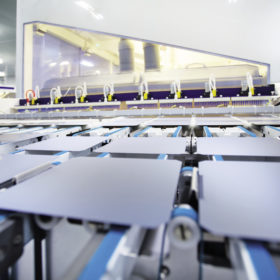
The shift to the larger M6 wafer format could occur faster than many have expected. Promoted heavily by mono giant Longi, the format is said to be a good fit for both cell and module production, while still allowing for relatively trouble-free integration into PV arrays. And it all began in China.

Panda Green settles $350m notes with hours to spare
The debt-saddled developer now has to hope its latest, $230 million state bail-out goes ahead before summer or it will be left $260 million in hock to its Beijing-owned main shareholder.
