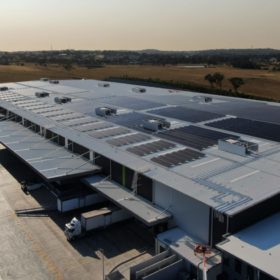
Australia’s largest energy provider acquires solar installers
AGL has revealed plans to acquire Epho and Solgen Energy Group, which will make it Australia’s largest climate polluter and its largest commercial solar provider.
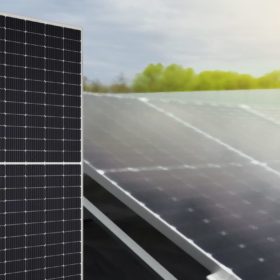
Sharp develops 445 W half-cut panels for large scale PV
The new panel is manufactured with M6 wafers. It features a power conversion efficiency of 20.1% and a temperature coefficient of -0.347% per degree Celsius.

Chinese PV Industry Brief: More inverter, battery and solar cell capacity
Solar cell manufacturer Jiangsu Luneng Energy is planning to deploy more production capacity for both heterojunction and TOPCon products. Battery company CATL and inverter maker Kstar have completed construction of a 1 GW factory in Xiapu economic development zone, in Fujian.

Solar could play big role in helping renewables displace UK’s planned gas fleet
Each 1.8 GW of new gas generation capacity could be replaced by 1.7 GW of solar as part of a cleaner, 6.3 GW collection of renewables and energy storage facilities–and that alternative already comes in cheaper than the business-as-usual approach, according to the Carbon Tracker thinktank.

Focus on temperature to reduce LCOE, says new study
A new model to assess the role of module temperature in PV power plant economics, developed by scientists in Saudi Arabia, finds that keeping modules cool could be an even more effective strategy to increasing energy yield than pursuing further gains in cell efficiency. The model finds that reducing module temperature by three degrees has a similar impact on energy yield to a 1% increase in conversion efficiency.

Green hydrogen projects proliferate in Chile, Mexico, Uruguay
Last week, several green hydrogen projects were announced in Latin America. AES Gener wants to set up a hydrogen production facility in Chile that would require around 850 MW of renewable energy capacity. The Uruguayan government is planning a tender for a pilot hydrogen project for sustainable mobility and the Mexican authorities are reviewing a large scale PV project planned to power a 75 MW hydrogen plant.
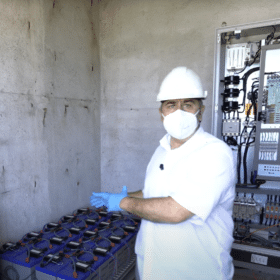
New power electronic device to manage surplus solar power–Part II
The first pilot tests have been conducted for the EU-funded project ‘renewable penetration levered by efficient low-voltage distribution grids (RESOLvD). pv magazine has looked into the demonstrator and the related energy sharing algorithm.
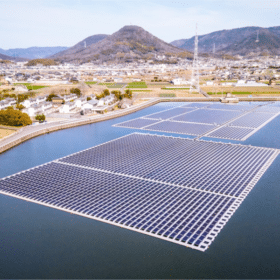
Sumitomo Mitsui Construction deploys in-house floating PV tech
Sumitomo Mitsui Construction has used its PuKaTTo proprietary tech for a 2 MW floating PV project in Japan’s Kagawa prefecture. It said its durable, easily deployable floats can host 60-cell and 72-cell solar modules.
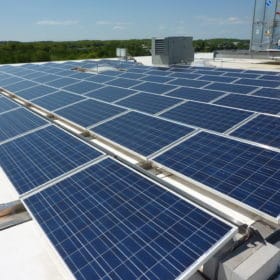
Hybrid operational strategy to use lithium-ion storage in commercial PV arrays
Lithium-ion batteries can not only improve self-consumption in commercial PV systems but are also able to efficiently perform peak shaving and price arbitrage, according to an international research group which has proposed a new strategy to calculate the best system configuration in terms of costs and revenue. The scientists specified, however, that the novel strategy may become effective only if storage system prices will drop under $250/kWh.
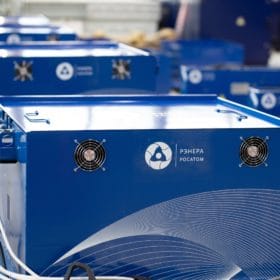
Rosatom plans 2 GWh lithium-ion battery factory in Russia
Russian nuclear energy giant Rosatom has acquired a 49% stake in Enertech International, a South Korean lithium-ion battery specialist, and has announced plans to build a gigafactory at an unspecified location in Russia. The start of production is scheduled for 2025.
