The weekend read: Bifacial adoption spurs rethink on PID
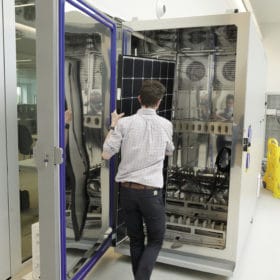
PV systems are unique among electronic devices, as they are expected to survive outdoors for at least 25 to 30 years. This makes module and system quality one of the cornerstones of guaranteed returns on investment. Potential-induced degradation (PID) is a critical failure mode with a potentially high financial impact. New research from imec and Hasselt University looks at the damaging impact that PID can have on bifacial technology, writes Michaël Daenen, a professor at EnergyVille and Hasselt University.

First Solar signs 2.4 GW deal, reports results from a “challenging” 2020
The thin-film module manufacturer achieved a turnover of $2.7 billion and a profit of $400 million last year. The company also revealed that it is evaluating further U.S. manufacturing expansion, “contingent on the right policy environment.”

German steel giant wants to set up 500 MW green hydrogen plant
German energy company Steag is helping Thyssenkrupp decarbonize its steel production site in Duisburg-Walsum. Green hydrogen generation is expected to be powered by a mix of wind and solar power.
Batteries double CO2 savings of households with PV systems
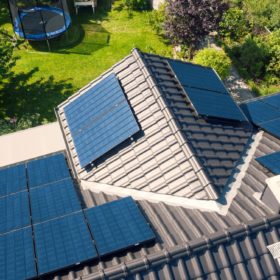
Photovoltaic systems for single-family homes reduce electricity-related CO2 emissions of the households by 45%, according to EUPD Research. When a battery is added the CO2 emissions can be reduced by up to 85%.
In the mind of a residential PV system owner
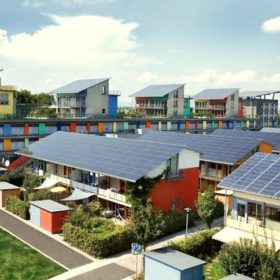
Scientists in the Netherlands have identified five different profiles of homeowners that have installed or could install rooftop PV systems. According to their findings, substantial differences characterize the five segmentation groups. The research is intended to help policymakers and solar companies to better promote PV technology among potential new adopters.
Sensorless fault-detection method for rooftop, large-scale solar
Turkish researchers have developed an algorithm to distinguish faults and changes in PV plant output. The sensorless method only uses electrical data gathered from the DC inputs of inverters. They tested it on 8.5 MW of ground-mount PV at nine sites, as well as 8.2 MW across 18 rooftops.
Chinese PV Industry Brief: Thinner wafers, rising profits and new solar ambitions for Yunnan Province
Goodwe and Irico have both announced rising revenue and profits for the fiscal year 2020. Zhonghuan Semiconductor intends to produce thinner wafers to respond to increasing polyisilicon prices. The southwestern province of Yunnan wants to add another 15 GW of clean energy to its power generation mix.
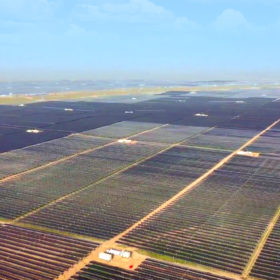
China may deploy up to 75 GW of PV this year
According to new forecasts from AECEA, China may see strong development of large-scale solar plants this year, due to a massive pipeline of unsubsidized projects. Furthermore, the distributed generation segment will be boosted by incentives provided by the national and regional governments.

Metal-perovskite-metal back contact solar cell with 4.31% efficiency
A numerical study by researchers at India’s Chitkara University has shown enhanced charge extraction in metal-perovskite-metal back-contact solar cell structure through electrostatic doping. The proposed design yielded a 59.4% improvement in power conversion efficiency over previously reported structures.
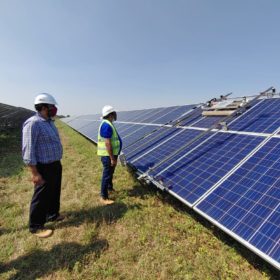
Indian panel-cleaning startup expands manufacturing capacity
Solavio Labs has already held three funding rounds to support the development of its new panel-cleaning robot.
