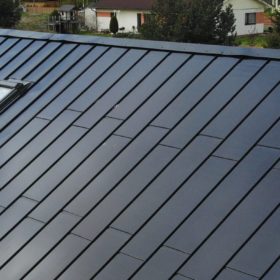
BIPV modules from Estonia
Estonian start-up Roofit.solar recently raised €6.4 million from a group of investors led by Germany’s Baywa r.e. The company will use the funds to commercialize its three BIPV modules with power outputs of 110 to 160 W. All products rely on a 0.5 mm metal back sheet with highly durable pural coating.

Roundtables USA: Solar resiliency in an age of extremes – video now available
Industry leaders, policymakers, and stakeholders joined pv magazine senior editors in an insight-packed live event to discuss optimizing solar PV and accelerating deployment across the U.S. and the globe.
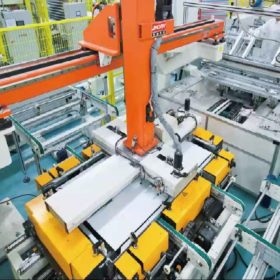
Talesun: Focus on solar tech and product innovation to survive
Several black swans have been circling over this year’s solar PV industry: rising raw material and product prices; supply chain issues and international logistics holdups; and power shortages in China, to name but the most disruptive. How is it possible for solar companies to survive under these conditions? According to Dong Shuguang, a PV veteran and President of Talesun Solar, they must focus on solar technologies like PERC, TOPCon and HJT, and product innovations that provide customer value.
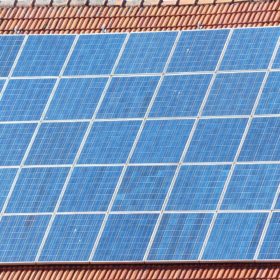
Proposal to move from net metering to storage in the Netherlands
The Netherlands storage industry association and the Dutch grid operators have proposed a faster phasing out of the net metering scheme to enable wider adoption of batteries among PV system owners. A 30% rebate on the purchase and installation of residential storage systems could help achieve the plan.
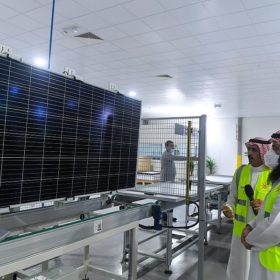
Solar module factory with 1.2 GW capacity inaugurated in Saudi Arabia
The production equipment for the factory was provided by Spain’s Mondragon Assembly. The facility is currently the largest module factory in the Middle East.

Indian hydropower producer enters solar business
SJVN’s board of directors approved a plan to set ut a wholly-owned subsidiary for the development of solar PV, wind, storage, and green hydrogen projects.
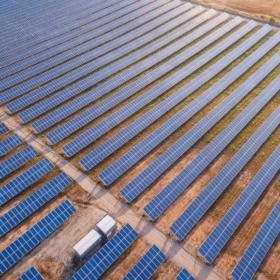
Three solar farms in Australia reach financial close
Greek company Mytilineos has reached financial close on all three of its 40 MWp solar farms in New South Wales, marking an important milestone in the company’s strategic move into the Australian market.
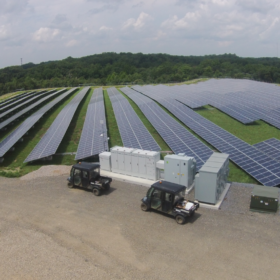
US landfills could host more than 60 GW of solar
Landfill sited solar capacity would nearly double Biden administration goals to grow community solar while increasing total U.S. solar power capacity by about 58%.

Ireland cites need for 1.9 GW more solar this decade to stay on track for net zero
Although wind power dominates the renewables scene in the Republic of Ireland and the North – and even natural gas has a bigger role to play – the grid companies of the neighbors have revised up their estimates of how much solar will be needed, after talking to the public and industry.
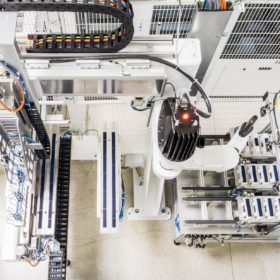
Shingled solar modules and shading
Scientists at Germany’s Fraunhofer Insititute for Solar Energy Systems (ISE) evaluated the performance of its newly introduced ‘Matrix’ approach to interconnecting shingled solar cells. The institute finds that, thanks to optimized current flows, energy yield of the Matrix approach could almost double that of standard shingled cell interconnection under random shading conditions.
