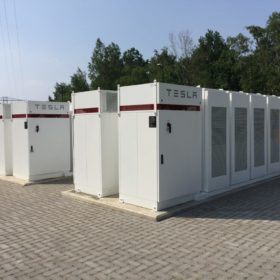
Chinese solar developer expects $0.22/W cost for lithium-ion storage in 2023
The board of Xinyi Solar has announced it expects to have to install energy storage at its Chinese solar projects from July onwards, as a result of the recently launched five-year plan.

Enabling aluminum in batteries
Scientists in South Korea and the UK demonstrated a new cathode material for an aluminum-ion battery, which achieved impressive results in both specific capacity and cycle life. The material allows researchers to better take advantage of aluminum’s energy storage characteristics, and produce batteries with much higher capacity.

China’s Covid recovery saw green bond issuance rebound in second half of 2020
The $18bn worth of sustainable finance instruments floated in the nation last year marked a retreat from previous highs but, with most of the bonds issued from July onwards, the recovery is under way, according to the IFC, which is anticipating a more-than-$100 billion sector in emerging markets over the next three years.

The smarter E Europe postponed to October
Due to the Covid-19 crisis the organizers of Intersolar and ees Europe, the largest photovoltaic and storage trade fairs in Europe, have decided to postpone it again. The Smarter E Europe will now take place from October 6th to 8th, 2021. However, the various awards will be presented digitally in July.

EU moves step nearer €11.5bn fund for coal-dependent regions
The European Parliament appears to have made the terms of the energy transition funding stream for public sector entities more favorable by securing a bigger slice of non-repayable grant cash for the bloc’s most deprived regions.

The Hydrogen Stream: Offshore hydrogen pipeline and more electrolysis capacity in Germany
Big German conglomerates such as Siemens, RWE and Vattenfall keep pushing for green hydrogen development through different projects. Germany’s first offshore hydrogen pipeline is being planned by RWE itself, Shell, Gascade and Gasunie, and should be commissioned in 2035. Siemens is planning hydrogen projects in the 5 MW to 50 MW range, for industrial and mobility applications.
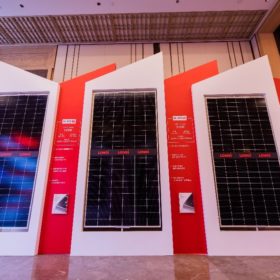
Longi unveils two PV modules for distributed generation
The two new products will be part of the Hi-MO4m panel series for rooftop applications. Their efficiency ranges from 19.2% to 21.2%.
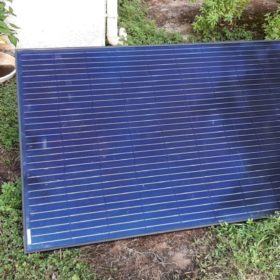
Solar kit for gardens and balconies, from France
French start-up Ekwateur is offering a solar kit consisting of a 330 W panel, a micro-inverter, a metallic structure, a monitoring sensor, and a few cables.
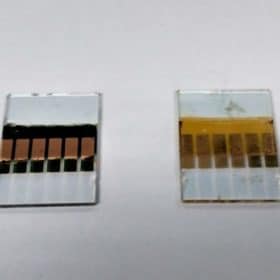
Solid-state solar cells based on metal-organic framework nanomaterials
Spanish scientists have fabricated solid-state PV cells with two different porous nanomaterials. Although low in terms of efficiency, one of the cells built with the MIL-125(Ti) metal-organic framework nanomaterial exhibited better photovoltaic performance than similar devices.

Silicon carbide passivating contact for 24%-efficient crystalline solar cells
The special passivating contact is claimed to feature high transparency, good conductivity, and at the same time, to offer enough hydrogenation for passivation. The cell built with this contact achieved an open-circuit voltage of 725 mV, a short-circuit current density of 40.87 mA cm−2, and a fill factor of 80.9%. Its certified efficiency was 23.99%.
