
TBEA unveils new residential inverters
TBEA has developed new products with nominal power ratings of 10 kW to 25 kW and efficiencies of 98.5%.
EV batteries alone could satisfy short-term grid storage demand
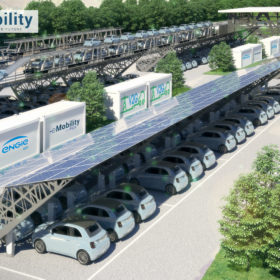
Low participation rates for vehicle-to-grid (V2G) tech of just 12% to 43% are needed to provide short-term grid storage demand throughout the world by as early as 2030, according to a group of Dutch and US researchers.
Japanese oil giant opens PV-powered hydrogen pilot in Australia
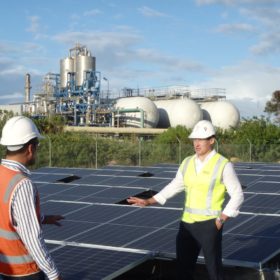
Japan’s largest oil company, Eneos, has opened a green hydrogen demonstration plant in Brisbane, Australia. The project is relatively small, producing just 20 kilograms of green hydrogen per day, but Eneos Senior Vice President Yuichiro Fujiyama says the company will expand it in the “near future.”
Germany installed 7.19 GW of new solar in 2022
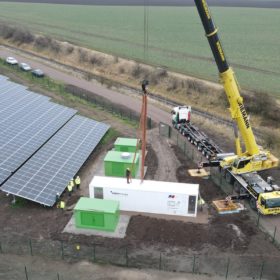
Germany deployed around 350 MW of new PV capacity in December alone. Its cumulative solar capacity reached 66.5 GW last year.

Solar may cover the world’s electricity demand with 0.3% of its land area
An international research group claims that raw materials and land availability do not present a real barrier for a global energy system with solar at its center. They said that forecasts for PV growth should not have their axis on utility-scale power plants and instead consider vertical PV, agrivoltaics, and floating PV as the source of future big market volumes.
LG unveils heat pump for water heating
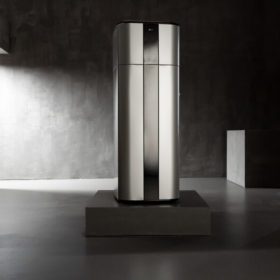
LG has developed an air source heat pump with the capacity to heat 200 liters to 270 liters of domestic water. It uses R134a as a refrigerant and the pump has a coefficient of performance (COP) of up to 3.85.
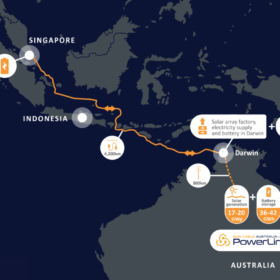
World’s biggest solar, storage project up for sale
Sun Cable, the company behind the world’s largest solar and storage project, has officially gone up for sale after entering voluntary administration in Australia in January. Its administrator, FTI Consulting, is seeking binding offers of acquisition or recapitalization by the end of April, with a deal to be finalized by the end of May.

Only5mins! – Standards in agrivoltaics might limit innovation
Makoto Tajima, an agrivoltaics analyst for Japan’s Institute for Sustainable Energy Policies (ISEP), speaks to pv magazine about the growth of agricultural PV in Japan, as well as cost considerations and the pace of technological development.
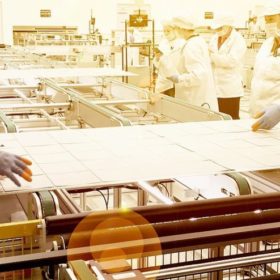
Canadian Solar reveals plans to set up 14 GW of solar cell, module capacity
Canadian Solar says its cell and module capacity will reach 50 GW by the end of this year.
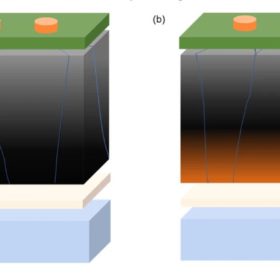
Cadmium selenium telluride solar cell achieves 20% efficiency via bandgap gradient
US scientists have applied bandgap gradient to a cadmium telluride PV cell for the first time. The result is an improvement of its efficiency and open-circuit voltage, and lower non-radiative recombination.
