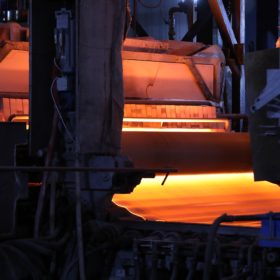
Borosil expands solar glass capacity in India
India’s Borosil Renewables has started domestic trial production with its third solar glass furnace, raising its capacity in India to 1,000 tons per day.

The Hydrogen Stream: World’s largest hydrogen airplane makes first flight
ZeroAvia tested its new 19-seat hydrogen-powered aircraft, Chinese scientists unveiled new tech to promote bubble removal in electrolyzers, and Egypt-Japan University of Science and Technology researchers claimed that the most efficient hydrogen production systems are based on waste heat.

Katek unveils silicon carbide inverter for residential applications
Katek, a German PV inverter manufacturer, says its 4.6 kW coolcept fleX inverter features silicon carbide (SiC) semiconductors from US-based Navitas Semiconductor. It is smaller and weighs less than non-SiC models.
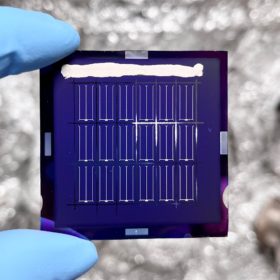
Silver-alloyed CGIS solar cell with 18.7% efficiency
Swiss scientists have used a minimal amount of silver to alloy the absorber in a thin-film CIGS solar cell. They say this process could help to improve efficiency, open-circuit voltage, and fill factor, while compensating for the low bandgap of the CIGS layer.
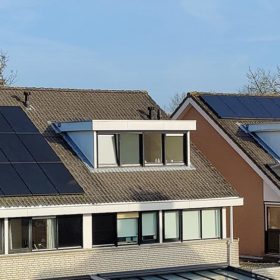
Netherlands posts another record year for residential PV in 2022
The Netherlands may have deployed 2 GW of new residential solar capacity in 2022, according to provisional figures from grid operators.
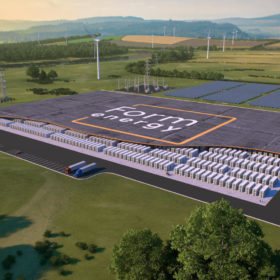
Retired coal sites to host multi-day iron-air batteries
Form Energy will install two 10 MW / 1,000 MWh batteries on the sites of Xcel Energy’s former coal-fired plants.

Australian scientists unveil method to produce hydrogen straight from ocean
University of Adelaide researchers and their international partners have successfully used seawater with no pre-treatment to produce green hydrogen. They did this by introducing an acid layer over the catalysts in situ.
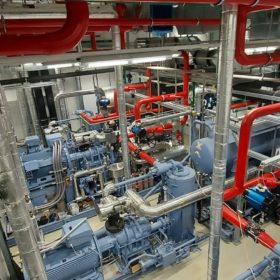
Steam-generating heat pump for industrial applications
The Austrian Institute of Technology (AIT) plans to build a heat pump that generates steam at 184 C at 11 bars without using gas. The tech, which uses natural refrigerants, will be used in the pharmaceutical industry.
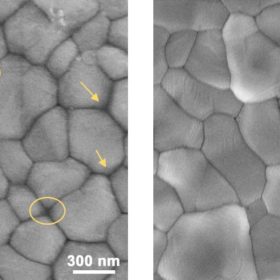
New ‘cushion’ solution to take stress off perovskite solar cells
Scientists in Germany have discovered a polymer compound that, when added to perovskite thin-film precursor materials, wraps itself around the perovskite crystals, acting as a cushion to protect the perovskite structure from thermomechanical stress. They used the additive to fabricate cells with up to 24.6% efficiency, retaining 96% of their initial performance after accelerated testing equivalent to one year in the field.
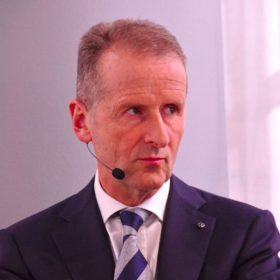
Former VW boss aims to set up 20 GW vertically integrated PV plant in Europe
In a podcast, former Volkswagen CEO Herbert Diess noted the importance of reducing reliance on China in the solar industry. But he said plans to set up production in Europe require state support and the right conditions.
