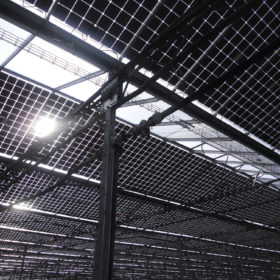
Satellite method estimates albedo for bifacial PV systems in ‘worst-case scenario’ areas
Scientists in the UK have utilized data from two different satellites – Sentinel-2 and MODIS – to develop a new and more accurate approach to estimated albedo for bifacial PV systems in complex landscapes. The novel methodology reportedly achieved a much lower normalized root mean square error than reference methods relying on MODIS only.
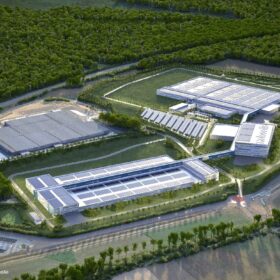
Heraeus buys stake in French solar manufacturer HoloSolis
HoloSolis plans to build Europe’s largest PV factory – a 5 GW solar plant in France – by 2025. Heraeus will provide its latest metallization technologies for the factory and play an active role on the HoloSolis board of directors.
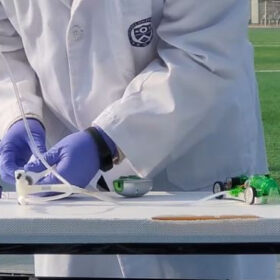
Algae photovoltaics for hydrogen production
South Korea researchers have developed a cell by merging green algae with carbon nanofibers, in order to generate 9.5 W per cell and achieve a peak efficiency of 0.9%. They claim this is enough to power a micro-generation system for hydrogen production.
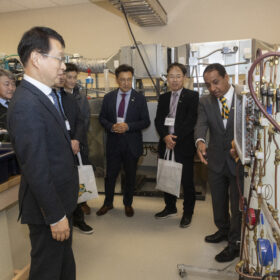
LG targeting Alaska for heat pump deployment, research
LG has formed a partnership with the University of Alaska Anchorage to conduct lab research and perform real-world testing of heat pump technologies, with a particular focus on Alaska’s extreme temperatures.
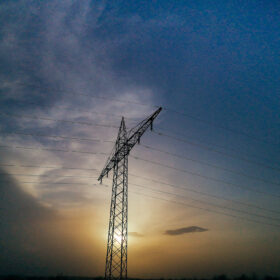
Poland’s grid-connected PV project pipeline hits 18 GW
Statistics from Instytut Energetyki Odnawialnej show that the Polish solar market could see significant growth due to a rise in grid-connection approvals, despite an increase in project rejections.
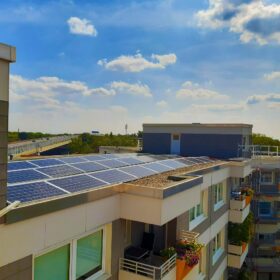
French startup Ensol creates platform to speed up residential PV deployment
Ensol, a French startup serving the residential PV and home energy solution market, has raised €3 million in venture capital from Paris-based investors, Otium Capital, a fund that backs early-stage companies, and BetterAngle, a business angel group.
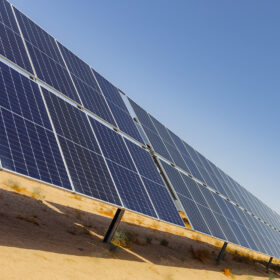
Consortium signs 25-year PPA for 1.1 GW of solar capacity in Saudi Arabia
Masdar, EDF Renewables and Nesma Company have signed a 25-year power purchase agreement (PPA) with Saudi Power Procurement Co. (SPPC) to develop the 1.1 GW Al Henakiyah Solar Project in Saudi Arabia.
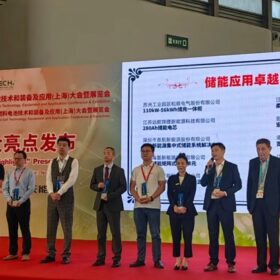
Key takeaways from China’s SNEC Energy Storage & H2 tradeshow
The latest edition of China’s SNEC Energy Storage & H2 event showed an impressive range of new products and technology. pv magazine was there to check out the most interesting solutions.
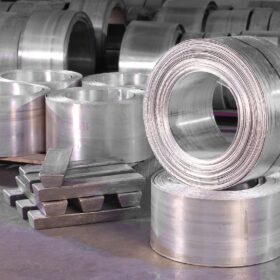
Quasi-solid-state magnesium-ion battery achieves energy density of 264 Wh/kg
Researchers at the University of Hong Kong (HKU) have developed a quasi-solid-state magnesium-ion battery with a voltage plateau at 2.4 V and an energy density of 264 Wh/kg. It surpasses the performance of current magnesium-ion batteries and almost matches the performance of lithium-ion batteries.
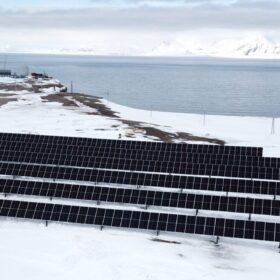
Norwegian developer switches on northernmost ground-mounted PV plant
Store Norske Energi AS has installed a PV system in the Svalbard archipelago, the last inhabited strip of land before the North Pole. The company told pv magazine that the system could reduce the use of fossil fuels by 70% and potentially become a model for the Arctic transition to renewables.
