Anti-soiling PV coating delivers 3% boost in energy production

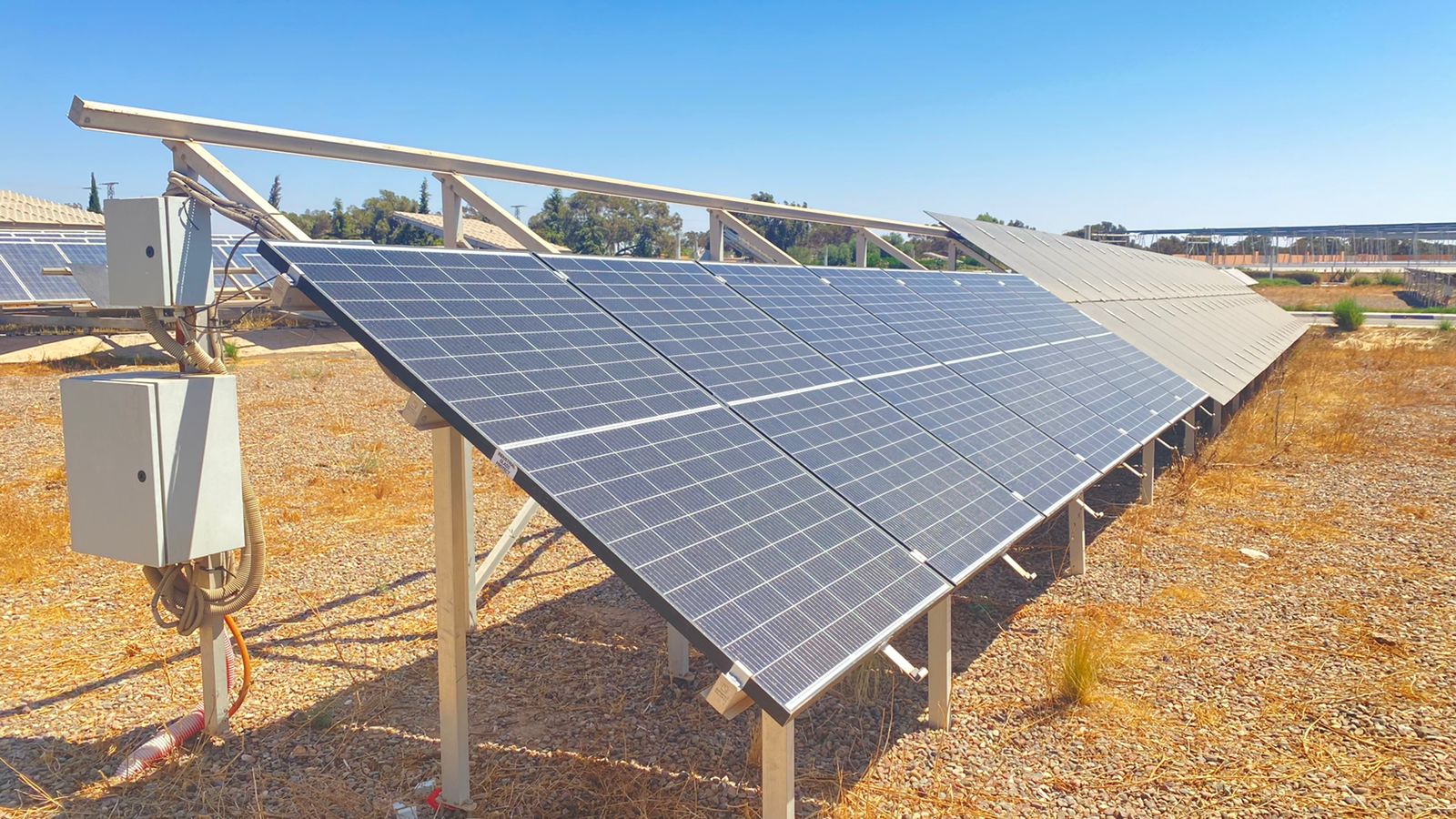
A major yet often underestimated issue, soiling – a gradual covering of the solar module surface by fine particles such as dust, dirt, or sand – can badly affect the performance of a PV system. A real-world study was recently conducted at the Green Energy Park research platform in Ben Guerir, Morocco, to evaluate the performance of antistatic and hydrophobic coatings for PV panels in challenging, semi-arid weather conditions.
The study, done in collaboration with Portuguese anti-soiling specialist ChemiTek Solar, involved testing various coating and cleaning strategies on five PV systems, all featuring the same technologies and electrical configurations.
The first PV system remained uncleaned and did not undergo any coating or cleaning solutions. The second PV system was periodically cleaned with just water. The third PV system employed ChemiTek’s Solar Wash Protect (SWP) cleaning and antistatic protection solution. The fourth and fifth PV systems, the company’s other solutions D-Solar Defender (DSD) and Industrial Glass Protect (IGP) respectively, employed unique combinations of two hydrophobic coatings.
After nine months of operation, the results demonstrated significant efficiency gains in the coated PV panels compared to the reference system. During the initial three-month cleaning period, the average efficiency gain of the coated PV panels was approximately 10%. In the subsequent non-cleaning period of six months, the efficiency gain remained around 5%. The cumulative energy gain of the coated systems, compared to the water-cleaned reference, reached an average of 3% after the outdoor exposure period.
The presence of the coatings on the PV modules significantly reduced the quantity of water needed to clean them. The SWP cleaning and antistatic protection solution, for instance, required 50% less water compared to the system cleaned without a cleaning solution. The SWP detergent for solar module cleaning and protection was more successful at dust removal during the dry season (August-February) with low rain rates. However, during the rainy season (March-April), IGP outperformed SWP and DSD, with a small difference in PV performance.
“This study demonstrates the significance of using new cleaning strategies such as anti-soling coatings in dry areas to enhance the performance of photovoltaic systems, which may be useful for investors, researchers, and engineers interested in grid-connected photovoltaic and self-cleaning technology,” the researchers said in “Performance Analysis of Innovative Cleaning and Soiling Mitigation Solutions in the Semi-Arid Climate of Benguerir, Morocco,” which was recently published in Heliyon.
This content is protected by copyright and may not be reused. If you want to cooperate with us and would like to reuse some of our content, please contact: [email protected].

Please login to comment

[…] or sand on solar module surfaces, can considerably influence the performance of a PV procedure. A practical examine took spot at the Green Electricity Park analysis system in Ben Guerir, Morocco, to assess the efficiency of antistatic and hydrophobic coatings for PV panels below challenging, […]
[…] or sand on photo voltaic module surfaces, can considerably affect the efficiency of a PV system. A sensible examine befell on the Inexperienced Vitality Park analysis platform in Ben Guerir, Moroc…, to evaluate the effectiveness of antistatic and hydrophobic coatings for PV panels underneath […]
[…] dirt, or sand on solar module surfaces, can significantly impact the performance of a PV system. A practical study took place at the Green Energy Park research platform in Ben Guerir, Morocco, to assess the effectiveness of antistatic and hydrophobic coatings for PV panels under […]
[…] dirt, or sand on solar module surfaces, can significantly impact the performance of a PV system. A practical study took place at the Green Energy Park research platform in Ben Guerir, Morocco, to assess the effectiveness of antistatic and hydrophobic coatings for PV panels under […]
[…] dirt, or sand on solar module surfaces, can significantly impact the performance of a PV system. A practical study took place at the Green Energy Park research platform in Ben Guerir, Morocco, to assess the effectiveness of antistatic and hydrophobic coatings for PV panels under […]
[…] dirt, or sand on solar module surfaces, can significantly impact the performance of a PV system. A practical study took place at the Green Energy Park research platform in Ben Guerir, Morocco, to assess the effectiveness of antistatic and hydrophobic coatings for PV panels under […]
[…] إحدى الشركات البرتغالية المتخصصة، وفقًا لما نشره موقع بي في ماغازين (PV Magazine)، الجمعة 26 مايو/أيار […]
[…] إحدى الشركات البرتغالية المتخصصة، وفقًا لما نشره موقع بي في ماغازين (PV Magazine)، الجمعة 26 مايو/أيار 2023.أعدت الدراسة منصة […]