Polish grid operator switches off gigawatts of PV

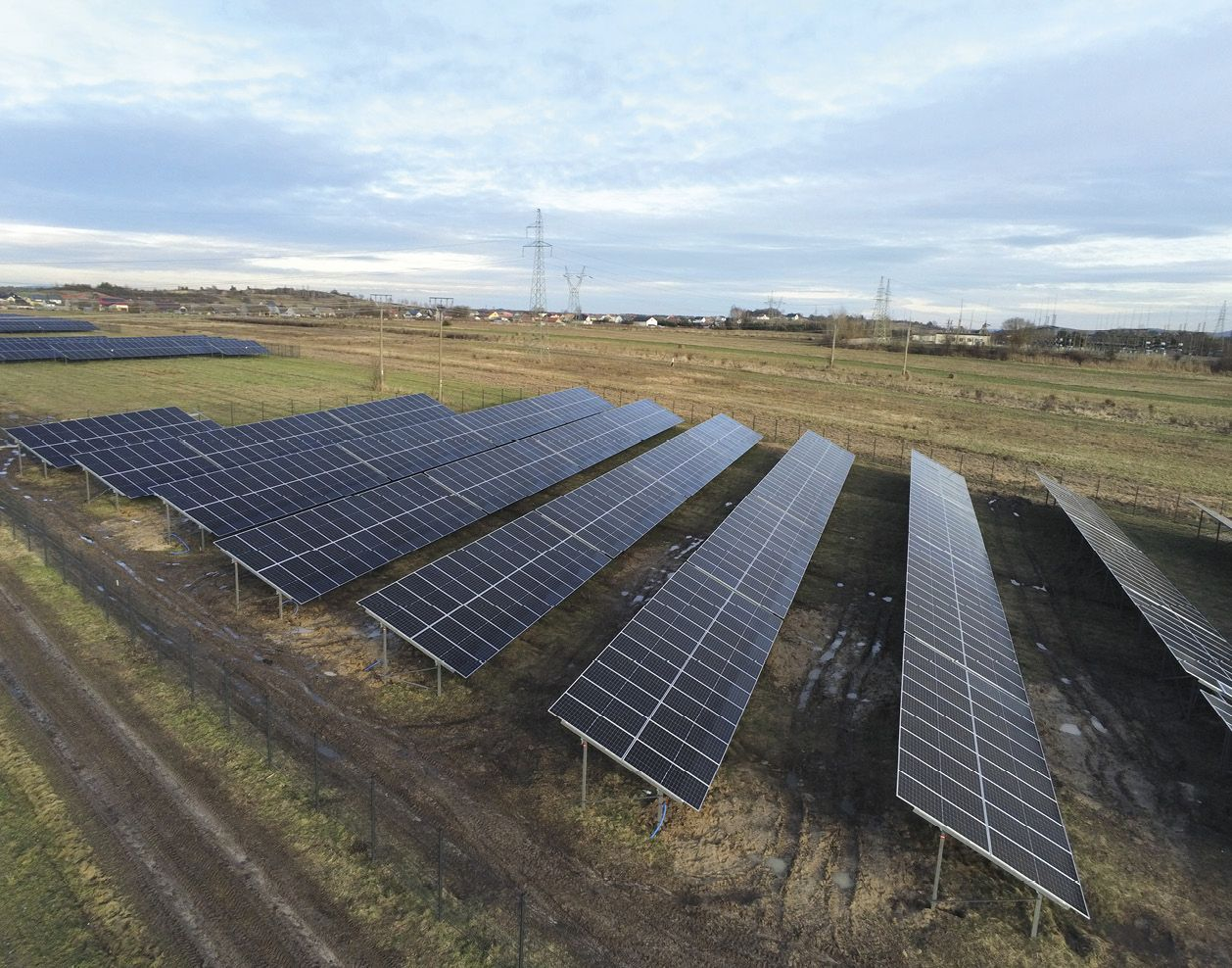
Grid operator PSE is struggling to manage Poland’s growing share of PV and has ordered the third curtailment of renewable energy capacity within a month.
“Due to the oversupply of generation in the National Power System and the need to restore the regulatory capabilities of the National Power System, PSE is introducing a non-market reduction in the generation of photovoltaic sources on March 26, 2024,” PSE said in a brief statement this week.
It has announced three one-hour curtailments of 1,201 MW, 1,877 MW and 1,711 MW from 11:00 am to 2 pm.
This is the grid operator’s third renewable energy curtailment this year. All of them have taken place in March, with the latest one specifically referring to PV installations alone.
On Tuesday morning of this week, around 10 am, photovoltaics produced and fed 9.7 GWh of electricity into the grid, according to the energy.insrat.pl portal. This represented around 45% of the total electricity production in the country, making solar the nation’s biggest energy source, followed by coal at around 27%.
“We need to invest some 500 billion zlotys ($126 billion) in transmission and distribution grids by 2040,” PSE Chief Executive Tomasz Sikorski said at the time, adding that the country needs to time grid upgrades so that they are finalized in sync with the growth of the nation’s renewable fleet.
Poland generates about 70% of its power from coal, but its new energy strategy envisages 74% of energy coming from zero-emission sources, including renewables and nuclear power.
Poland’s cumulative installed PV capacity hit 12.4 GW at the end of 2022, making it Europe’s third biggest solar market after Germany and Spain.
By the end of the third quarter of 2023, the country had 18 GW of solar PV projects with grid connection approvals, according to Polish research group Instytut Energetyki Odnawialnej (IEO).
This content is protected by copyright and may not be reused. If you want to cooperate with us and would like to reuse some of our content, please contact: [email protected].

Please login to comment

It is a good reason for more interconnection of the European Grid. Simulations surpluses of wind and solar from one end of the EU to the other are unheard of (as well as the opposite (called “dunkelflaute”)). Interconnection From Helsinki to Lisbon, Kiev to Belfast, Oslo to Athens, etc would bring green energy into a new level of significance and reliability.

Very plain, instructive and educational. The implication for Seachange from dictated corporate commercial utility scale Solar, to communities’ own “micro utility businesses” concept (use of locally produced solar power on built/disturbed surfaces, only) – gains increasing support and momentum, with reports like this – about the older business culture,

Non fossil based energy need to be promoted to contain the emission from fossil fuel based energy (electricity), but the efforts need to be made that grid security is not endangered. Excess RE (from Wind and Solar resources) can be used and aligned to charging of Electric vehicle batteries, Energy storage devices (including the battery energy Storage Systems, Pump Storage systems and others). The available and excess RE can be used to produce Green hydrogen, which has many applications and is a career of energy also.
Since wind and Solar are seasonal, variable and intermittent in nature those need to be supplemented by the existence of fossil or hydro or nuclear or gas or geo-thermal based firm power sources, so that when the wind and solar insolation are not present, the electricity needs can be met from the above mentioned sources.
RE is best described as a support to enhance the consumption time of the available fuel and supplementing the electricity supply in the grid.
RE is no doubt good, but requires meticulous planning, optimization, control, automation, forecasting and scheduling, data communication and visibility. RE integration require use of advanced technology not only for electricity production, but its management in the grid. The present day need also require the capacity building of personnel in related fields.
Still larger challenge is the safe disposable of Batteries, Solar panels, Wind Turbine blades and other power system waste.
Further, in case the coal based resources are to be closed down, associated mining and other activities will also be affected, affecting the personnel/workers/societies dependent on them – so a JUST TRANSITION is need of the hour.
A larger debate and R&D efforts are to be made to find an acceptable, economical, sustainable, wholesome solution. As an immediate step the Distributed Energy resources (DERs) need to be developed and innovation brought in that technology. It will reduce the burden on extensive EHV grid, and reduce the transmission and distribution losses as well as employment opportunities to local people.

Eric’s suggestion of more Hydrogen storage is not unexpected- we’ll see if it’s really a functional program as the economics are revealed over time- but in any case, SOME form of storage is clearly what needs to amend their current oversupply in PV. Pumped Hydro, CAES, EV fleets and Grid scale battery storage.
It’s just the timing of different parts of this buildout.
The beauty of PV is that you CAN simply shut down some of that supply when you need less. Trying to ramp up and down Coal and NG plants is a much more cumbersome and inefficient game.. but rerouting more of the PV supply right into storage can be a nearly automatic process, and the switching is nearly instantaneous.

Without details on the network and upgrade plans, it’s hard to suggest solutions. Country export is a requirement with solar or storage.
But a lot of problems are caused by solar power curve and the aged network with a lack of investment and too much profiting.
Even lower power home installations don’t draw down the power as they have their own supply. It’s like two solutions for the same problem, in a three way party.
Clearly management and intercommunication is required for a long term solution and cost effective measures.

The green solution is grid scale battery storage, which is being successfully used in California and Australia.

Definitely agree re convert surplus PV electricity to Green Hydrogen.
Export it !
See Saudi Arabian plans for Solar to Green Hydrogen.

It is good a example to draw attention to retain balance between PV production and other sources of power generation so that system security is not jeoprized.

Sounds like the need batteries to store the electric supply when it is not needed. It does not make any sense if you are disconnecting the cheapest power when it is actually producing the most power for the grid. Maybe the coal plants are the ones that need to be disconnected or redirect to batteries. Unfortunately, without contact in place to prevent this, the PV and wind always gets left out for coal.

Hope subsidies for roof-top solar & home batteries cam take into account the savings on not having to install new transmission grids, if generation is a few meters away from usage

Until they have 100% renewable grid supply makes far more sense to employ battery storage than Hydrogen production. Hydrogen conversion efficiency is, and always will be, very low compared to other forms of energy storage.
With the number of coal mines in Poland, perhaps they can gradually convert them to gravitational storage as green production increase their share of the grid production – this would also allow for the retention of some workers as the mine transitions from coal to power storage…

I remember reading an article a few years ago, how Poland has a lot of good sites for pumped hydro.

A good example of why PV should be cooperating with Green Hydrogen production. Makes no sense not to produce when there is an energy requirement ready to use the power. Hydrogen electrolyzers need green power to operate.
World-wide green energy is an all-hands-on-deck solution. There are no competitors here. All non-fossil fuel sources must be considered as part of the solution.

Way more efficient, and faster to use large scale BESS. Once there is enough renewables tied to battery storage, incremental energy production will be effectively zero cost. An age of energy abundance on the horizon, assuming existing industries don’t try to shut things down.

Very good point

It’s crazy that they ask to curtail PV production instead of limiting burning coal!
This is not a good example to be followed by other Countries….

The problem is that they did not match their investment in solar with a corresponding investment in energy storage. Coal plants can’t be turned off for the few hours that solar produces each day.

It’s crazy how high your lack of knowledge level can be. There is technically impossible to switch off turbines of professional coal power stations in minutes or seconds – instead of PV or wind farms.

Maybe the energy could not be stored. Coal power can be produced on demand. Can solar energy be managed so power is provided between sunset and sunrise? I thought we had solutions for that.

The problem is that the coal plants are inflexible, but still needed in the evening. The solution is probably batteries. Perhaps more electric vehicles and dynamic pricing so they charge up from 11 till 2.

Coal is baseload production and this ramping coal up or down takes a long time. Its like stopping and starting a train.
Maybe it is easier to switch off solar with a flick of a switch, than to power down a coal burning power station.
[…] 来源:www.pv-magazine.com […]