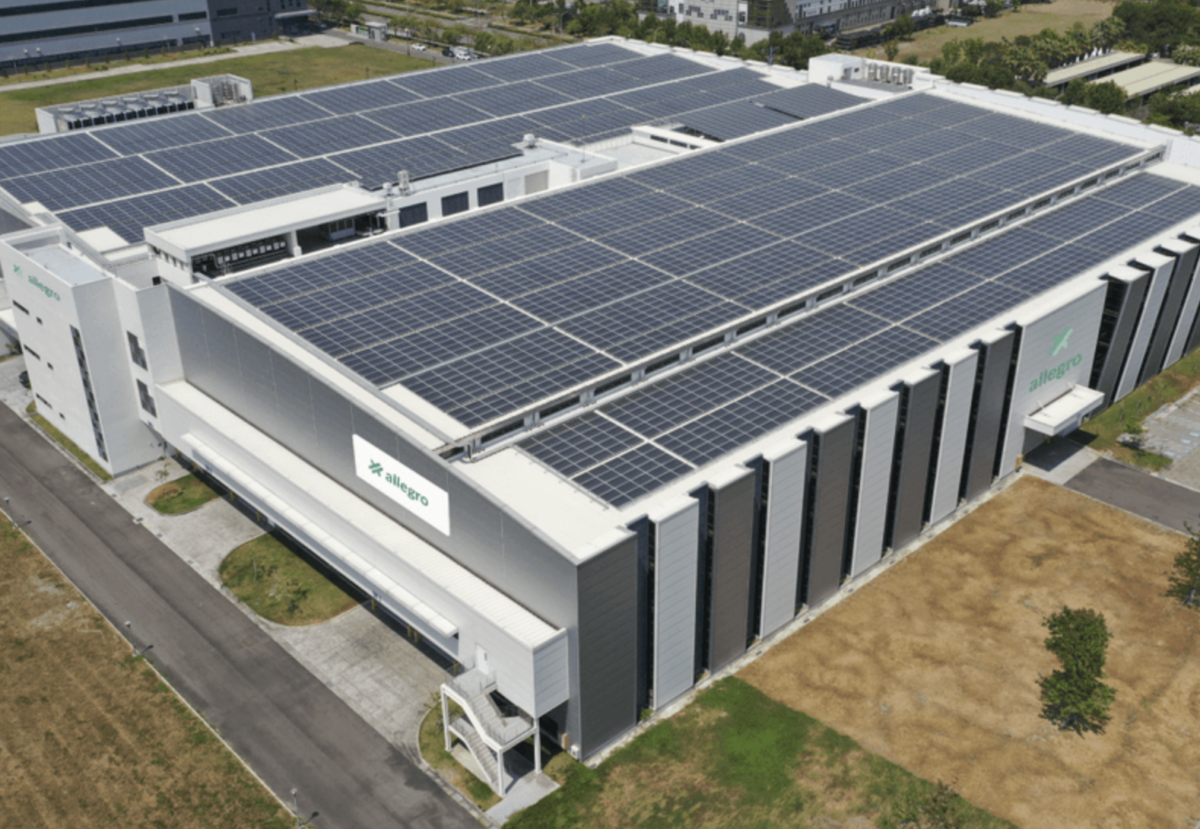





Allegro Energy has introduced Australia’s first domestically manufactured microemulsion flow battery (MeFB) for LDES.
Its non-flammable, scalable, and cost-effective battery technology will debut at Origin Energy’s Eraring Power Station, highlighting the role of LDES in Australia’s clean energy transition.
Allegro Energy CEO Thomas Nann said the battery’s chemistry marks a significant advancement for supporting the global clean energy transition. Australia can use advanced manufacturing to differentiate itself and develop capabilities others lack, said Nann.
Allegro Energy Chief Technology Officer Fraser Hughson said the battery will also benefit the economy in Newcastle, Australia, as most components are sourced locally. Producing the battery domestically is not just a strategic choice but an economically viable one, said Hughson.
Origin Energy, which holds a 5% equity stake in Allegro Energy, said on LinkedIn that battery storage – including LDES – will be critical to Australia’s energy transition.
Through its partnership with Allegro Energy, Origin plans to pilot the technology at Eraring before considering broader deployment, the company stated.
Origin’s stake supports the staged development of Allegro Energy’s 60 MWh pilot redox flow battery (RFB) and gives Origin the option to back Allegro Energy’s first gigafactory.
This content is protected by copyright and may not be reused. If you want to cooperate with us and would like to reuse some of our content, please contact: editors@pv-magazine.com.

I suspect that this technology is not going to compete with other flow battery technologies based on the low energy efficiency at high current densities due to the inherently higher ohmic losses which result from the relatively low conductivity of the microemulsion electrolytes. This limits the cell operation to low current densities, which requires significantly larger flow battery hardware and consequently a much greater initial capital cost for the system. This technology would likely require a much larger footprint for equivalent power compared to VRFBs or other promising FB technologies. The higher voltage enabled by the technology will not be sufficient to overcome this obstacle. Microemulsion electrolyte flow batters are an interesting and novel technology, but I don’t think it has a chance of competing for grid-scale storage.
Investors should be demanding data on both (1) max power density in mW/cm^2 or equivalent units, and (2) energy efficiency at this power density. Ask for a polarization curve from which such data can be determined (two separate y axes for voltage and for power density, x axis for current density, measured during cell cycling at various states of charge).
If I misunderstood the situation I would like to hear more technical details from Allegro Energy. They have disclosed very little about their proprietary technology, and there is no mention of energy efficiency in their publications or in the patent. The 2021 paper “Re-discovering micro-emulsion electrolytes: a biphasic electrolyte platform for Organic redox flow batteries” describes flow cell testing with a current density of only 20 mA/cm^2, which is much lower than current densities utilized for testing commercially viable RFBs (typically on the order of at least 40 up to 100’s of mA/cm^2)