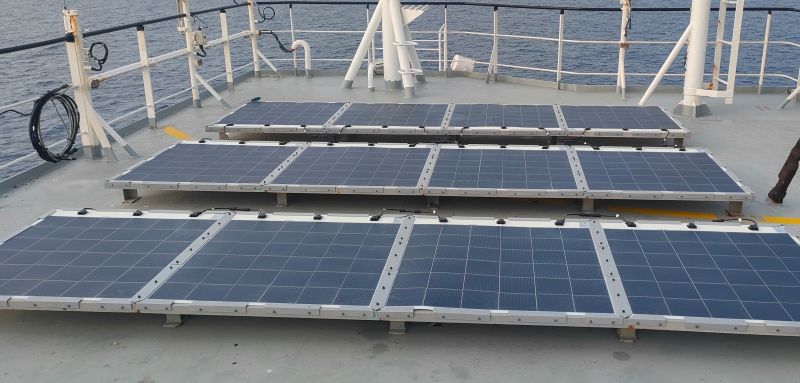





Japan-based energy technology specialist Eco Marine Power announced a trial of an integrated solar PV solution aboard a large-sized cargo ship. The project aims to demonstrate PV practicality and performance in real maritime conditions over the next year. It features glass-free monocrystalline silicon modules from U.S.-based Merlin Solar Technologies.
The bulk cargo ship measures 190 m x 32 m, with a 57,369 T deadweight, according to Greg Atkinson, president and CTO, Eco Marine Power. It hosts the first of several trials to test a range of module technologies and equipment in real shipping conditions over a period of 12 to 18 months.
“We are discussing with other PV module suppliers about the use of their panels for this project and other projects. Typically, we look for non-glass panels that are lightweight and marine grade,” Atkinson told pv magazine.
The monocrystalline silicon panels used in the initial trial are Merlin Solar's flexible, monocrystalline silicon, glass-free 155 W model, according to Atkinson.
These are integrated with the latest version of Eco Marine Power’s performance management system in a solution developed specifically for shipping applications. They are mounted in customized frames previously installed on the ship and fitted by Aries Marine, based in the United Arab Emirates.
Atkinson noted that Eco Marine completed a project on a similarly large general cargo ship in 2019. It featured a battery, battery charging, marine-grade PV panels, special mounting racks, and an energy management system.
Merlin Solar’s panels have been used in other maritime settings, including recreational vessels and defense platforms. They are reportedly rugged and suitable for non-optimal PV settings.
Eco Marine Power was founded in 2010 to develop wind, solar and electric power-based fuel-saving and emission-reduction solutions for ships such as passenger ferries, cruise ships, oil tankers and cargo vessels.
Earlier this year, Germany’s HGK Shipping and Salzgitter AG announced a cargo ship trial using solar power to supplement diesel for the onboard low-voltage system and the high-voltage propulsion units. Elsewhere in Europe, a consortium announced the four-year Whisper project to demonstrate solar PV-driven fuel savings in two types of long-distance cargo vessels.
This content is protected by copyright and may not be reused. If you want to cooperate with us and would like to reuse some of our content, please contact: editors@pv-magazine.com.


By submitting this form you agree to pv magazine using your data for the purposes of publishing your comment.
Your personal data will only be disclosed or otherwise transmitted to third parties for the purposes of spam filtering or if this is necessary for technical maintenance of the website. Any other transfer to third parties will not take place unless this is justified on the basis of applicable data protection regulations or if pv magazine is legally obliged to do so.
You may revoke this consent at any time with effect for the future, in which case your personal data will be deleted immediately. Otherwise, your data will be deleted if pv magazine has processed your request or the purpose of data storage is fulfilled.
Further information on data privacy can be found in our Data Protection Policy.