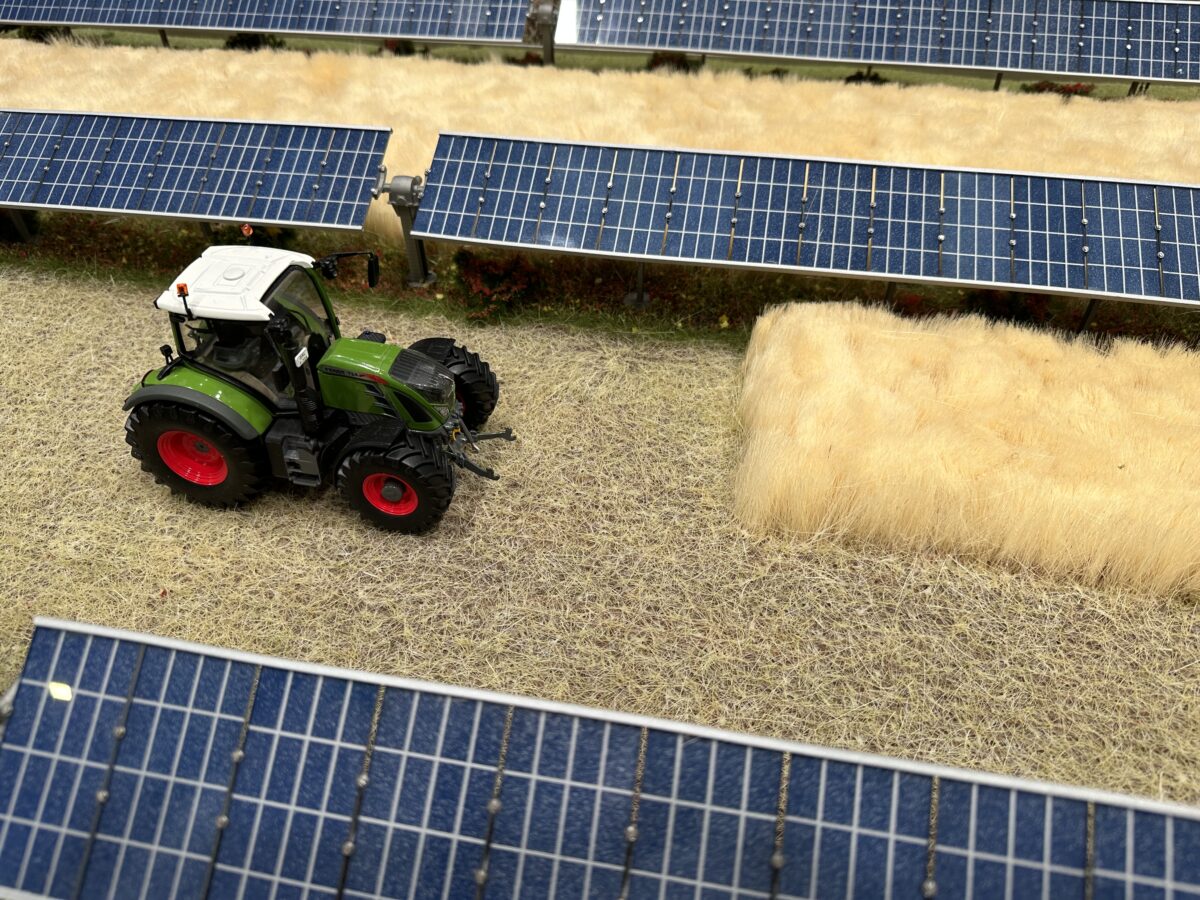





Czechia’s Ministry of Agriculture has updated its provisions on agrivoltaics.
Czechia introduced its first rules for agrivoltaics in May 2024 before extending measures at the start of this year to permit agrivoltaics on six crop types.
The most recent change allows the installation of vertical agrivoltaics, as well as deployment on arable land, provided that vegetables with high or very high labor intensity are grown on the land at least once every three years.
A statement published by Czech solar association Solární Asociace says this change paves the way for modern vertical systems, which, unlike in other European countries, have not been practically possible in Czechia to date.
Jiří Bím, head of permitting processes and agrivoltaics at the association, added that expanding the crop circle is key for the smooth and fair development of agrivoltaics.
“In combination with vegetables, vertical systems oriented to the east and west can be used, which do not contribute to midday overproduction of electricity, but supply electricity to the grid in the morning and evening, thereby helping to stabilize the electricity system,” Bím explained.
Solární Asociace Executive Director Jan Krčmář added that thanks to the change, agrivoltaics have become available to farmers who do not own vineyards or orchards. “We believe that in the future we will also be able to open up space for agrivoltaics on pastures,” Krčmář added.
This content is protected by copyright and may not be reused. If you want to cooperate with us and would like to reuse some of our content, please contact: editors@pv-magazine.com.


By submitting this form you agree to pv magazine using your data for the purposes of publishing your comment.
Your personal data will only be disclosed or otherwise transmitted to third parties for the purposes of spam filtering or if this is necessary for technical maintenance of the website. Any other transfer to third parties will not take place unless this is justified on the basis of applicable data protection regulations or if pv magazine is legally obliged to do so.
You may revoke this consent at any time with effect for the future, in which case your personal data will be deleted immediately. Otherwise, your data will be deleted if pv magazine has processed your request or the purpose of data storage is fulfilled.
Further information on data privacy can be found in our Data Protection Policy.