




The 2025 IRENA report reveals that women represent only 32% of the renewable energy workforce, and their participation in technical and leadership roles remains much lower. These numbers, while improving slowly, reflect persistent structural and cultural barriers that still limit women’s participation in the energy sector.
From my experience in government and policy design, one of the biggest barriers is the absence of family-friendly corporate policies. According to UN Women, women and girls dedicate 16 billion hours daily to unpaid care work, 2.5 times more than men. This invisible and undervalued work limits women’s time and energy to continue advancing professionally.
In Panama, for example, only 36% of women working in the energy sector in 2021 continued with capacity-building programs after obtaining their current positions. Most of them made the difficult choice to prioritize family over professional development because the system offered no structural support for balance.
The second major barrier is discouraging workplace practices, discriminatory environments, exclusion, and even harassment. The Second Diagnosis of Women’s Equality in Panama’s Energy Sector found that nearly 24% of women felt discriminated against when receiving awards, promotions, or event invitations, compared to only 4% of men. This means discrimination is perceived as five times more common among women.
These barriers are not only unfair, they are inefficient. They deprive our sector of vital talent that could accelerate the energy transition.
Building Gender Inclusion into Energy Policy
As Panama’s former Secretary of Energy, I’ve seen firsthand that gender inclusion is not a side issue, it is a precondition for a just and successful energy transition.
One of the most powerful lessons from Panama’s journey is that Science, Technology, Engineering, and Mathematics are also women’s habitats. We must be vocal in highlighting what women are already contributing to accelerate sustainable energy penetration.
We must also remember that our planet’s health is the foundation for any transformation. A truly sustainable energy transition must be people-centered, equitable, and rooted in the realities of local communities.
To make that vision real, countries must first establish a gender baseline, an honest picture of how institutions, companies, and individuals behave and perceive equality. Women are not only engineers and policymakers; they are also users and influencers of energy technologies in civil society.
Institutional change requires commitment from the highest decision-making spheres. Every actor in the energy sector should be trained in gender management and learn to identify their own biases. Inclusivity starts with self-awareness.
Designing Partnerships That Empower
Public–private partnerships (PPPs) are central to expanding universal energy access, but they can also become engines of equality and empowerment if designed intentionally.
When access to energy is leveraged to empower women, it can transform entire communities. Governments and private companies must create opportunities for women in areas living without electricity, especially in energy poverty conditions.
Public tenders should require companies to ensure gender parity in future energy jobs as a condition of selection. PPPs must include in their bylaws explicit commitments to gender equity and community empowerment.
Energy investments should respond to women’s needs, offering clean cooking solutions, energy-efficient appliances, and training on energy efficiency to save time and reduce household burdens. PPPs can also foster women’s inclusion in energy governance through cooperatives that give women leadership and ownership roles, making energy more affordable, sustainable, and locally managed.
Empowering Women through the Solar Champions Program
One of the most rewarding experiences of my career was leading the Solar Champions training program, an initiative that empowered 85 Indigenous women to become certified rural solar installers.
These women, aged 18 to 55, lived in communities without electricity, often in poverty and with low levels of formal education. Over seven weeks and 280 hours of training, in both theory and practice, they learned how to install and maintain isolated solar systems. The course was delivered in their native languages and included sessions on women’s empowerment, personal finances, and entrepreneurship.
Today, 25% of these graduates work in energy companies or as local installers, bringing light and opportunity to their communities. I have the privilege of calling them my colleagues and friends. They are proof that when we invest in women, we invest in progress.
Recognizing Women as Agents of Change
Women play a central role in household and community energy management, but their contributions are often overlooked. To truly value their role, we must raise awareness and embed gender sensitivity into every stage of policy and project design.
Governments and businesses must create gender-sensitive initiatives and support women-led projects in off-grid and rural areas. These regions hold immense potential for women’s talent to drive sustainable energy supply.
Governments should establish financing programs with preferential rates for gender-inclusive projects, promote women’s entrepreneurship in the energy sector, and create national platforms to showcase women’s profiles and expertise.
Representation matters, visibility matters. When we make women’s contributions visible, we inspire others to follow and strengthen the collective fabric of equality.
A Call to Action for Energy Leaders
If I could send one message to energy leaders and policymakers across the Global South, it would be this:
The gender and energy dialogue has evolved. Women are not victims, they are agents of change.
They are consumers, innovators, producers, and decision-makers who shape the sector daily. But inclusion is not just about opening spaces for women; it is about transforming attitudes, behaviors, and environments so that their ideas are valued, heard, and acted upon.
We must show, through data and outcomes, how women’s participation strengthens energy transition goals. And we must continue communicating strategically to counteract those who still underestimate the power of equality.
Equality Is Everyone’s Energy
Gender equality is not a women’s issue; it is a global development imperative. We need male allies who understand that inclusion benefits everyone. Within diverse environments, creativity and innovation thrive.
Equality fuels not only the energy transition but also family well-being and climate resilience. By cultivating empathy among men and building confidence in collaboration, we bring everyone into the fight against inequality.
Talent has no face, ethnicity, or gender. The energy transition is our shared mission, and only by including all talent can we win the climate battle.
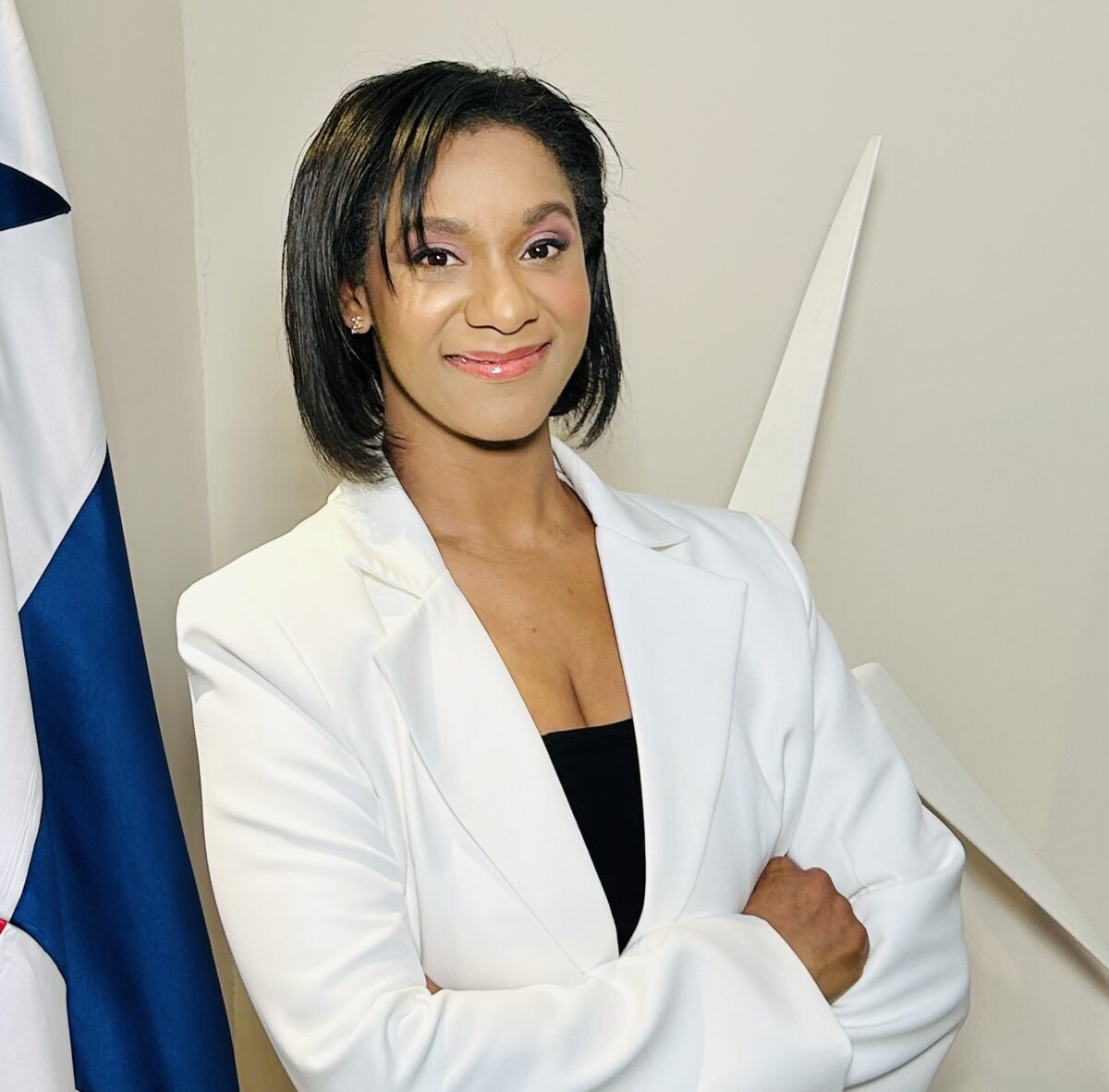
Rosilena Lindo is a global energy and climate advisor, Member-at-Large of REN21, and a member of the Global Women’s Network for the Energy Transition (GWNET) International Advisory Board. She made history as Panama’s first woman National Secretary of Energy and previously served as the country’s first National Undersecretary of Energy. Rosilena has been the author, co-author, and editor of more than 15 national public instruments on energy policy, including the Green Hydrogen Strategy, Universal Access to Energy Plan, Interconnected Grid System Innovation Strategy, Energy Transition Communication Strategy, and the Solar Water Heater Action Plan, among others, all developed with a strong gender perspective and through broad, multi- and interdisciplinary collaboration processes. She served as Director of Climate Change at the Ministry of Environment (2014–2017), where she spearheaded the development of Panama’s first Nationally Determined Contribution (NDC) under the Paris Agreement, as well as the National Climate Change Strategy and the REDD+ Programme.
Interested in joining Rosilena Lindo and other women industry leaders and experts at Women in Solar+ Europe? Find out more: www.wiseu.network
The views and opinions expressed in this article are the author’s own, and do not necessarily reflect those held by pv magazine.
This content is protected by copyright and may not be reused. If you want to cooperate with us and would like to reuse some of our content, please contact: editors@pv-magazine.com.

By submitting this form you agree to pv magazine using your data for the purposes of publishing your comment.
Your personal data will only be disclosed or otherwise transmitted to third parties for the purposes of spam filtering or if this is necessary for technical maintenance of the website. Any other transfer to third parties will not take place unless this is justified on the basis of applicable data protection regulations or if pv magazine is legally obliged to do so.
You may revoke this consent at any time with effect for the future, in which case your personal data will be deleted immediately. Otherwise, your data will be deleted if pv magazine has processed your request or the purpose of data storage is fulfilled.
Further information on data privacy can be found in our Data Protection Policy.