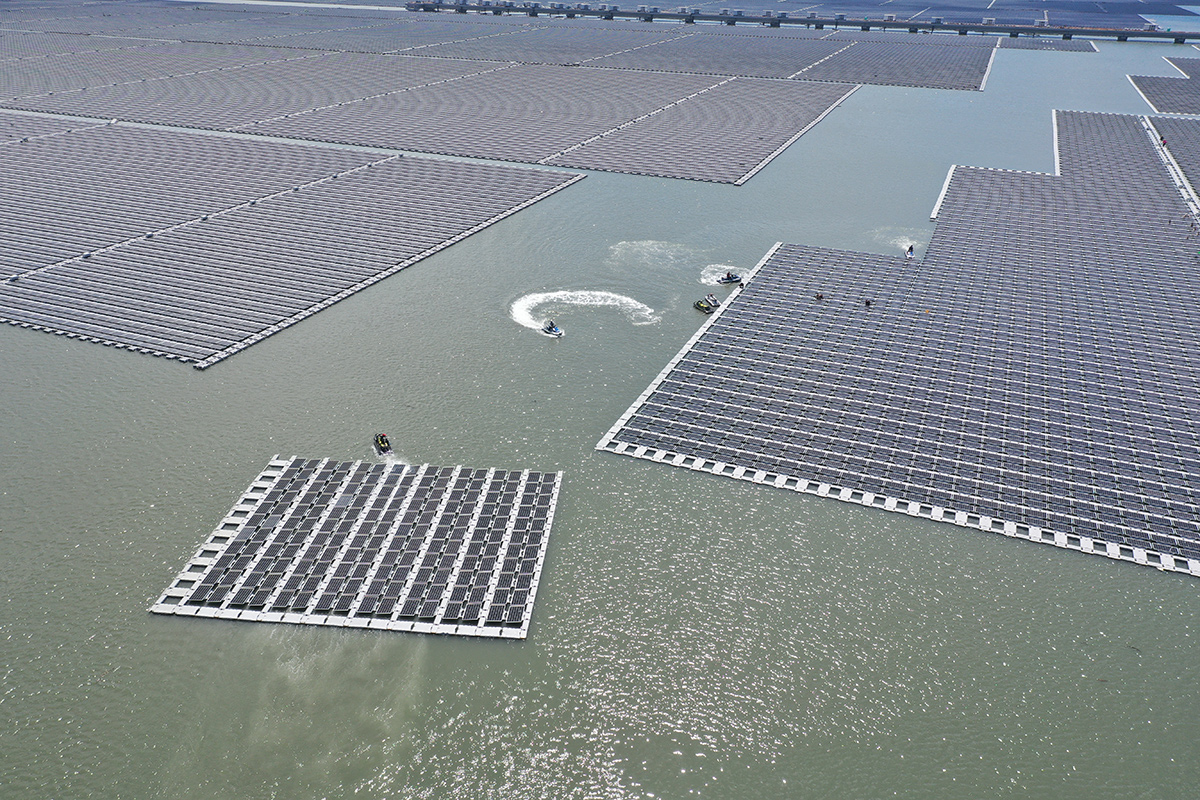





Taiwan’s Legislative Yuan has passed a series of amendments on the rules governing the development of ground-mounted and floating solar projects.
A release from the Central News Agency explains changes to the Environmental Impact Assessment Act mandate environmental impact assessments (EIA) under certain conditions prior to the development of a solar project.
EIAs will now be required for all solar projects above 40 MW in capacity or 40 hectares in size. When the solar project is located on a slope, on a body of water, or in an area deemed environmentally sensitive, an assessment will be required when the project is 10 MW in capacity or five hectares in size.
The change to the Tourism Development Act prohibits the installation of ground-mounted and floating solar projects in areas deemed of national scenic importance, unless the project is less than one hectare in size and it has passed an EIA. Similarly, the Geology Act bans ground-mounted and floating solar projects in areas classified as geologically sensitive, such as places prone to landslides and unstable terrain. Again, solar projects less than one hectare that pass an EIA will not be impacted.
Rooftop, auxiliary and smaller-scale solar installations below the applied thresholds are exempt from the new amendments.
Last month, Taiwan's Ministry of Environment announced plans to update EIA standards for solar projects amidst growing public concern over floating solar deployment and following storm-related damage to existing installations. Over 135,000 solar panels were damaged when Typhoon Danas struck Taiwan in early July this year, the majority of which were located in the south of the island.
This content is protected by copyright and may not be reused. If you want to cooperate with us and would like to reuse some of our content, please contact: editors@pv-magazine.com.



By submitting this form you agree to pv magazine using your data for the purposes of publishing your comment.
Your personal data will only be disclosed or otherwise transmitted to third parties for the purposes of spam filtering or if this is necessary for technical maintenance of the website. Any other transfer to third parties will not take place unless this is justified on the basis of applicable data protection regulations or if pv magazine is legally obliged to do so.
You may revoke this consent at any time with effect for the future, in which case your personal data will be deleted immediately. Otherwise, your data will be deleted if pv magazine has processed your request or the purpose of data storage is fulfilled.
Further information on data privacy can be found in our Data Protection Policy.