JinkoSolar takes top spot on WoodMac’s list of PV module manufacturers
JinkoSolar led global PV module shipments in 2024, followed by JA Solar, Longi, Canadian Solar and Trina Solar, according to Wood Mackenzie. The research firm notes a growing shift toward full vertical integration among top manufacturers.

Chinese researchers achieve 24.6% efficiency with perovskite-CIGS tandem cell
Chinese scientists hit 24.6% efficiency with a two-terminal perovskite-CIGS tandem cell by adding D-homoserine lactone hydrochloride (D-HLH) to the perovskite precursor, marking one of the highest reported performances for the technology.
Solar and chip titan back in groove overhauling SunPower
T.J. Rogers, the founder of now-defunct Cypress Semiconductor, is forging global strategic alliances and hunting acquisition targets to restore the SunPower brand to solar-business greatness.
Chinese PV Industry Brief: Jinchen sets up Malaysian unit
The Chinese PV production equipment provider is expanding to Malaysia with the aim to “enhance supply chain agility and efficiency.”

Germany registers 130 hours of negative day-ahead power prices in May
Germany registered 130 hours of negative day-ahead power prices in May, driven by midday solar oversupply, as PV output regularly outpaced demand. The Fraunhofer Institute for Solar Energy Systems (Fraunhofer ISE) says prices dipped below €1/($1.14)MWh for 160 hours.
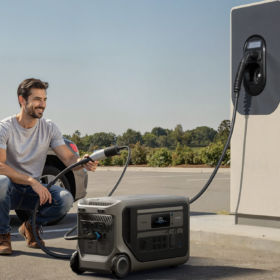
Anker Solix launches F3000 portable power station for home backup use
Anker Solix has unveiled the F3000, a 3-kWh portable power station designed for home backup and off-grid use in the United States and Canada, featuring fast charging, EV and generator compatibility, and scalable capacity up to 12.3 kWh.
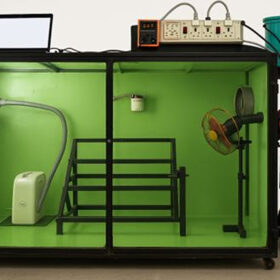
New soiling chamber for testing of dust buildup in solar modules
Scientists in India have designed a new soiling chamber that is capable of emulating the soiling conditions of a given geographical location in a shorter time frame, hosting larger panels compared to conventional setups. The new chamber can be used to estimate soiling losses and cleaning costs for potential solar power plant sites, to improve existing soiling models, to investigate how factors like tilt angle affect soiling, and to evaluate the effectiveness and durability of anti-soiling coatings.
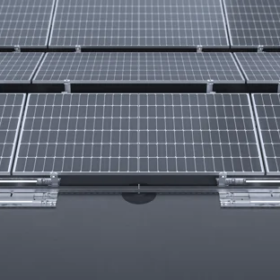
Aerocompact introduces tool-free PV mounting system
Austria’s Aerocompact says its new PV mounting system can be installed on foil, bitumen, gravel, and concrete rooftops. It can reportedly withstand wind loads of up to 1.7 kN/m2 and snow loads of up to 3.5 kN/m2.

Hoarfrost-inspired technique to improve MPPT in PV systems under partial shading
Scientists in China have introduced developments to the RIME optimization method, which takes inspiration from the developmental course of hoarfrost in nature. They have compared it to other MPPT algorithms and found it to be faster and to improve power output.

‘I wish I had known earlier that impostor syndrome is common’
This week Women in Solar+ Europe gives voice to Krystyna Kacperska, Marketing Director Europe at Germany-based SegenSolar. She says she never labeled her leadership style, but she always strove to lead authentically. “That includes vulnerability. I lead the same way I live: solution-oriented, assertive, empathetic, and open. I care deeply about what happens at work, and while I’m still learning to set boundaries and disconnect, I know that caring makes me a stronger leader,” she states.
