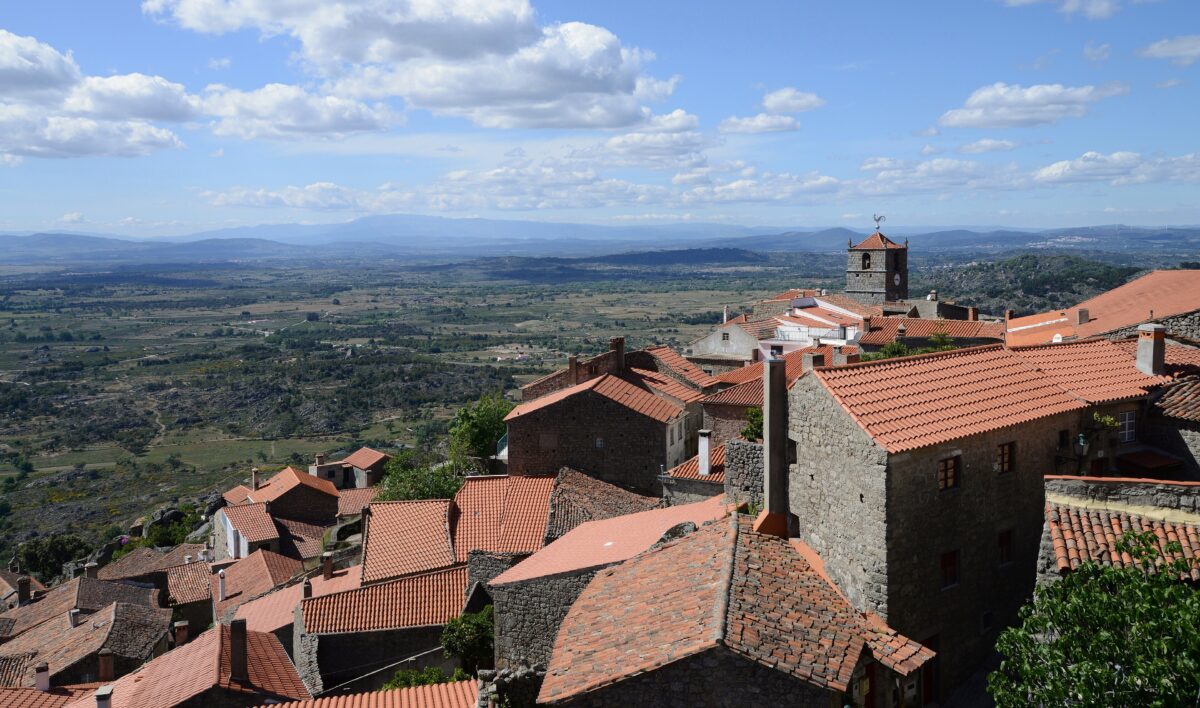





A public petition against the development of large‑scale solar projects in the Beira Baixa subregion of central‑eastern Portugal has received more than 18,200 signatures.
The petition, launched by a campaign group known as the Portuguese Platform for the Defence of the Tejo International Natural Park (PDPNTI), calls for the development of large solar power plants in natural areas and fragile ecosystems in Beira Baixa to be halted.
The campaign group argues that large-scale solar development in the region leads to biodiversity loss, the decline of rural communities, and economic harm. While acknowledging the need to accelerate the energy transition, the group says priority should be given to deploying solar on existing artificial surfaces, including rooftops and industrial areas, and to expanding local energy communities.
The petition also claims the Portuguese Environment Agency (APA) has approved or is reviewing solar projects that would cover 1,254 hectares of Beira Baixa, featuring more than 1.5 million solar panels.
Among the projects under contention is the Sophia solar power plant, a proposed 867 MW solar project, valued at €590 million ($689 million), and slated for build in the district of Castelo Branco. It has a projected annual production of 1,271 GWh, enough to supply more than 370,000 homes annually.
Project developer Lightsource bp told pv magazine that the project is still in the preliminary environmental impact assessment phase, which allows technical and institutional contributions to be incorporated before any final decision is made.
“If the project receives a positive decision, Lightsource bp will be required to submit a detailed execution plan, which will be subject to further scrutiny through another public consultation,” the developer said in a statement. “Lightsource bp has chosen this approach to maximise assessments and input from all relevant stakeholders, including potentially affected communities.”
Lightsource bp added that sustainability is “a cornerstone of the Sophia project,” as it features biodiversity protection measures such as anti-collision devices on power lines, ongoing birdlife monitoring programmes and the rehabilitation of riparian corridor strips. Other featured plans include a 228 hectare Green Structure and Landscape Integration Plan, and the conversion of 135 hectares of eucalyptus forest into cork oak and holm oak stands, with the planting of around 27,000 native trees.
“All stands of greater ecological value will be preserved and the trees affected will be amply compensated, with a planting rate around 18 times higher than the number of trees felled,” the company said.
Lightsource bp also confirmed that it is maintaining an open dialogue with local authorities, sectoral authorities, environmental organisations and citizens initiatives, and is “fully available to listen, clarify and incorporate relevant technical contributions … We consider public debate to be legitimate and essential to ensure that projects of this scale are understood and socially sustainable.”
Separately, PDPNTI sent pv magazine a statement stating that it plans to deliver its petition to Portugal’s Assembly of the Republic on Jan. 30, before hosting a demonstration in Lisbon the day after. It also said APA’s decision regarding the Sophia project is expected by Feb. 9.
“Beira Baixa is presented here as an example of the entire Interior of Portugal,” the campaign group said. “We are not dead territory – on the contrary. What is at stake is a unique region, largely still intact, full of diversity, beauty and life.”
In late December 2025, APA rejected plans for the Beira solar power project, a proposed 266 MW site to cover over 500 hectares in the districts of Castelo Branco and Idanha-a-Nova within the Beira Baixa region, citing the identification of significant negative impacts on ecological systems.
At the time, the agency published a statement explaining the project promoter had expressed interest in revising the project and has 180 working days to submit changes, which would then be subject to a public consultation and technical analysis by APA’s evaluation committee.
Portugal’s cumulative solar capacity exceeded 6 GW by May 2025, with deployment across the first five months of last year spread evenly between the utility-scale and distributed generation segments.
This content is protected by copyright and may not be reused. If you want to cooperate with us and would like to reuse some of our content, please contact: editors@pv-magazine.com.


By submitting this form you agree to pv magazine using your data for the purposes of publishing your comment.
Your personal data will only be disclosed or otherwise transmitted to third parties for the purposes of spam filtering or if this is necessary for technical maintenance of the website. Any other transfer to third parties will not take place unless this is justified on the basis of applicable data protection regulations or if pv magazine is legally obliged to do so.
You may revoke this consent at any time with effect for the future, in which case your personal data will be deleted immediately. Otherwise, your data will be deleted if pv magazine has processed your request or the purpose of data storage is fulfilled.
Further information on data privacy can be found in our Data Protection Policy.