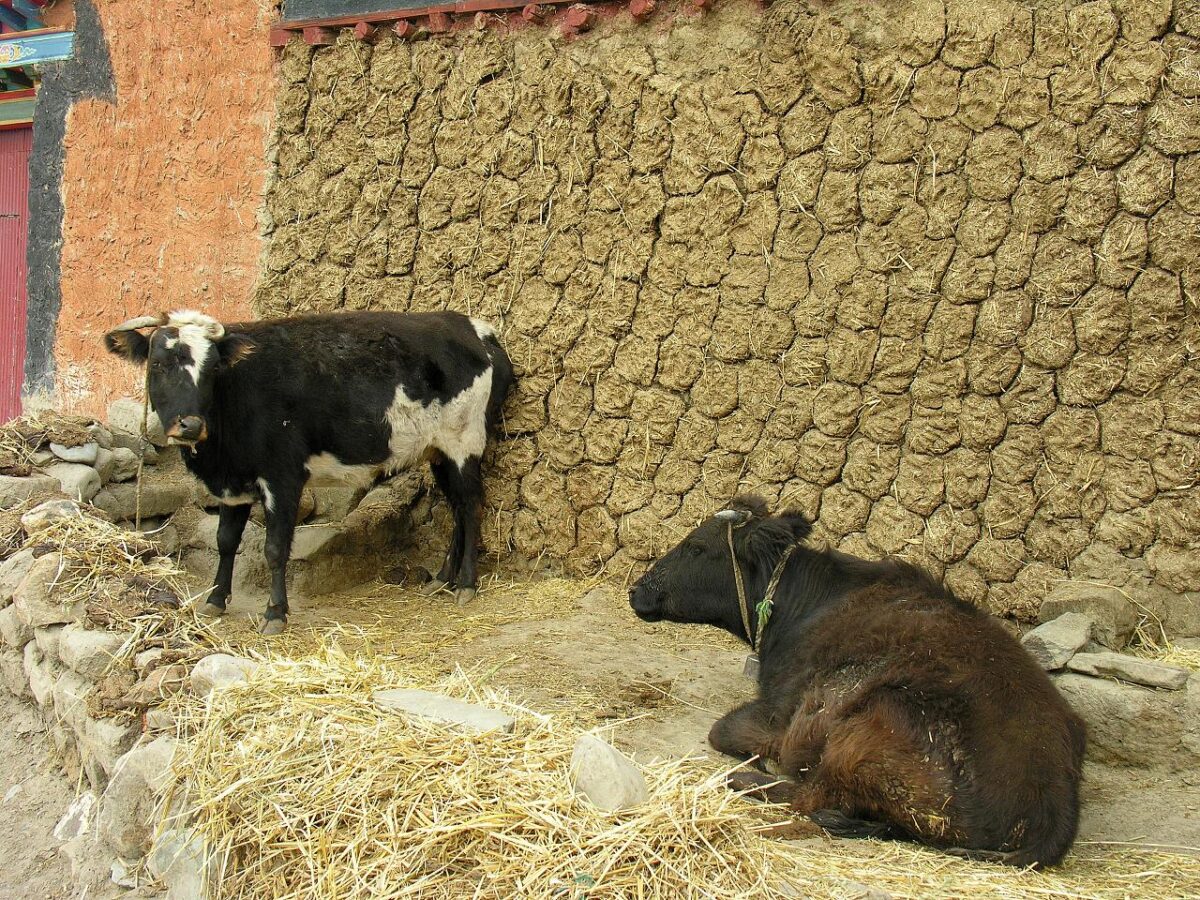





An international team of researchers has conducted an experimental analysis of solar PV-integrated gasification of dried cattle dung.
Gasification of dried cattle dung begins by feeding the dried biomass into a gasifier, where only a limited amount of oxygen or air is supplied. Inside the reactor, the material is exposed to high temperatures, causing thermochemical reactions such as pyrolysis and partial oxidation that break down the organic matter. As a result, a combustible gas mixture called producer gas or syngas, mainly composed of carbon monoxide, hydrogen, and small amounts of methane, is produced, along with residual ash and char that remain as by-products.
“Our research presents a novel approach by integrating solar PV technology with cattle dung gasification, specifically in confined animal feeding operations (CAFOs),” said corresponding author Muhammad Ashraf to pv magazine. “The unique aspect of our work lies in its techno-economic-environmental assessment (TEEA), which demonstrates that solar PV integration significantly enhances energy recovery and reduces reliance on grid electricity, offering an economically feasible and environmentally sustainable waste-to-energy solution for regions with abundant cattle resources, such as Pakistan.”
Ashraf also explained that while the team expected the PV system to improve the system’s energy recovery, the TEEA results were unexpectedly surprising.
“Although we assumed the cost of raw cattle dung to be free, the levelized cost of energy (LCOE) and overall economic feasibility were still influenced by load patterns and system utilization,” he said. “Even with high efficiency in energy extraction – over 80% biomass conversion and nearly 67% energy recovery – the economic benefits in some operational conditions, especially with partial or low system utilization, did not scale as expected.”
Additionally, he noted that factors such as capacity factor, system downtime, and maintenance are just as important as the fuel source itself in determining the system’s overall feasibility. “This outcome challenges the conventional assumption that biomass energy systems with free feedstock will always be economically viable, especially when relying on intermittent renewable energy sources like solar PV,” he said.
Their study began by analyzing different combinations of cow and buffalo dung, measuring their moisture content and volatile matter, and analyzing the carbon, hydrogen, nitrogen, sulfur, and oxygen compositions. Following the tests, the group decided to proceed with one mix of cow dung from different Pakistani cities, one mix of buffalo dung, and one mix that includes both.

Image: Bahauddin Zakariya University, Sustainable Chemistry for Climate Action, CC BY 4.0
All three feedstocks were dried, crushed, sieved, and then fed into the gasification system. The system consisted of an electric tube furnace powered by six 400 W mono PERC solar panels. The pilot plant operated with a dung feed rate of 2 kg/h at four power levels: 500 W, 700 W, 900 W, and 1,100 W. These power levels heated the furnace to approximately 500 C, 600 C, 700 C, and 800C, respectively.
The researchers said that the solar PV system demonstrated a net energy recovery of 40.17%, significantly outperforming grid-powered systems, which achieved only 23.03%. They added that the system reduces CO₂ emissions by 1.2–1.3 kg per kilogram of dried cattle dung, equivalent to the carbon sequestration capacity of 12–13 hectares of forest annually.

Image: Bahauddin Zakariya University, Sustainable Chemistry for Climate Action, CC BY 4.0
Based on the TEEA, the researchers also concluded that the system is economically viable. It has a payback period of 3.75 years and can generate annual revenue of 98,703 PKR ($352.1) at a processing capacity of 5 kg/day. They added that gasification at 800 C, which produced optimal syngas yields, was shown to be scalable.
“We are planning further research to scale up this system for larger CAFOs and to explore its feasibility in different environmental conditions. Additionally, we aim to investigate further optimization of the system for improving syngas yield and reducing emissions, particularly in the context of different biomass types,” Ashraf said. “The next phase of research will focus on enhancing the commercial viability of solar PV-integrated gasification systems and evaluating their performance at various scales, including pilot projects in rural and off-grid areas.”
Their findings can be found in “Market feasibility evaluation of Solar photovoltaic integrated gasification of cattle dung: experimental study,” published in Sustainable Chemistry for Climate Action. Researchers from Pakistan's Bahauddin Zakariya University, the University of Engineering and Technology, the NFC Institute of Engineering and Technology, China's Nantong University, Nigeria's Federal University of Petroleum Resources, and the University of South Africa have conducted the study.
This content is protected by copyright and may not be reused. If you want to cooperate with us and would like to reuse some of our content, please contact: editors@pv-magazine.com.

By submitting this form you agree to pv magazine using your data for the purposes of publishing your comment.
Your personal data will only be disclosed or otherwise transmitted to third parties for the purposes of spam filtering or if this is necessary for technical maintenance of the website. Any other transfer to third parties will not take place unless this is justified on the basis of applicable data protection regulations or if pv magazine is legally obliged to do so.
You may revoke this consent at any time with effect for the future, in which case your personal data will be deleted immediately. Otherwise, your data will be deleted if pv magazine has processed your request or the purpose of data storage is fulfilled.
Further information on data privacy can be found in our Data Protection Policy.