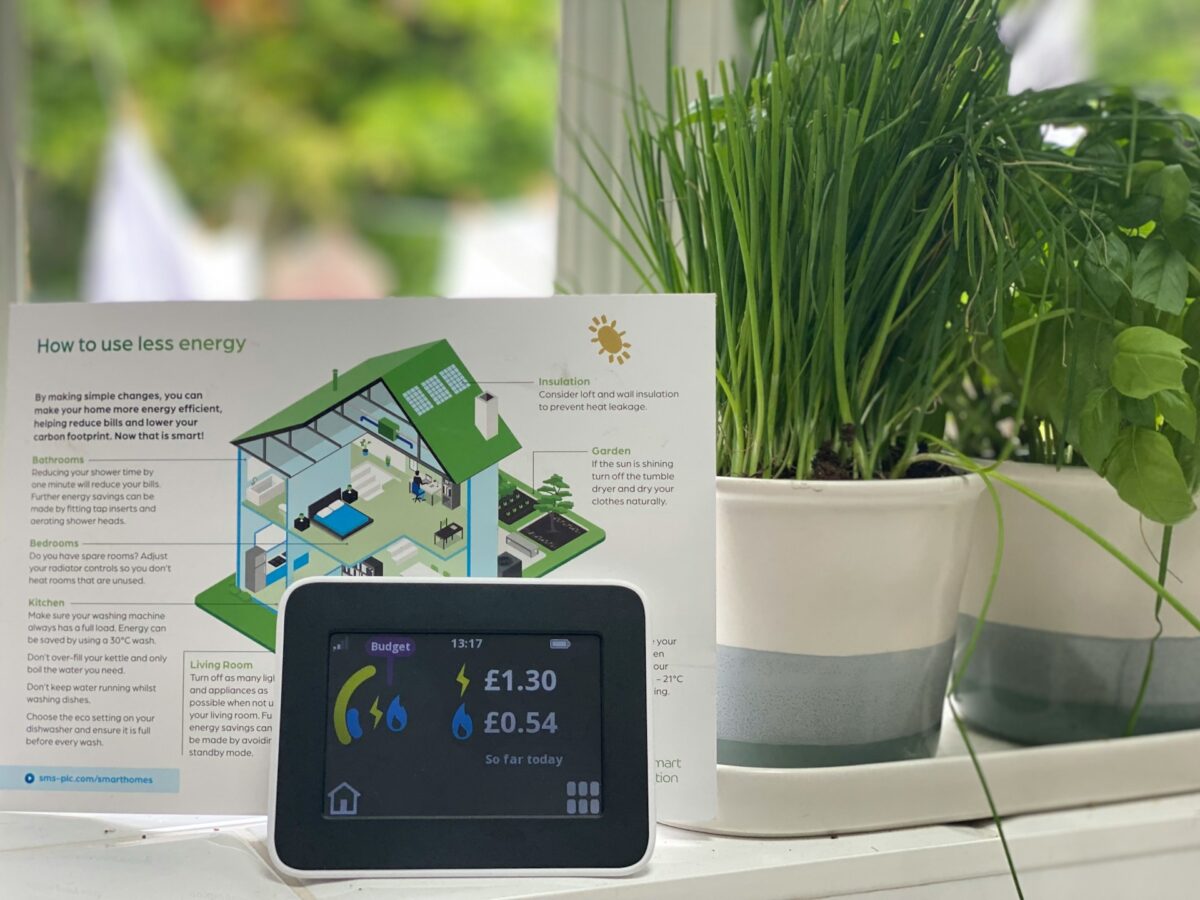





Smart meter deployment has slowed in the United Kingdom, and energy retailers now face stricter regulations compelling them to complete the domestic rollout in all premises by the end of 2030.
There were 21.8 million domestic smart electricity meters in Great Britain operated by large energy suppliers at the end of 2025, according to the latest UK government data, with 20.6 million of these operating in smart mode. This left 7.8 million traditional meters still to be replaced, plus 1.1 million smart meters operating in traditional mode.
Replacing the remaining non-smart electricity meters in time for the government’s 2030 target would require similar installation volumes to the roughly 1.5 million smart electricity meters added in 2025. Deployment can become more challenging when fewer households remain, however, as many of the most accessible installations have already been carried out.
The UK government first committed to installing smart meters across households in 2011 and set an initial target of full coverage by 2019, but deployment has lagged ambition. Stricter obligations are now being introduced in a bid to achieve full smart meter deployment by 2030, in line with the UK government’s broader Clean Power 2030 strategy.
The government plans to make energy suppliers take “all reasonable steps” to complete the domestic smart meter rollout by installing smart meters in all remaining domestic premises by the end of 2030. Energy retailers will be required to submit annual deployment plans to Ofgem, providing the industry regulator with an outline of activities they will undertake to meet installation, operational and replacement obligations.
Annual milestones for new installations and pre-emptive replacements will be binding and “without tolerances” from January 2027, according to the UK government. Ofgem will assess compliance. The regulator is facing changes to how it handles the rollout too, as the time it has to reject an energy retailer’s deployment plan will be reduced from 40 days to 28 days.
New standards will also give energy retailers no more than 90 days to repair faulty smart meters, or potentially face fines or legal action. Energy suppliers will also be required to replace all smart meter connected to 2G and 3G cellular networks before these services are switched off in Great Britain by 2033.
The policy changes come amid slowing momentum for UK domestic smart meter deployment. Data from the end of 2025 show annual deployment has fallen each year since 2021, when 2.8 million smart electricity meters were added. That was the strongest year on record, partly driven by pent-up demand following Covid restrictions – smart meter data for the second quarter of 2020 shows just 3,000 new smart electricity meters were added to the total over the three months, compared to more than 600,000 for the same period in 2021.
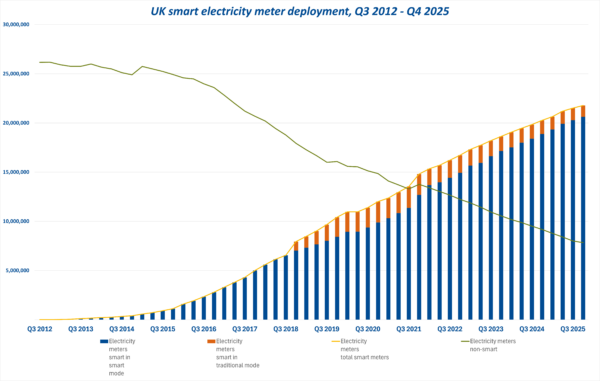
Source: UK government domestic smart meters statistics to end December 2025.
Even removing a post-pandemic bounce, deployment of new smart electricity meters has been on a clear downward trend and 2025 saw the lowest increase to the total number of domestic smart electricity meters since 2015 – apart from 2020, when deployment was severely restricted by pandemic measures.
Action on smart meters also comes as the UK electricity system increases opportunities for households to participate in flexibility markets. A recent rule change opened the balancing mechanism market to residential batteries, heat pumps and EV chargers trading through utilities or third-party aggregators, broadening the flexibility trading opportunities open to consumers.
UK government smart meter deployment data applies to households connected to the electricity grid in Great Britain. Northern Ireland is part of a connected electricity grid with Ireland.
This content is protected by copyright and may not be reused. If you want to cooperate with us and would like to reuse some of our content, please contact: editors@pv-magazine.com.

By submitting this form you agree to pv magazine using your data for the purposes of publishing your comment.
Your personal data will only be disclosed or otherwise transmitted to third parties for the purposes of spam filtering or if this is necessary for technical maintenance of the website. Any other transfer to third parties will not take place unless this is justified on the basis of applicable data protection regulations or if pv magazine is legally obliged to do so.
You may revoke this consent at any time with effect for the future, in which case your personal data will be deleted immediately. Otherwise, your data will be deleted if pv magazine has processed your request or the purpose of data storage is fulfilled.
Further information on data privacy can be found in our Data Protection Policy.