Negative power prices reach all-time high on the Iberian Peninsula in Q1


From pv magazine Spain
Negative electricity prices hit a new all-time high in the first quarter on the Iberian Peninsula, driven by record renewable energy generation.
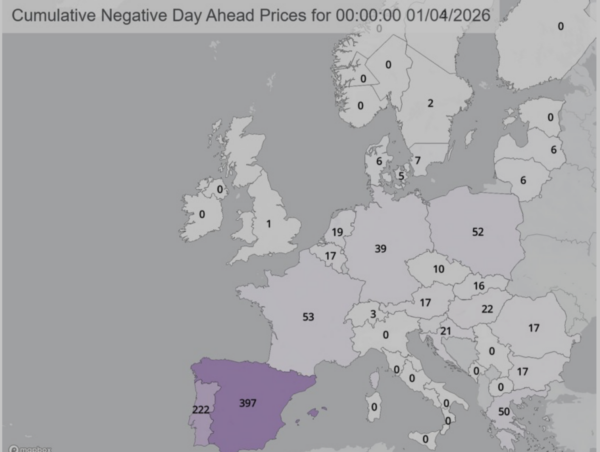
According to the latest quarterly report on the European electricity market from analytics firm Montel, Spain recorded 397 hours of negative prices between January and March—significantly higher than the 48 hours registered in the same period of 2025 and close to that year’s annual total of 555 hours. Portugal, meanwhile, reached 222 hours of sub-zero prices during the same period.
A surge in solar generation was the main driver of the trend, particularly during peak production hours. On Feb. 21, for example, prices fell to -€58.60/MWh between 12:00 and 12:45 CET, when solar output reached 15.6 GW against demand of 24.6 GW.
This contrasts with the rest of Europe, where no country exceeded 53 hours of negative prices during the quarter. The difference is largely attributed to milder temperatures on the Iberian Peninsula, which limited demand growth compared with other regions, particularly Northern Europe.
Jean-Paul Harreman, director of Montel EnAppSys, said future trends will remain heavily weather-dependent, although continued solar capacity growth points to further records. Despite shorter winter daylight hours, solar output in the first quarter was already high, reflecting rapid capacity additions. Generation levels, meanwhile, are expected to exceed last year’s peaks during the summer months.
Further records for negative pricing in 2026 are therefore likely. Longer daylight hours in the second quarter, combined with additional solar capacity, could intensify the trend.
Across Europe, total renewable generation reached 384.9 TWh in the first quarter, driven by record solar output of 52.6 TWh, up 15% year on year, alongside a recovery in wind generation and strong hydro output.
For the second quarter, the report forecasts extended periods of renewable surpluses, potentially leading to more frequent negative pricing events, as well as curtailment and adjustments to nuclear output during peak solar generation and periods of strong overnight or weekend wind production.
At the same time, higher prices are expected in the afternoon hours, when declining renewable output increases reliance on combined-cycle gas turbines, which remain exposed to gas price volatility.
Harreman also warned that while demand is likely to ease as temperatures rise, extreme heat events could still place stress on the system, particularly given relatively low gas storage levels.
This content is protected by copyright and may not be reused. If you want to cooperate with us and would like to reuse some of our content, please contact: [email protected].

Please login to comment

C’mon Iberian Grid Builders, get that low bar up there where it can earn its due! Vertical south PV facing and IR emissive films / roof coatings, help cooling areas do their things! … maybe spare a Gaudi #20 scrim for export.
Sounds like opportunity to me. The more excess generation there is, the easier it is to justify the capital expense of installing something that can use it. Solar is really cheap now, and the Iberian peninsula is very sunny, so it’s way cheaper to install more solar, than pay for the gas, and better for the environment.